Is a memo about an "unidentified humanoid" a real Department of War document released with other "UFO files" in May 2026? No, that's not true: The document does not appear in the publicly available UFO files released by the Trump administration or the Department of War as of the time of publication. A search for "1994" in the files, the year of the alleged encounter, returned no results matching the document.
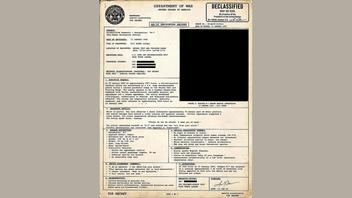
The claim appeared in a post and image (archived here) by the @PaulGoldEagle account on X on May 13, 2026. It read:
BREAKING DISCLOSURE 🚨 🚨
PENTAGON RELEASED DOCUMENT
Just so much, if all this is true, it's more than we could have dreamed of...
Here we go:
This is what the post looked like on X at the time of writing:
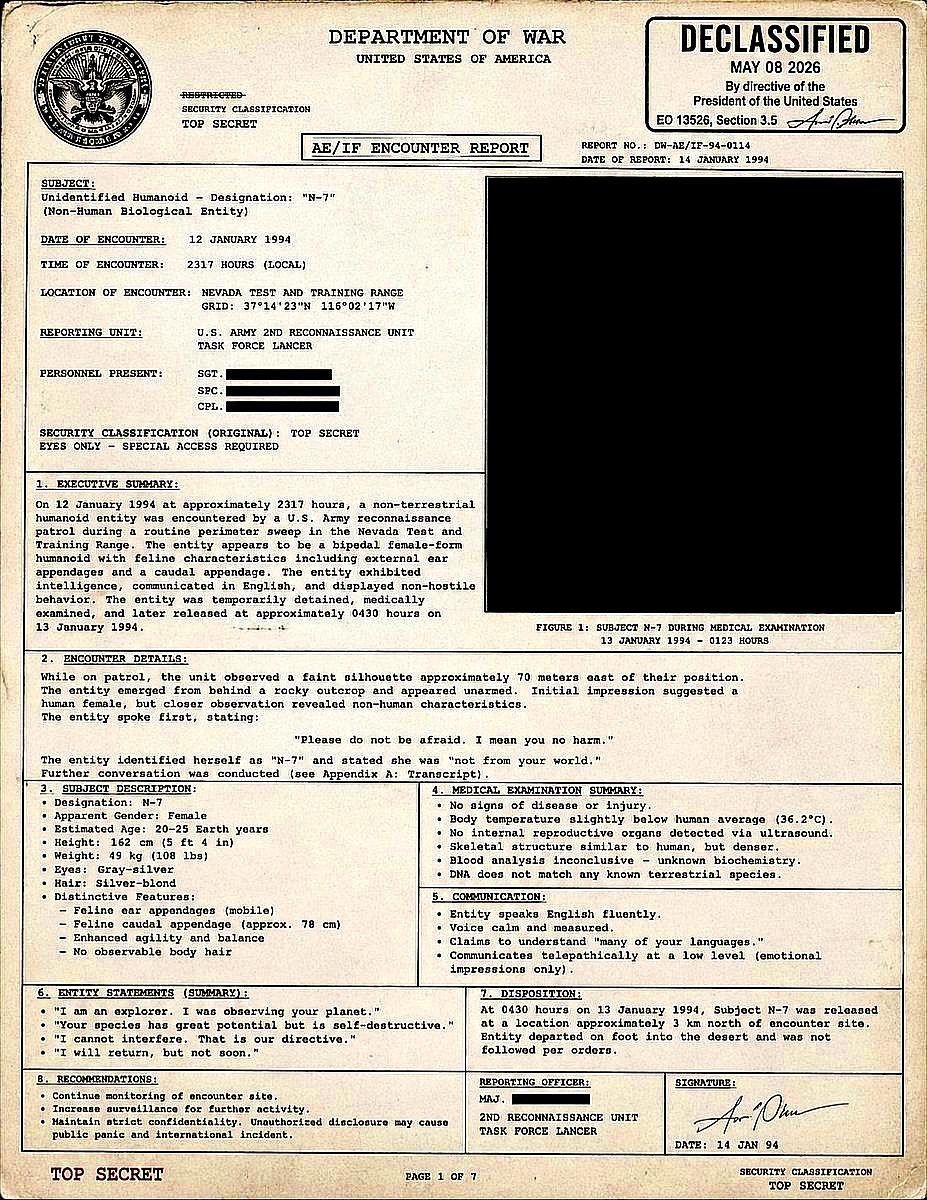
(Image source: post by @PaulGoldEagle on X.)
The post appeared on social media less than a week after the Department of Defense (archived here) -- whose website was rebranded as war.gov under Secretary Pete Hegseth -- began releasing UFO files (archived here) on May 8, 2026.
Lead Stories searched the government UFO website for any incident in 1994 (archived here), but found no sign of the one described in the fake Jan. 14, 1994 report on X. The only report found described pilots' sighting of an unidentified flying object (archived here) over Kazakhstan on Jan. 27, 1994.
Signs of AI generation
Fake documents with large amounts of text do not provide enough visual information to determine whether they are AI-generated, but there are some clues.
The document is titled "Department of War." The Department of War (DOW) was established in 1789. Its name was officially changed to the Department of Defense (DOD) in 1947 after World War II. The DOW moniker was restored in 2025 by President Donald Trump, but only as a secondary title. Only Congress can officially change the name back to DOW, according to Encyclopedia Britannica (archived here).
On the alleged date of the document, Jan. 14, 1994, the agency was not called the DOW. At that time, it was known as the DOD.
The yellowed edges of the image and the specific fonts used are common tropes in digital art designed to resemble "leaked" government documents, but they are more typical of an earlier era. By the mid-1990s, word processors and personal computers had largely replaced typewriters in many offices. A document from that era would likely look very different from the one shown in the post.