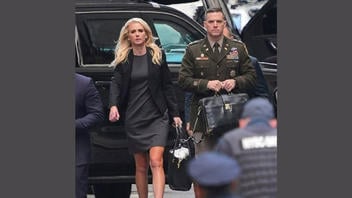
Does a real photo show an army officer with the "nuclear football" chained to what is described on social media as a "diaper bag" carried by Trump aide Natalie Harp? No, that's not true: The original photo didn't display an army officer or the briefcase allowing access to the nuclear arsenal. The image was digitally altered by AI.
The claim appeared in a post (archived here) on Facebook by @OccupyDemocrats on July 1, 2026. It opened:
BREAKING: I am fairly certain that on the right an Army officer is carrying the nuclear football in a briefcase for Trump, but I am POSITIVE that on the left Natalie Harp is carrying his diaper bag. Change my mind.
This is what the image looked like on Facebook at the time of writing:

(Image source: post by @OccupyDemocrats on Facebook.)
"Nuclear football" (archived here), also known as the presidential emergency satchel (archived here), is a secure briefcase that is carried with the U.S. president (archived here) when the head of state is outside the White House. This is so that the president always has access to the systems allowing the use of nuclear weapons.
The version of the photo that went viral, however, was digitally altered. The original, which appeared in an April 16, 2024, Daily Mail article (archived here) didn't show the man in the military uniform. It was Margo Martin, President Donald Trump's communications advisor (archived here) in his second term, who was seen in the real photo walking next to White House aide Harp (archived here). They carried one bag together, and it was not the presidential emergency satchel.
The image reviewed in this fact check purported to show Harp's hand, but it appeared anatomically incorrect while multiple images of her (archived here) did not confirm such an issue:
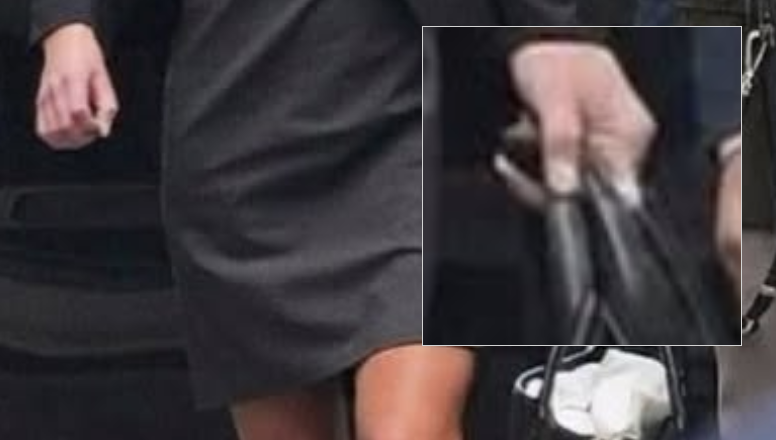
(Image source: InVID.)
InVID reported that the image was 87% likely to have been edited with AI:
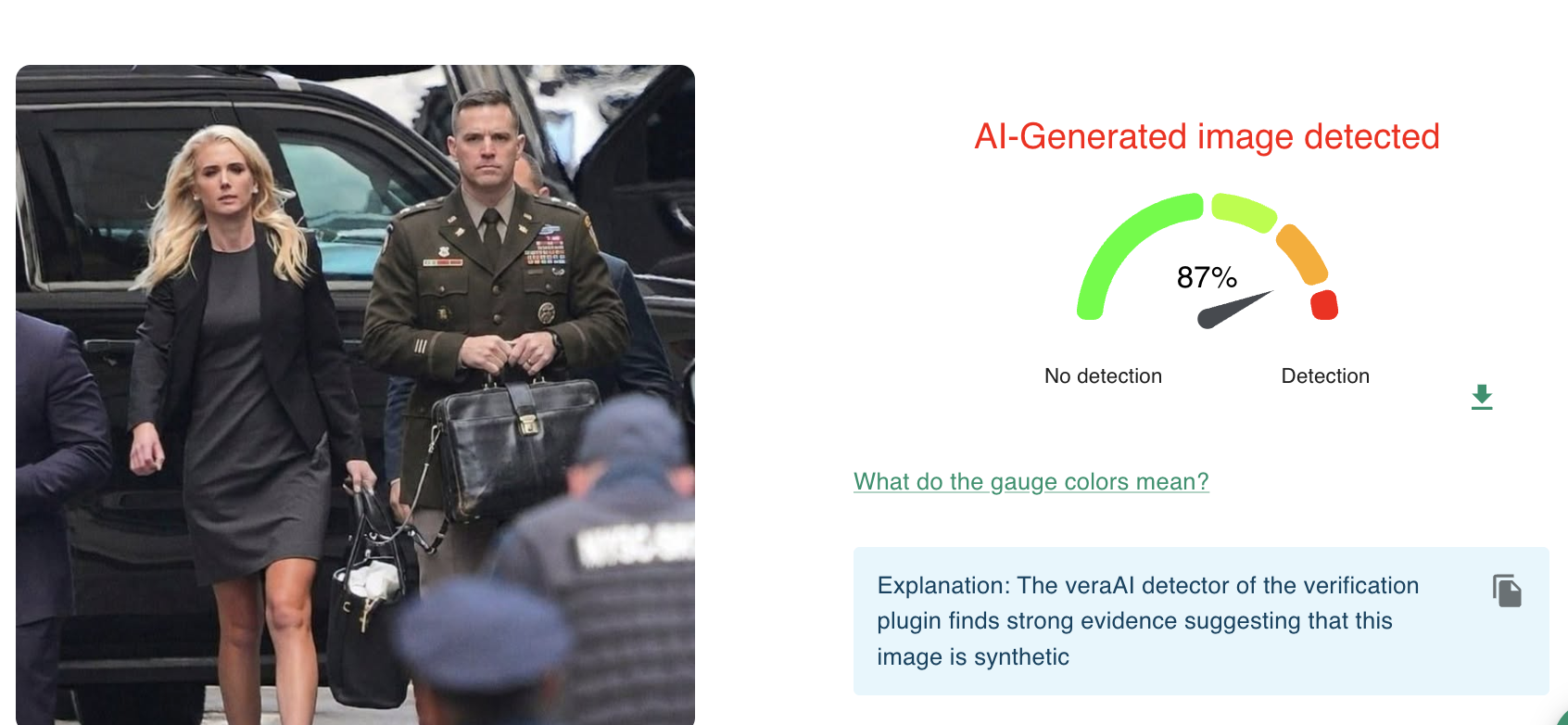
(Image source: InVID.)
Sightengine, another online AI detector, reported that the chances of the image having been modified with AI were 99%:
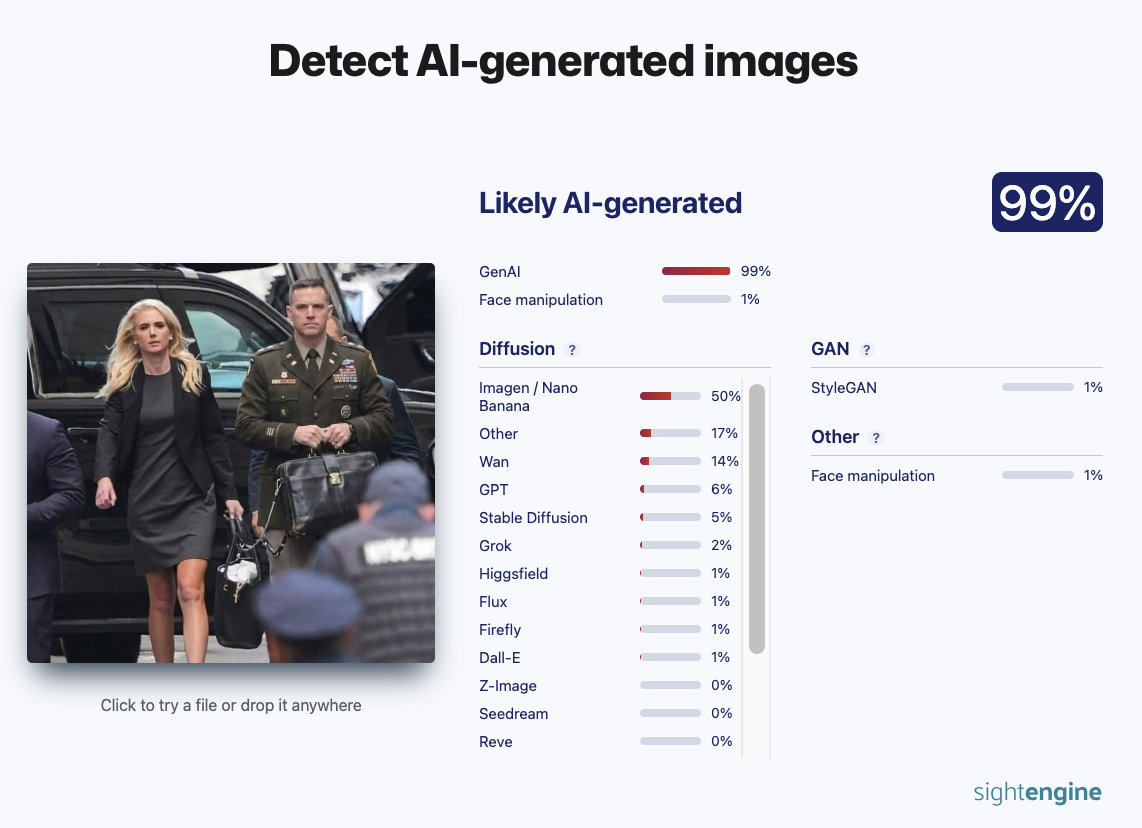
(Image source: Sightengine.)
Lead Stories submitted the picture to Google's Gemini and asked it to look for a SynthID watermark (archived here), an invisible signal embedded by Google AI tools to identify AI-generated content. The conclusion read (archived here):
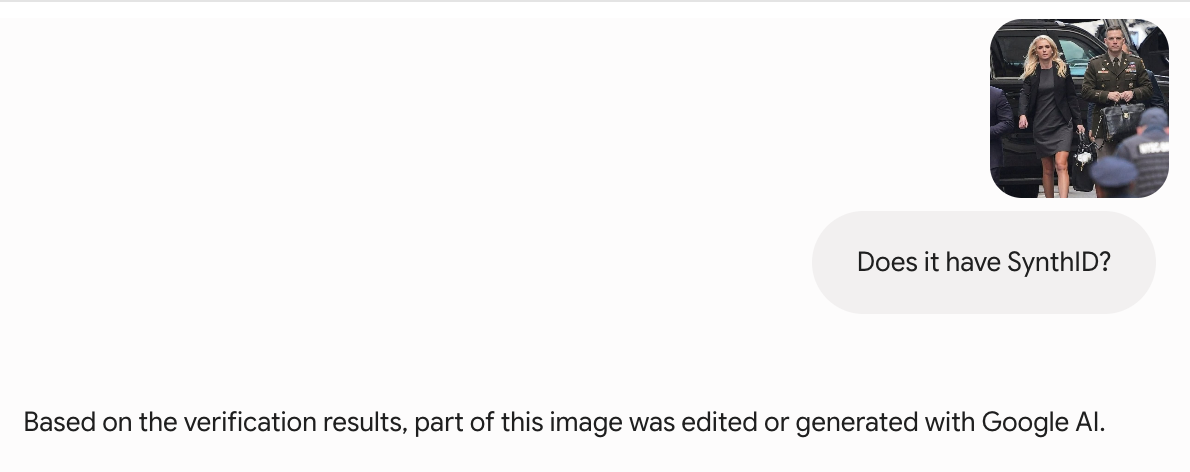
(Image source: Gemini.)