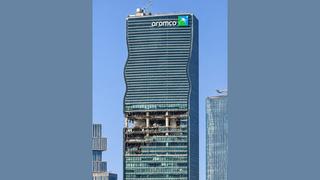
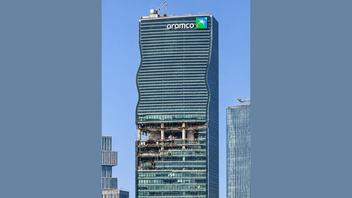
Does a viral image actually show Aramco Tower in Riyadh, Saudi Arabia, after the Houthi attack in November 2026? No, that's not true: The picture was not a real photo documenting the aftermath. Five online tools determined the viral image was AI-generated.
The claim appeared in a post (archived here) on X where it was published by @adoneikam on Nov. 9, 2026. It opened:
Shame on the people & those in the media who are attempting to downplay the Houthi terror attack on the Aramco Tower in Riyadh. Terrorism is terrorism, regardless of the target, regardless of who the terrorists are.
This is what the attached image looked like on X at the time of publication:
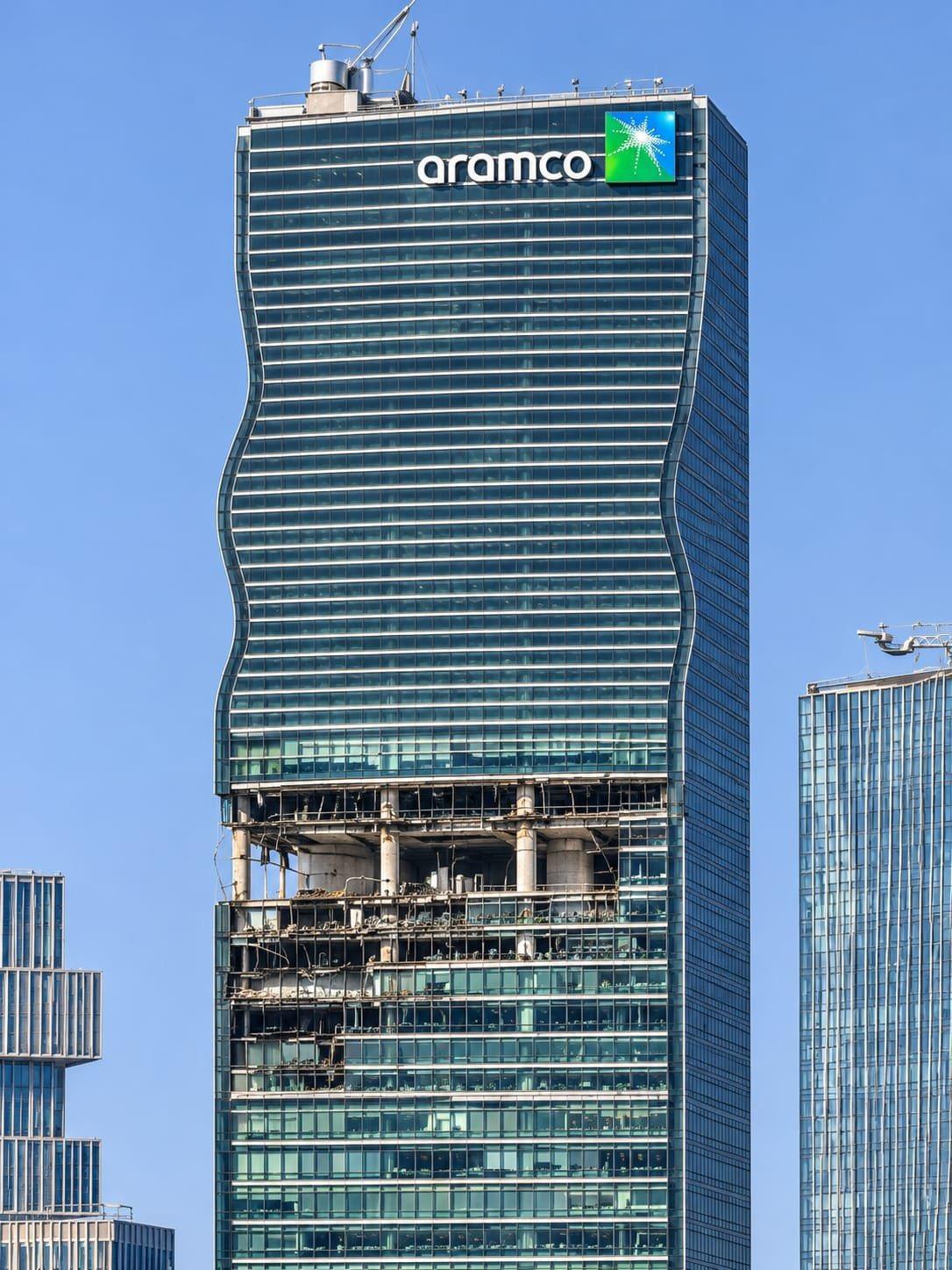
(Image source: post by @adoneikam on X.)
The implication was that the picture shared on X was a real photo documenting the aftermath of the Nov. 8, 2026, attack on Riyadh (archived here) that Iran-backed Yemen's Houthis claimed (archived here and here) and left the Aramco skyscraper damaged. The Saudi energy ministry, cited by the New York Times (archived here) among others, described the degree of impact as "minor"; the newspaper's reporter on location said that there were "shattered windows and black marks" on the tower's surface and that "at least one floor of the roughly 30-story tower appeared to be severely damaged, leaving a gaping hole in the building."
The viral image reviewed in this fact check, however, was not a real photo -- it was made by AI.
Online AI detection tool Pangram said the image was very likely made by AI:
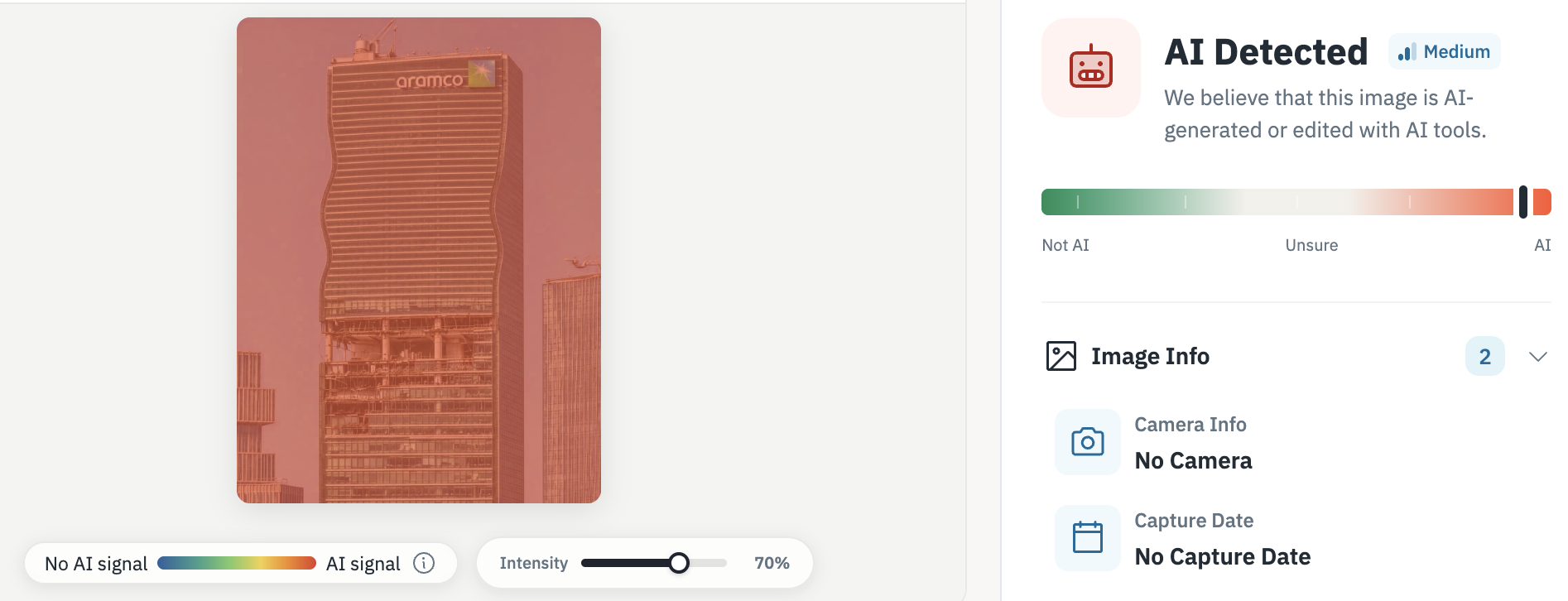
(Image source: Pangram.)
AI or Not estimated that the picture was 94% likely to contain generative AI:
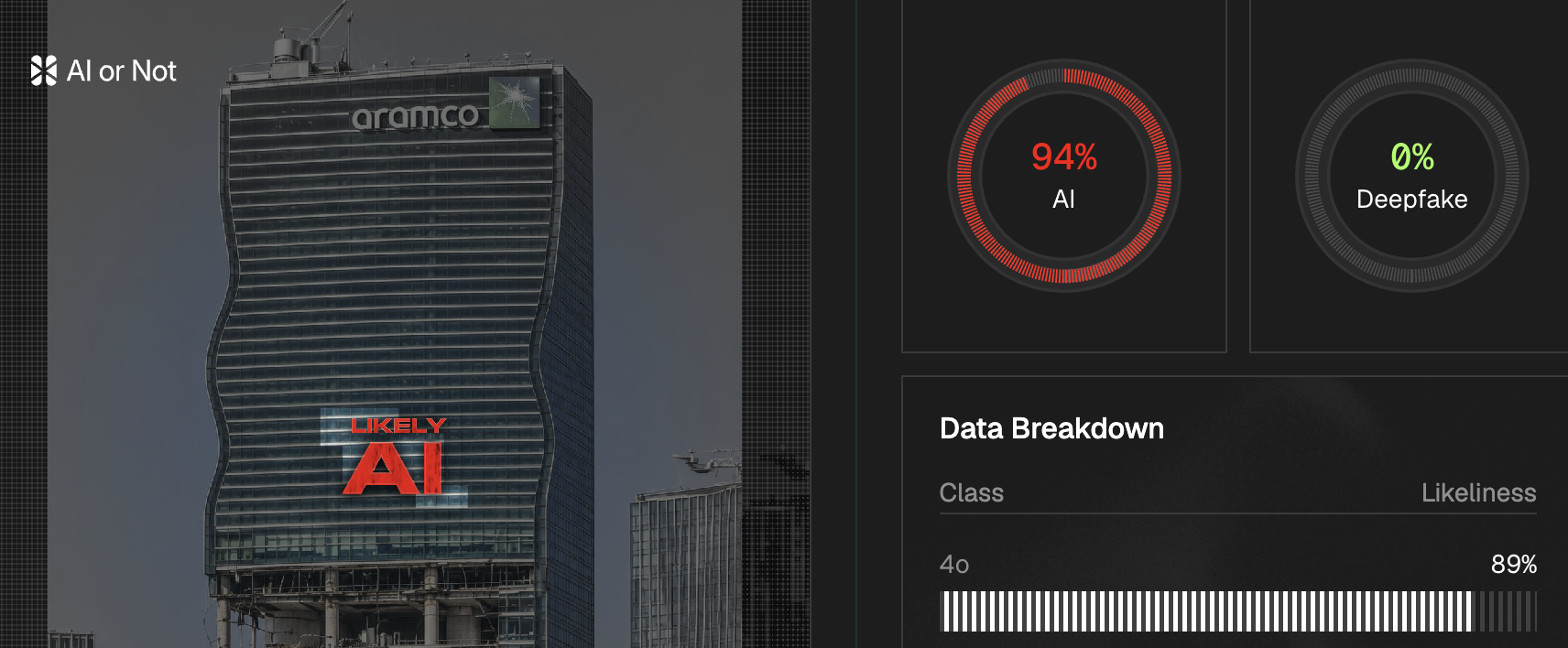
(Image source: AI or Not.)
Sightengine said that the odds of that were 99%:
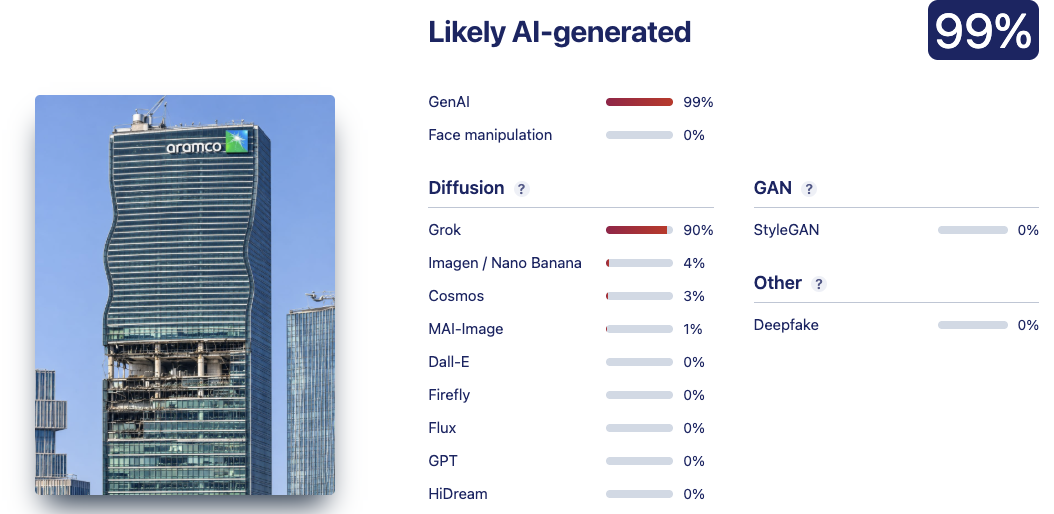
(Image source: Sightengine.)
ZeroGPT ruled that the image was "99% FAKE":
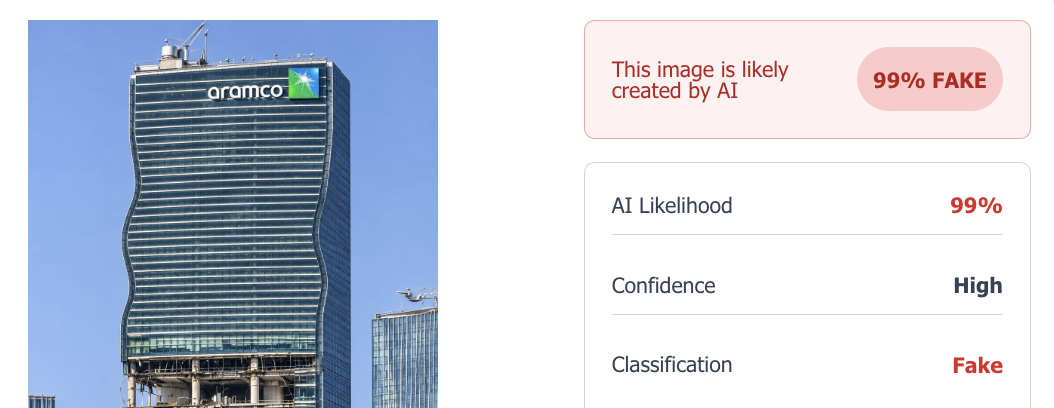
(Image source: ZeroGPT.)
Finally, the SynthID detector found an invisible watermark automatically added to some AI-generated content. According to the tool, the image in question "was made or edited with OpenAI":
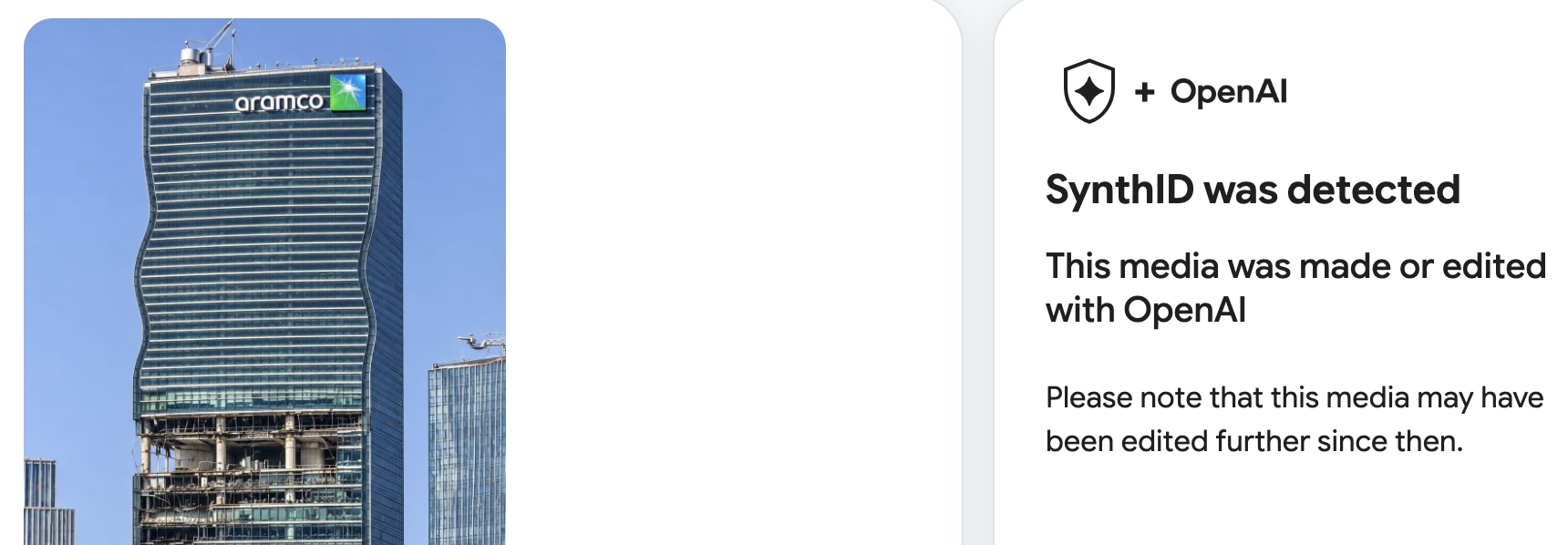
(Image source: SynthID.)