
Does a video show Indian people dumping plastic waste into a river? No, that's not true: The video does not show garbage dumping but the final religious ritual of the Ganesh Chaturthi festival, Ganesh Visarjan, where idols made for this purpose are immersed in water. The environmental impact of the festival can vary depending on what the statues and decorations are made with, and where they are immersed.
The video appeared in a post (archived here) published by the @FullRetardRadar account on X on Aug. 20, 2026. It read:
India dumps entire truckloads of plastic trash straight into the rivers. Meanwhile we're forced to use paper straws that dissolve, bottle caps that never come off, ULEZ charges and carbon taxes. Net zero is a scam run by people who hate you.
This is what the post looked like on X:
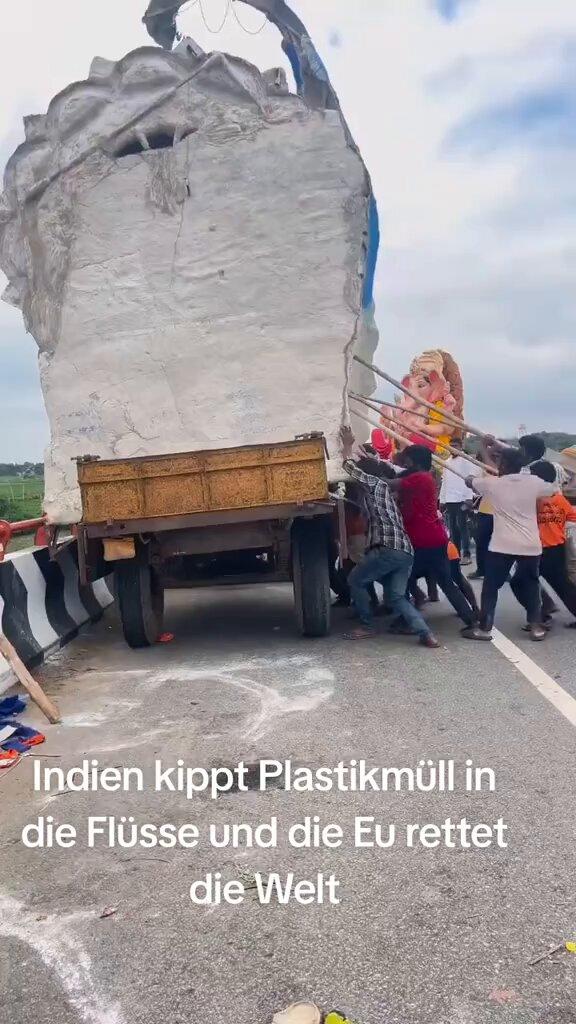
(Image source: post by @FullRetardRadar on X.)
Text captioning on the video in German read:
Indien kippt Plastikmüll in die Flüsse und die Eu rettet die Welt
Google's translation to English reads:
India dumps plastic waste into rivers and the EU saves the world
The scope of this fact check is not to quantify the environmental impact of the festival but to clarify what is depicted in the specific video.
The video was published on Instagram (archived here) by @themurdocktheory on May 7, 2026. Other videos published by this account have similar lengthy descriptive captions that explain the actions seen in the video with flowery language. This caption reads:
This video captures a poignant moment during the Ganesh Visarjan ceremony, where a large, beautifully crafted idol of Lord Ganesha is immersed into a river. The scene begins with several devotees working in unison, using long poles and physical strength to carefully tilt the massive idol from the back of a truck parked on a bridge. The atmosphere is thick with emotion, underscored by a soulful Telugu song that speaks of the bittersweet nature of the farewell--honoring the "God of Wisdom" while feeling the sting of his departure.
As the idol reaches the tipping point, it slides gracefully off the vehicle and plunges into the water below, creating a dramatic splash. The camera pans to show the river filled with other smaller idols and flowers, signifying a communal act of faith and the completion of the yearly cycle. This ritual, known as Nimajjanam, symbolizes the concept of Samsara--the cycle of birth, life, and death--reminding devotees that while the physical form returns to nature, the divine presence remains in their hearts. The video beautifully balances the heavy physical effort of the men with the spiritual solemnity of the occasion, capturing a tradition that is as much about collective strength as it is about deep-rooted devotion.
The Britannica entry for Ganesh Chaturthi (archived here) describes the festival:
Ganesh Chaturthi, a festival in Hinduism celebrating the birth of the elephant-headed deity Ganesha (Ganesh), the god of prosperity, wisdom, and removal of obstacles. The holiday begins on the fourth day (chaturthi) of the month of Bhadrapada (August-September), the sixth month of the Hindu calendar. The festival lasts up to 10 days when, at the culmination of the holiday, statues of Ganesha are immersed in water. Ganesh Chaturthi is celebrated both as a small domestic ritual in homes and as a grand public spectacle in community spaces.
There is debris left behind after the immersion ritual. Concerns for the environmental impact are driving regional regulations regarding the composition of the idols, their size, and where they can be immersed. In 2026, the final day of the festival will fall on Sept. 25. For example, an Aug. 20, 2026, article (archived here) from The Hindu states:
The Dharwad district administration has banned the manufacture, sale, storage and use of Ganesh idols made of plaster of Paris (PoP) and other chemically treated material.
An Aug. 21, 2026, article (archived here) in Hindustan Times reports:
MUMBAI: Ganesh idols up to six feet in height, including those made of Plaster of Paris (PoP), will have to be immersed in artificial water bodies this year, while idols taller than six feet can be immersed in natural water bodies, the Bombay high court clarified on Thursday. The court said its July 24, 2025 order laying down these restrictions will remain in force until it delivers its final verdict on a pending public interest litigation (PIL).
There are some suppliers (archived here) making small-scale Ganesh idols from natural biodegradable materials. For years there have been community efforts to clean up debris in the days after the festival. One example appears in a news segment video from India Today (pictured below) posted on Facebook on Sept. 29, 2023 (archived here). It shows the community effort to clean up the beaches of Mumbai. The reporter, Dev Kotak, said the Girgaon Chowpatty beach is a massive immersion point where more than 30,000 idols were immersed. The effort was not just to clean up the debris of the idols but also the trash left behind by the festival crowds. The post was captioned:
Cleanliness drive in Mumbai post-Ganesh Chaturthi celebrationsA day after devotees bid farewell to Lord Ganesh, hundreds of volunteers were seen cleaning beaches across Mumbai. Dev Kotak tells us more in this exclusive ground report from Girgaon Chowpatty.
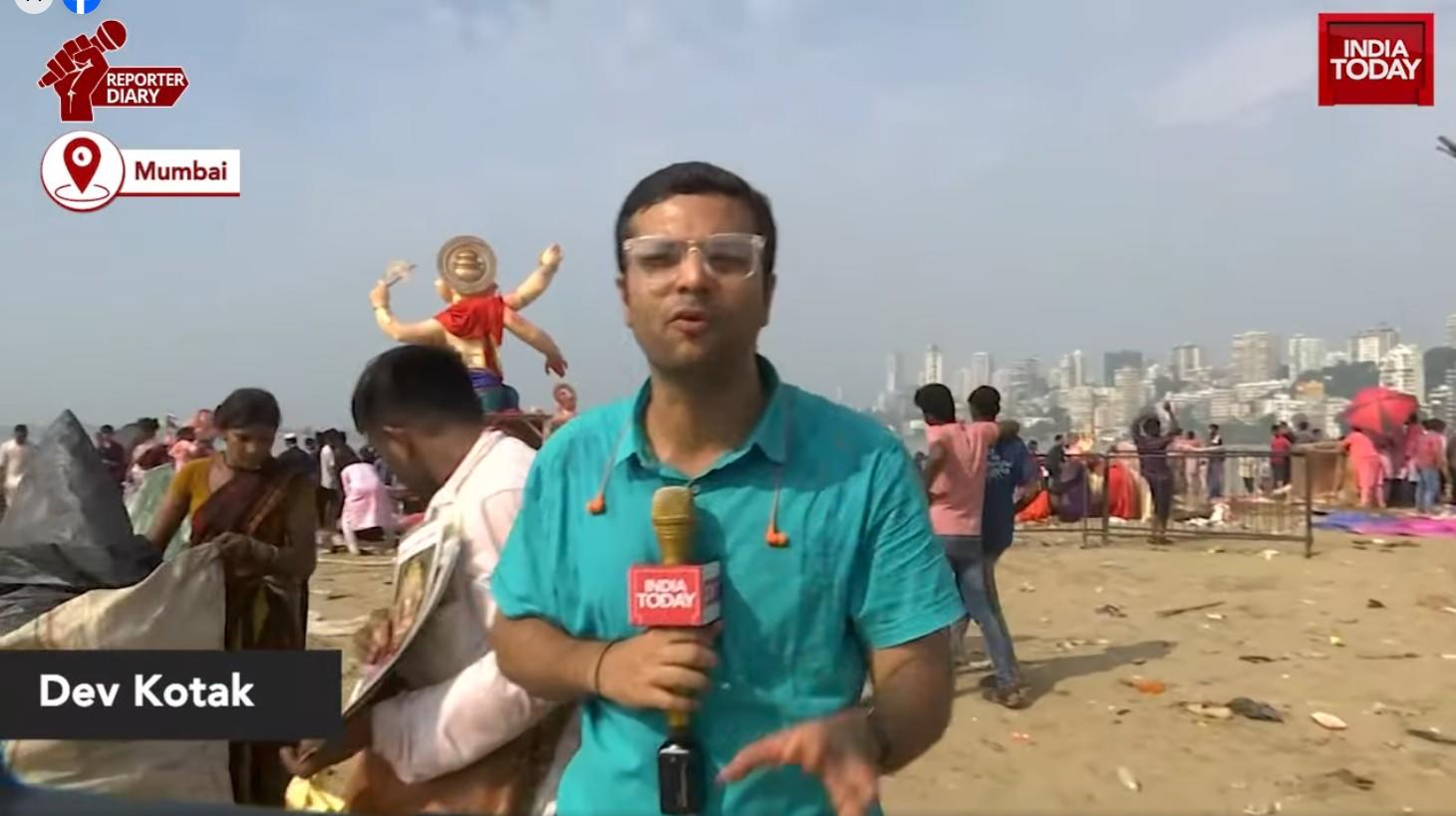
(Image source: post by @IndiaToday on Facebook.)