Is there a real CVE record "CVE-2026-42069" about a critical issue and an exploit called "HTML2Shell" that documents remote code execution in HyperText Markup Language (HTML)? No, that's not true: A viral joke image re-uses the CVE-2026-42069 record number of a real CVE advisory about the open-source publishing software Kirby. The image contained a clear reference to an in-joke among programmers and the account that published the image later made remarks indicating it was a joke.
The image appeared in a post on X (archived here) published on October 24, 2026. The text of the post read:
Ugh now we have html2shell?
The image in the post looked like this:
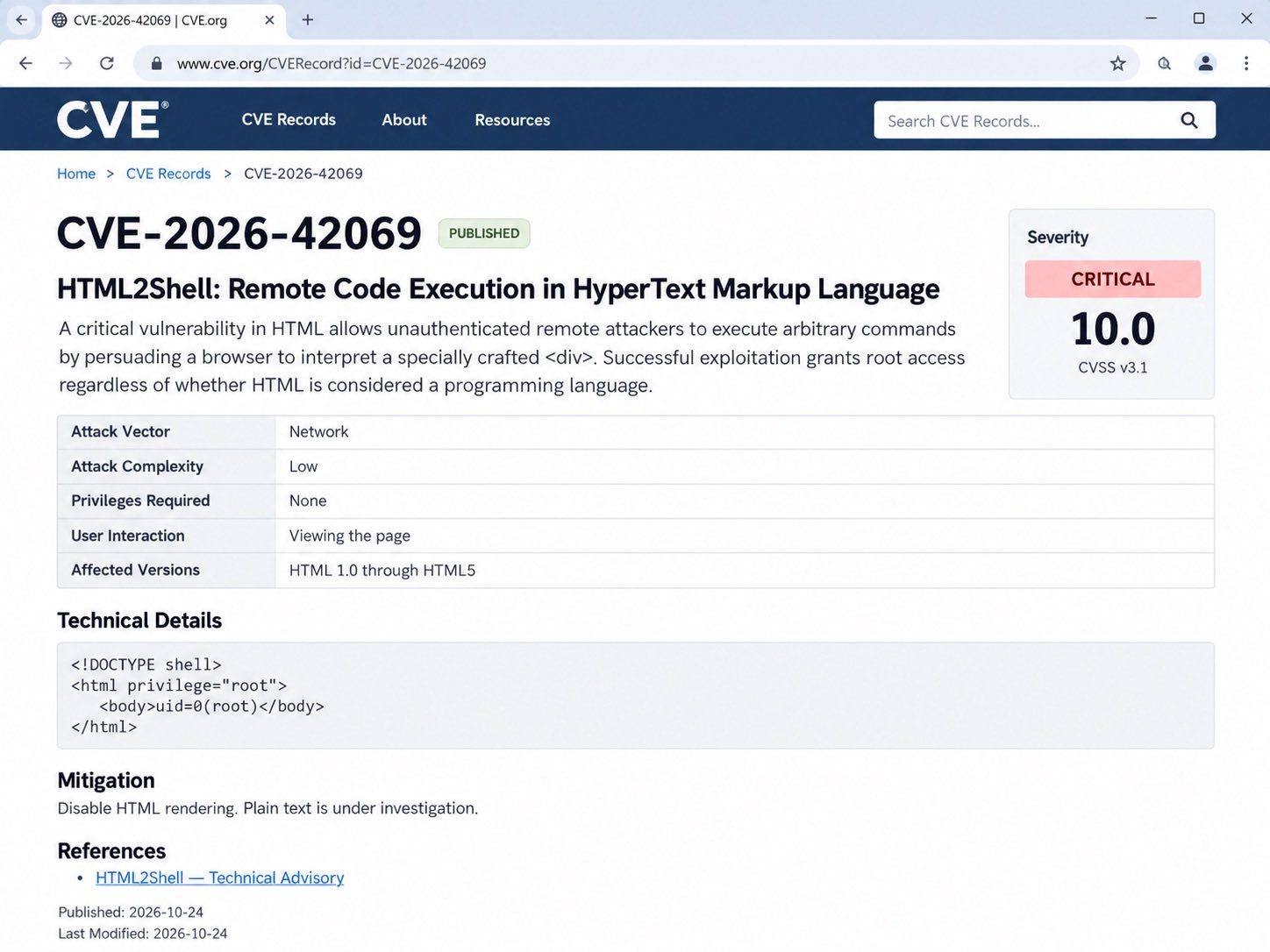
(Image source: post by @polydaic on X.)
It used a layout and wording similar to the ones used in records on CVE.org, a website used by IT security specialists that maintains a list of Common Vulnerabilities & Exposures (archived here) in various software tools.
The image gave the fictitious issue a 10.0 "critical" rating on the scale of severity used by the site, the highest one possible, and described it as:
HTML2Shell: Remote Code Execution in HyperText Markup Language
A critical vulnerability in HTML allows unauthenticated remote attackers to execute arbitrary commands by persuading a browser to interpret a specially crafted <div>. Successful exploitation grants root access regardless of whether HTML is considered a programming language.
There is an actual CVE-2026-42069 (archived here) but it is about an issue in a piece of open-source software named "Kirby".
The question whether "HTML is considered a programming language" is a programmer in-joke (archived here), often used to tease and mock designers for not being "real" programmers.
When asked by another X user how many people she believed were "going to believe this", the original poster replied with "Too many lol" (archived here), further indicating the post was a joke.
@tmaiaroto Too many lol
-- Arielle (@polydaic) October 25, 2026
The joke was likely a response to recent events involving the discovery of a severe vulnerability in the PHP programming language that caused worldwide security issues.