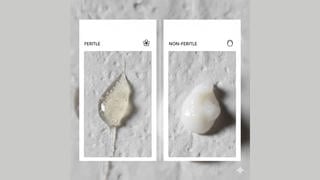
Does a real image showing blobs of material, both clear and creamy, provide information about human fertility? No, that's not true: Hive Moderation determined the image was 99.9% likely to be AI-generated, and Google's SynthID detection tool confirmed it was made with Google AI. Aside from the misspelled labels "feritle" and "non-feritle", the image does not provide additional information about what the example illustrates.
The claim appeared in a post (archived here) by the @AnnUdoh5 account on X on Oct. 20, 2026. It read:
Please explain this @grok
This is what the post looked like on X at the time of publication:
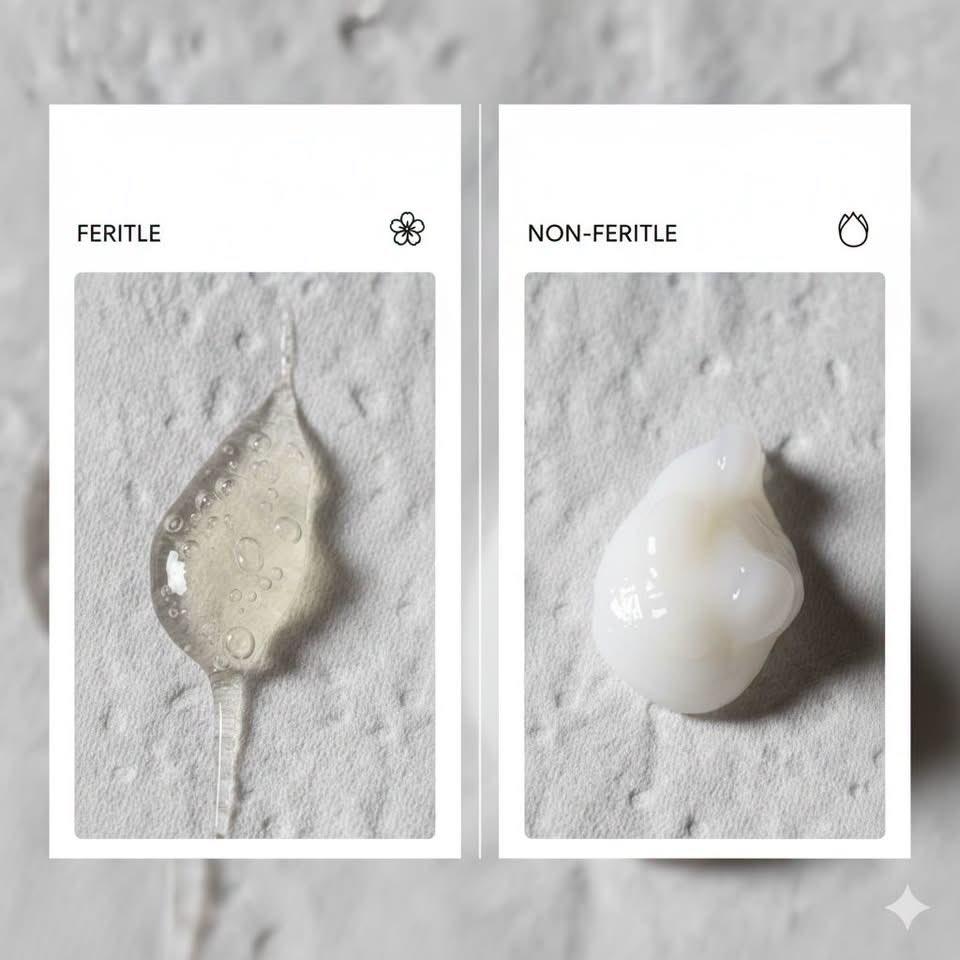
(Image source: post by @AnnUdoh5 on X.)
There is a four pointed sparkle icon (archived here) in the lower right corner of the image that represents something made with Google AI. Lead Stories uploaded the image to two AI-Generated content detection tools and both determined the image was likely AI-generated.
The Hive Moderation tool (archived here) determined the input was 99.9% likely to contain AI-generated or deepfake content.
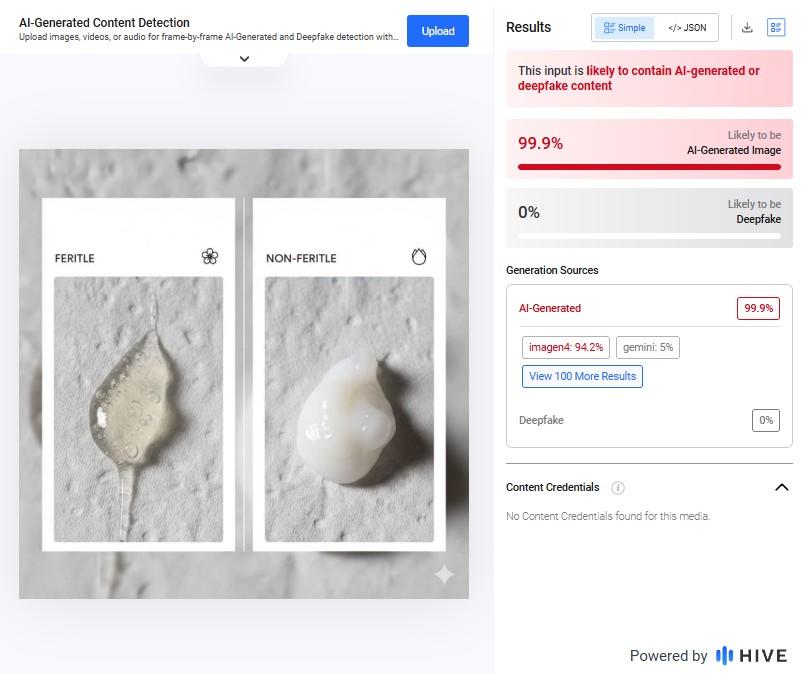
(Image source: Hive Moderation.)
The SynthID Content Detection Tool hosted by Google detected the invisible digital watermark developed by Google DeepMind (archived here). The watermarking system is used by AI tools from various SynthID partner platforms: Nvidia, OpenAI, Google and Kakao. In this case, the detection tool confirmed that the image was made with Google AI (archived here).
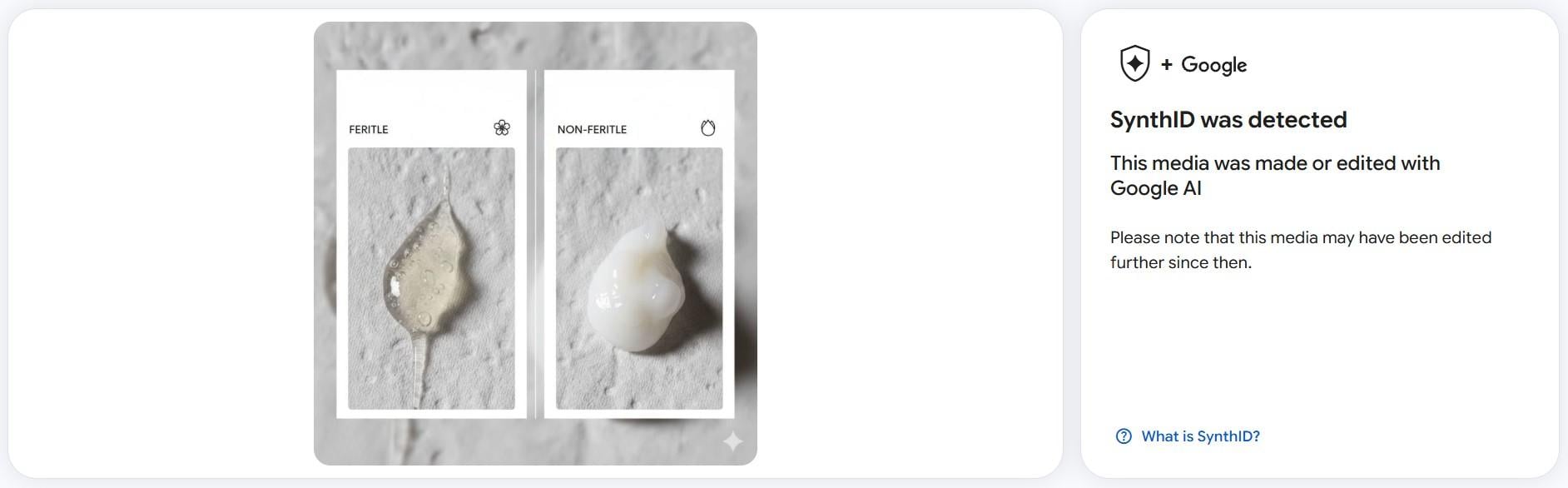
(Image source: SynthID.com.)
Neither the post caption nor the image caption explains what it is that is pictured. The two examples on top of what appears to be toilet paper show two raised globs of material, one clear, one opaque white. The examples most likely represent cervical mucus at different stages of the menstrual cycle, though the image does not state this. A person might think these show semen (or ejaculate), which can also vary in color and consistency (archived here) -- in which case the fertile and non-fertile labels on the images could be problematically misleading.
An article (archived here) about cervical mucus from Cleveland Clinic reviews the changes through a typical 28-day menstrual cycle and how that corresponds to ovulation and the most fertile time. It begins:
Cervical mucus is a fluid your cervix makes. Your cervical mucus changes throughout your menstrual cycle. Wet and slippery cervical mucus indicates fertility. This type of discharge makes it easy for sperm to swim to an egg at ovulation. Some people find charting their cervical mucus helps identify when they're most likely to conceive.
The article has a medical illustration (pictured below) depicting how the cervical mucus may appear during 14 days of a typical 28-day menstrual cycle. The cervical mucus is depicted on fingertips to illustrate both the color and consistency.
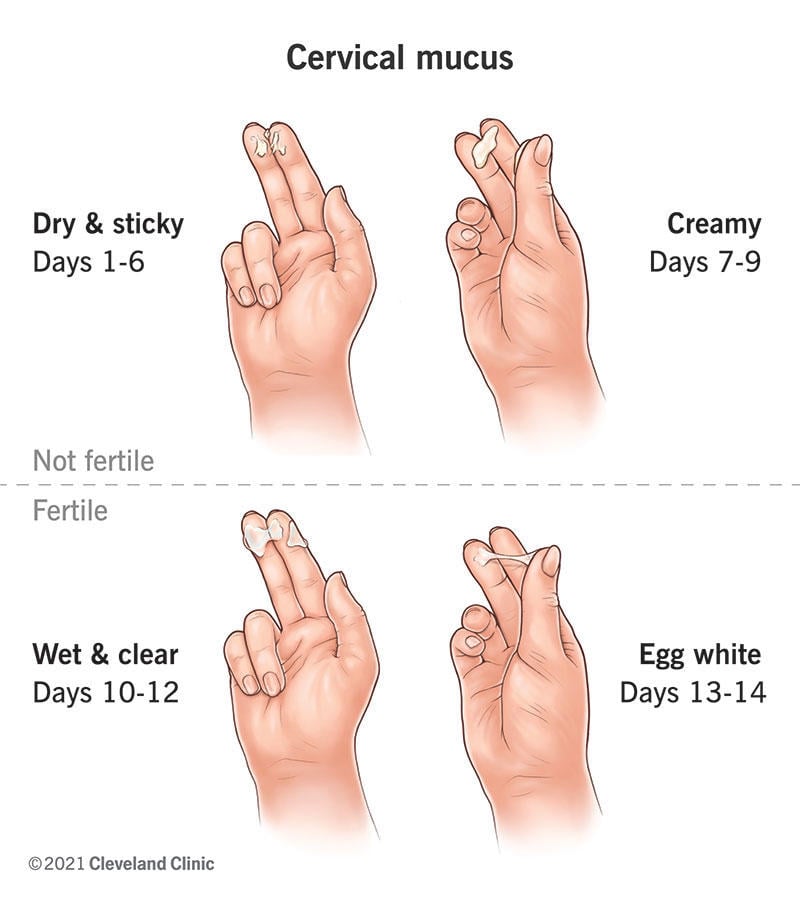
(Image source: Cleveland Clinic.)