
Is this a real image released by Iran of Supreme Leader Ali Khamenei's body being pulled from under rubble by rescue workers? No, that's not true: The image contains a SynthID watermark indicating it was generated in whole or in part using AI, according to Google's Gemini tool. The image did not appear on any Iranian websites, according to Google's image search.
An example of the viral image appeared in a post on X (archived here) where it was published on March 1, 2026, with a description that read:
🚨IRAN RELEASES IMAGE OF KHAMENEI'S BODY BENEATH RUBBLE
This is what the image looked like:

(Image source: post by @silvertrade on x.com)
The composition of the photo shows an unlikely scene: None of the rescue workers seem to have the slightest interest in the body, instead peering intently at the rubble. And the man on the right seems to be adding his full body weight to the large piece of concrete pressing down on the victim in order to remove a relatively small piece of debris.
Lead Stories uploaded the image to Google's Gemini (conversation archived here) which used the watermarking tool SynthID (archived here) ("A tool to watermark and identify content generated through AI") to determine if the image was edited or generated with Google's own AI tools:
Gemini said:
This image contains a SynthID watermark, which indicates that it was either fully generated or partially edited using Google's AI tools.
In addition to the watermark, there are several visual cues that are often characteristic of AI-generated content. For example:
The person's hand: In the foreground, the hand resting on the wooden beam has six fingers, which is a common artifact in AI-generated images.
Anomalous objects: Some of the structural elements, like the way the metal rods emerge from the concrete or the positioning of the wooden beams, appear physically inconsistent or distorted upon close inspection.
Lighting and texture: The light from the headlamps creates some unusual glows and shadows that don't always align perfectly with the surrounding environment.
The image also features two visible watermarks in Arabic, which can be easily added to any digital file and do not confirm its origin. To learn more about how SynthID works to identify AI-generated content, you can visit
. support.google.com/gemini?p=synthid
We have to note that in our count we only saw five fingers on the hand but a SynthID watermark is pretty strong evidence for an image being edited with AI.
Lead Stories also performed a reverse image search on the picture using Google Image search that was limited to websites on the Iranian ".ir" country code and none of the results that were returned (archived here) were from Iranian websites, X accounts or Facebook pages.
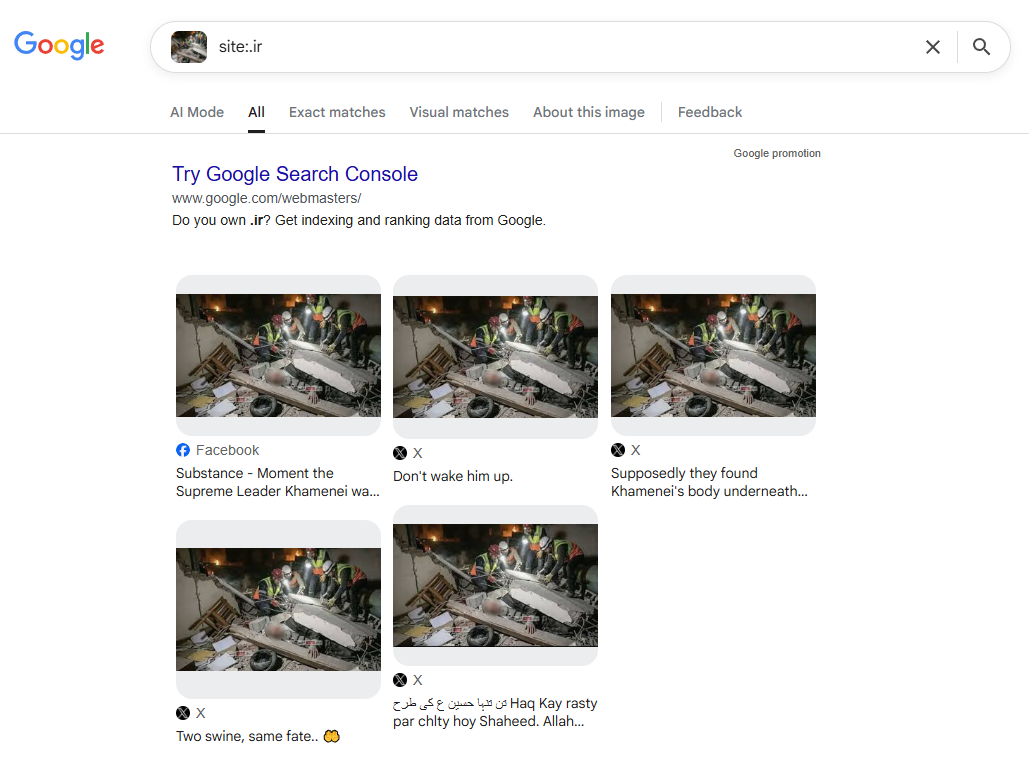
(Image source: Google Image search for the image in question, limited to Iranian websites)
The Hive Moderation AI-Generated Content Detection tool also concluded the image was 64.1% "likely to be AI-generated," with the strongest signal detected indeed being for Google's Gemini3 model:
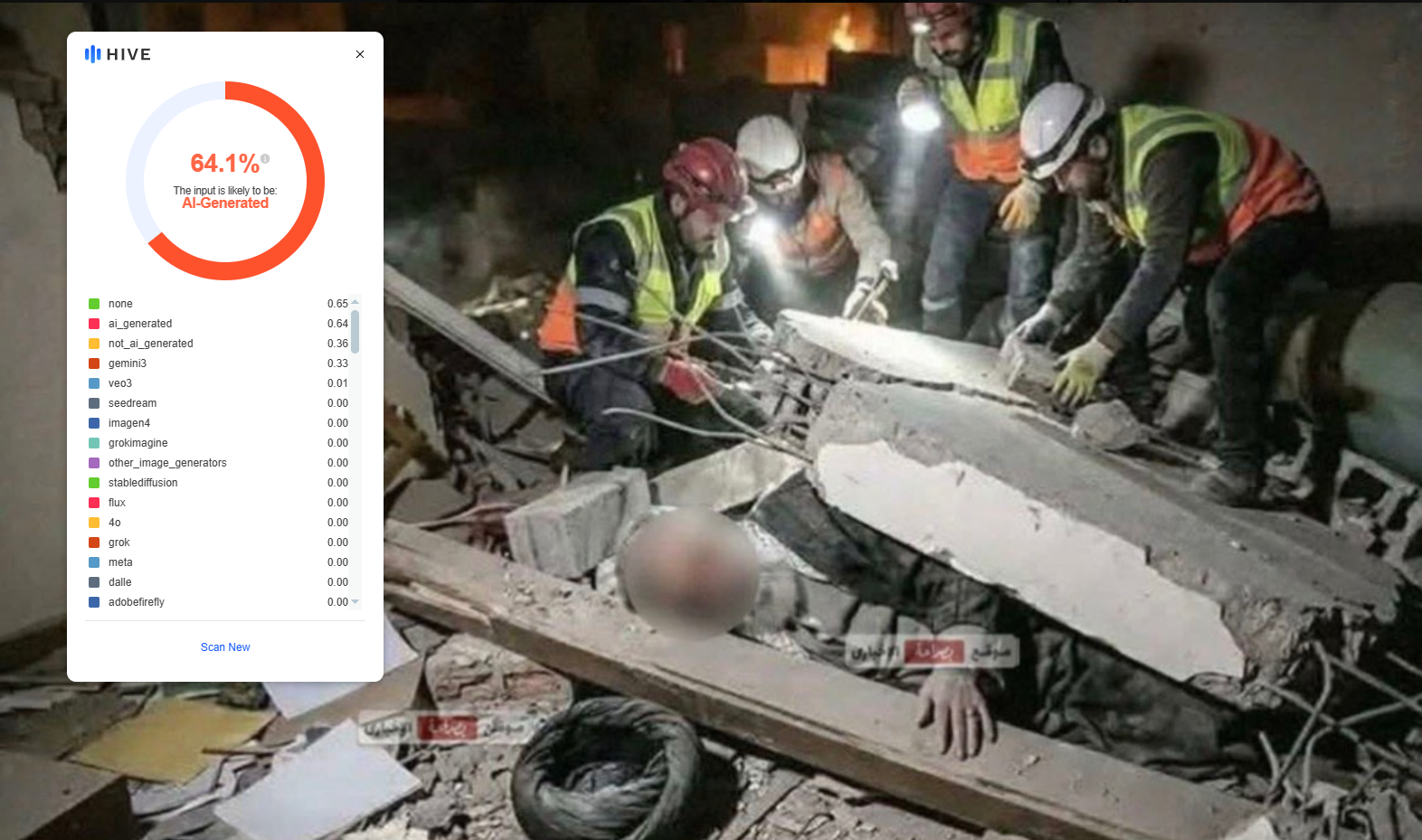
(Image source: Lead Stories screenshot hivemoderation.com's Chrome browser plugin)