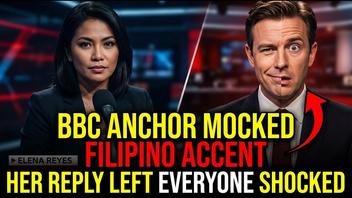
Does a viral video on YouTube discuss a real-life scandal involving BBC host "James Whitmore" mocking Filipino Doctor "Elena Reyes" for her accent? No, that's not true: The story was made up by AI. Multiple online tools detected AI across different elements of the story, and the BBC website showed no record of either the host or the guest.
The claim appeared in a video (archived here) published on YouTube on April 11, 2026. It opened:
BBC Anchor Mocked Filipino Woman's Accent - Her Reply Left Everyone Shocked.
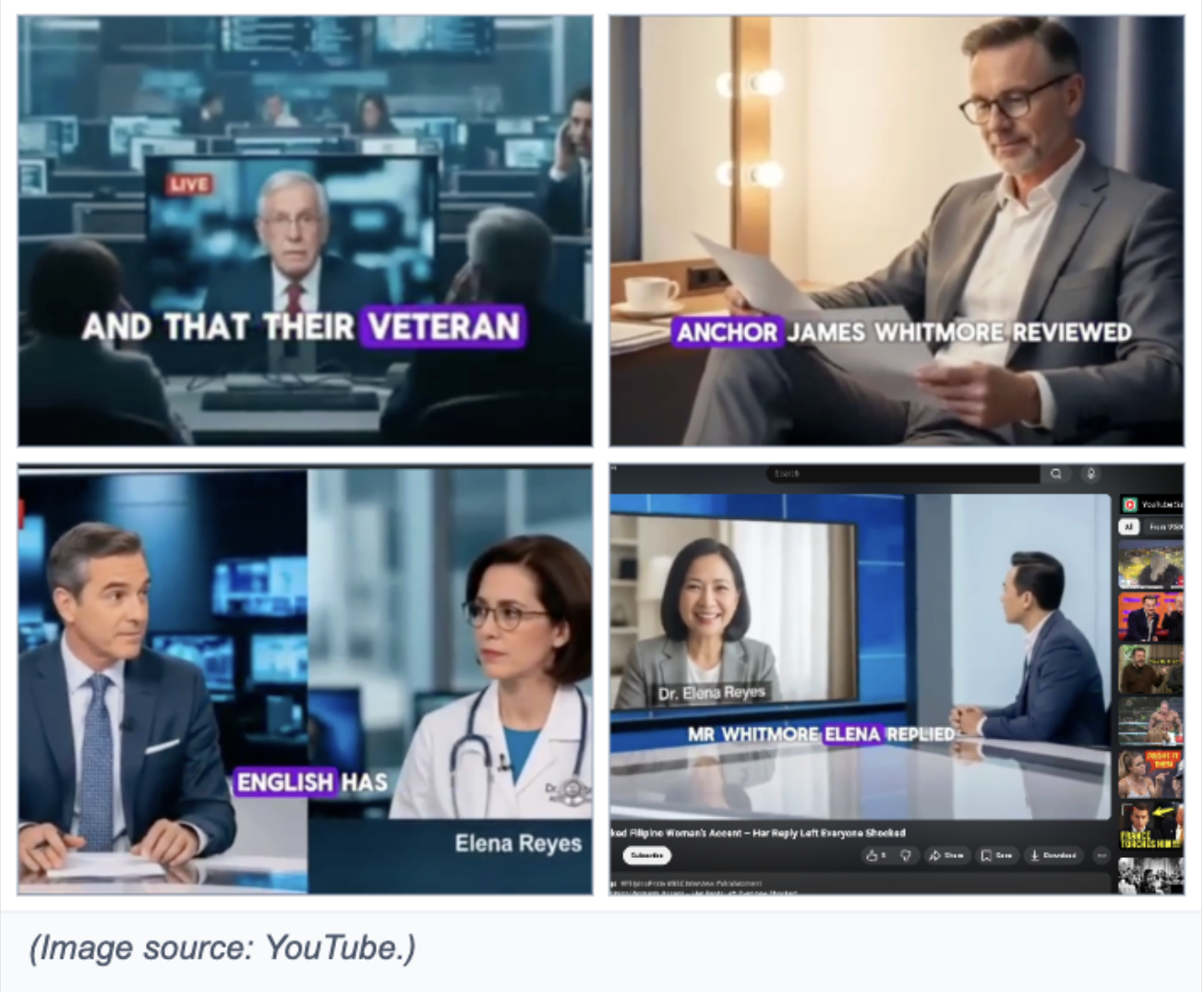
This is what the thumbnail from the video looked like on YouTube at the time of writing:
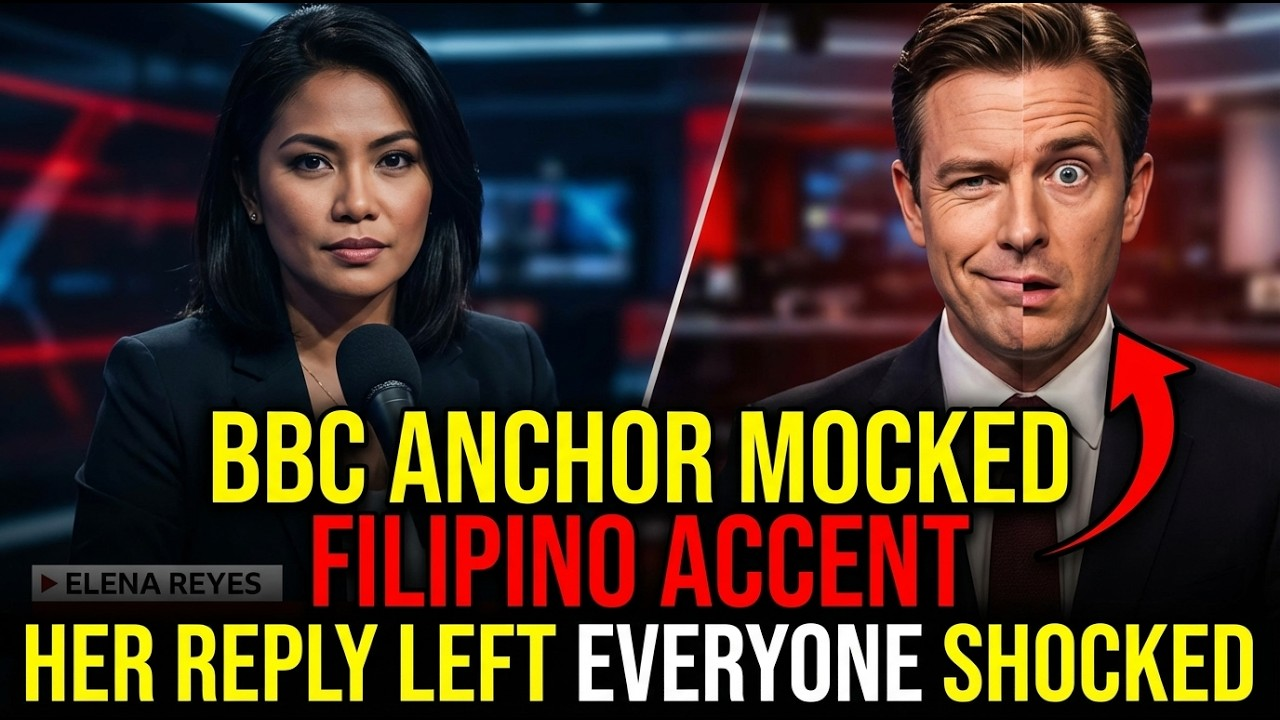
(Image source: post by VISION PRO on YouTube.)
In the clip, the voice-over continued:
It started as what should have been a routine segment on BBC World News. The producers had lined up a simple 5-minute interview about language diversity in former British colonies. They found their guest, Dr. Elena Reyes, a Filipino professor of linguistics from the University of the Philippines, and scheduled her for the morning broadcast. What the BBC didn't anticipate was that those 5 minutes would turn into the most-watched clip in their digital history, and that their veteran anchor would become a global example of what not to do on live television.
The morning of the interview, anchor James Whitmore reviewed his notes with the confidence of someone who'd conducted thousands of interviews. He was known for his sharp wit and occasionally cutting remarks. 'Good morning, Dr. Reyes,' James began as her face appeared on the split screen. 'Thank you for joining us.'
'Good morning, Mr. Whitmore,' Elena replied with a warm smile. 'I'm happy to be speaking with you.' James chuckled, glancing at his notes. 'Now, you're here to talk about English in the Philippines. I must say, I find it fascinating how English has... evolved in different parts of the world.' The way he said 'evolved' carried a weight that didn't go unnoticed. In the BBC control room, one of the younger producers shifted uncomfortably.
Elena maintained her composure. 'Yes, language is always evolving. That's what makes it so beautiful.'
'Indeed,' James said, leaning back with an expression that suggested he was about to make a clever point. 'But tell me, Dr. Reyes, when you say Filipinos speak English, do you mean they speak actual English, or is it more of a... creative interpretation?' The control room went silent. It was live. There was nothing they could do now. Elena's smile didn't waver.
'I'm not sure I understand what you mean by 'actual English, Mr. Whitmore.' Could you clarify?' James waved his hand dismissively. 'Well, you know, proper English. The King's English. Not to be rude, but there is a certain standard, wouldn't you agree?'
'A standard set by whom?' Elena asked, her voice pleasant but carrying an edge. 'Well, by the English, naturally,' James replied with a slight laugh. 'We did invent the language, after all.'
Elena nodded slowly. 'That's interesting. So you're suggesting that the English have ownership over English?' 'I wouldn't say ownership, but certainly... authority. We are the native speakers.'
'Mr. Whitmore, there are approximately 70 million native English speakers in the United Kingdom,' Elena said, her tone shifting to that of a professor. 'In the Philippines, we have over 90 million people who speak English.'
When Lead Stories ran the text of the voice-over through the GPTZero AI detection tool, it was 100% confident that AI generated the story:
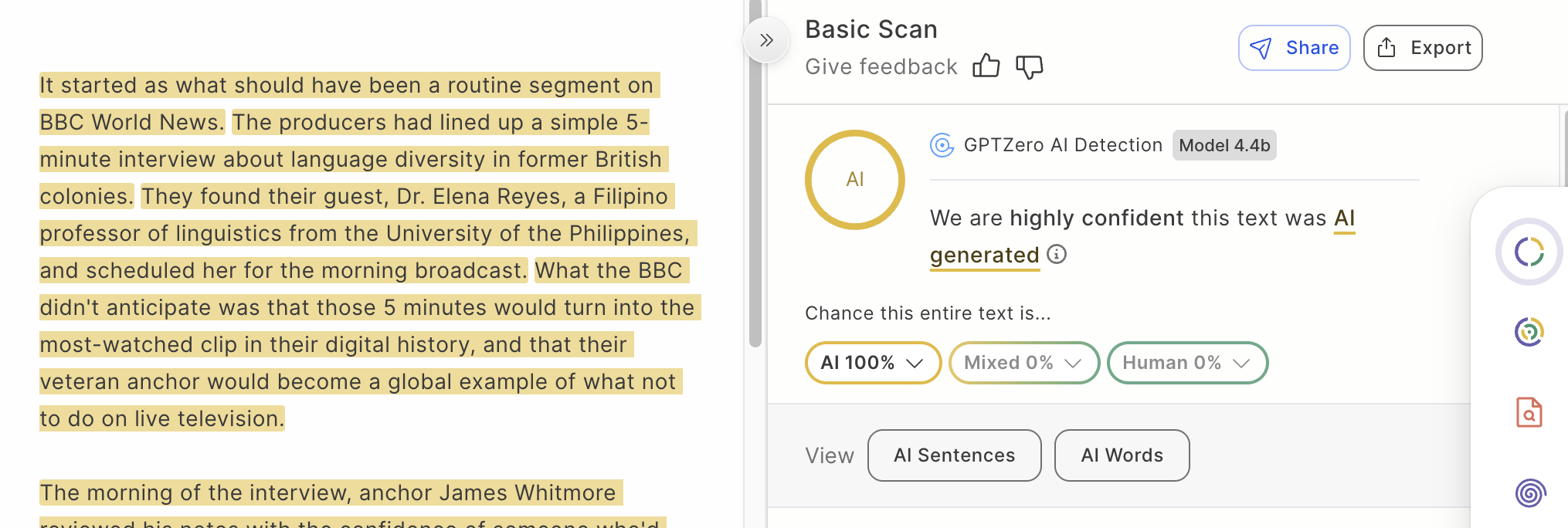
(Image source: GPTZero.)
The Hive Moderation plugin said that the content of the narration was 99.1% likely to have been produced by AI:
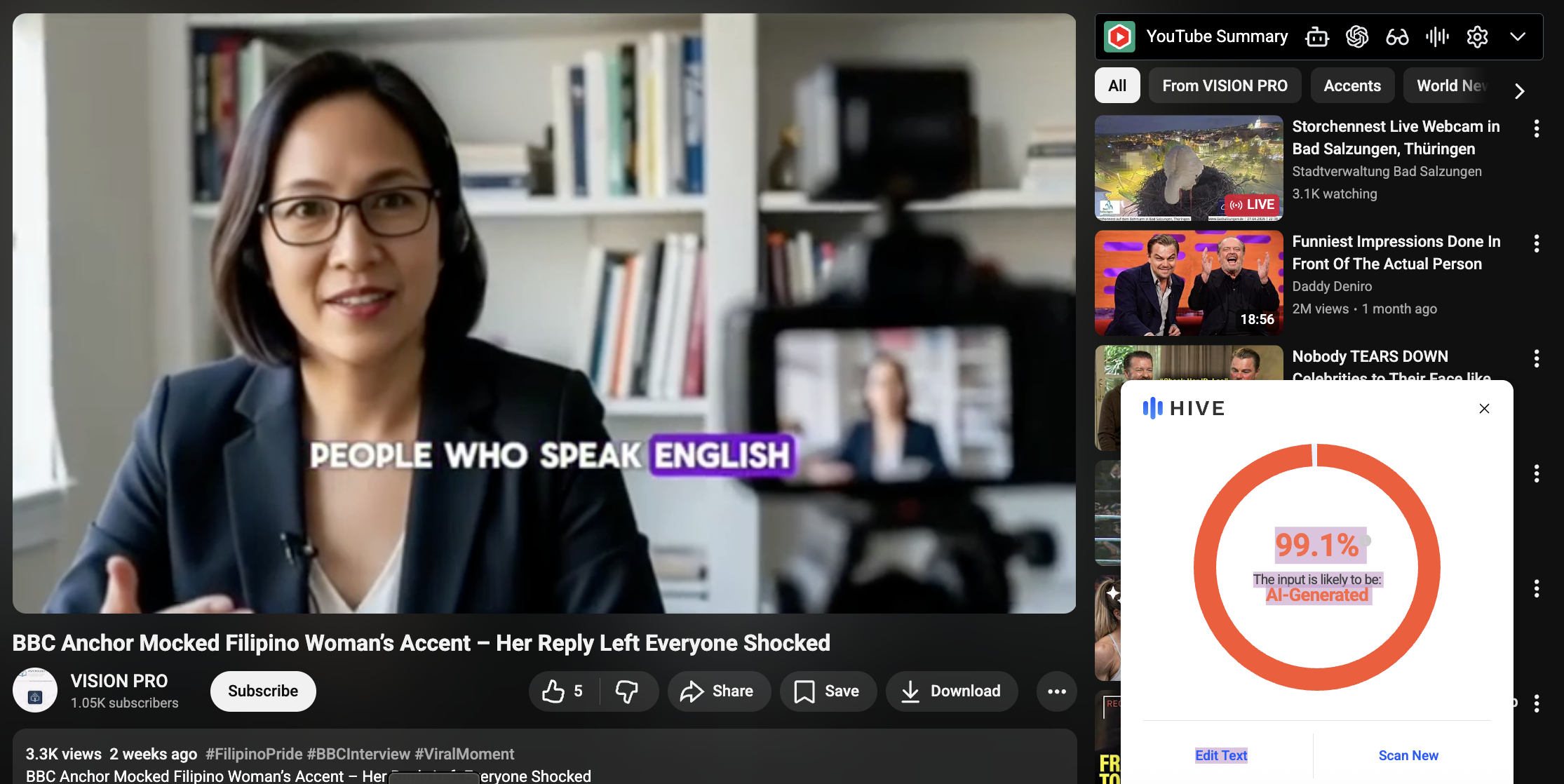
(Image source: Hive Moderation.)
When Lead Stories ran the video's sound through the InVID verification plugin, the tool concluded the odds of the narration being the product of the AI-powered voice cloning technology were 99%:
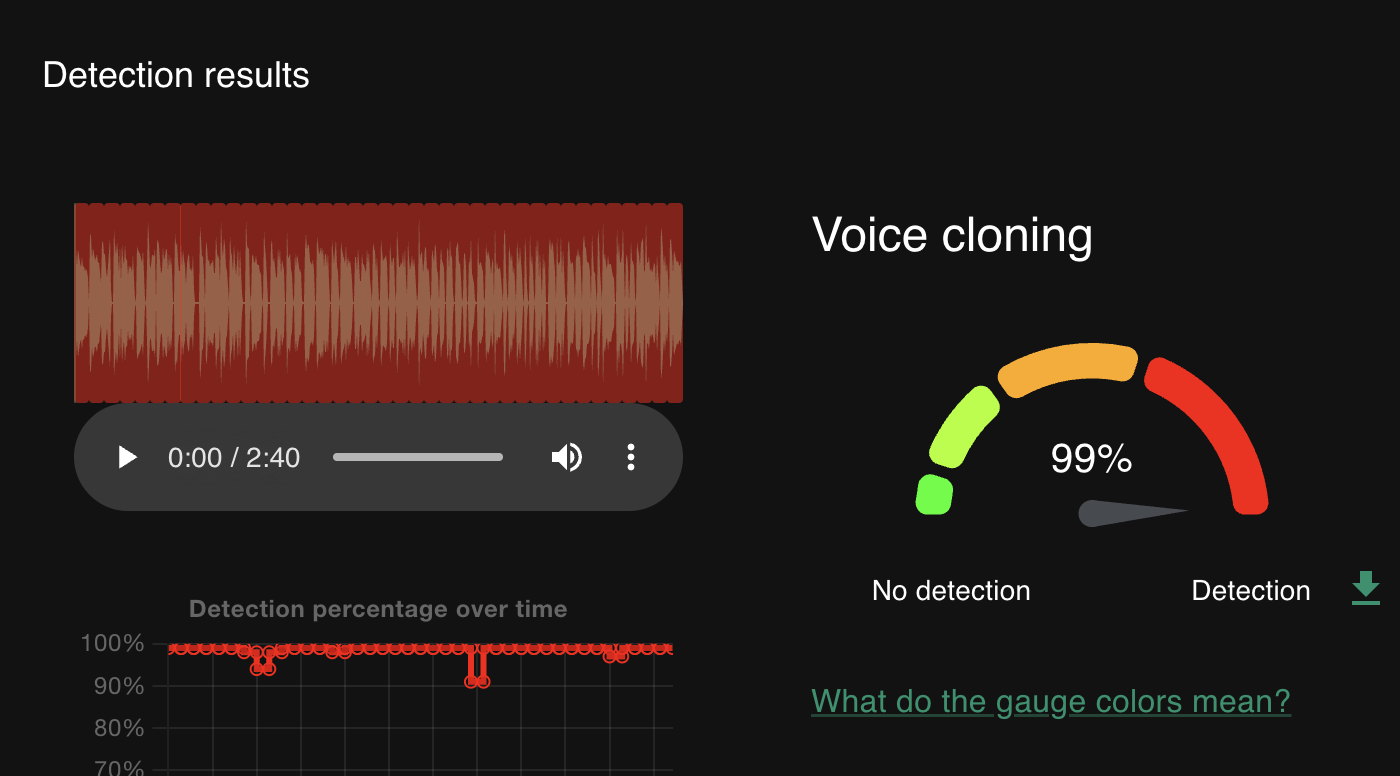
(Image source: InVID.)
Hive Moderation said that the sound was 99.2% likely to have been created by AI:
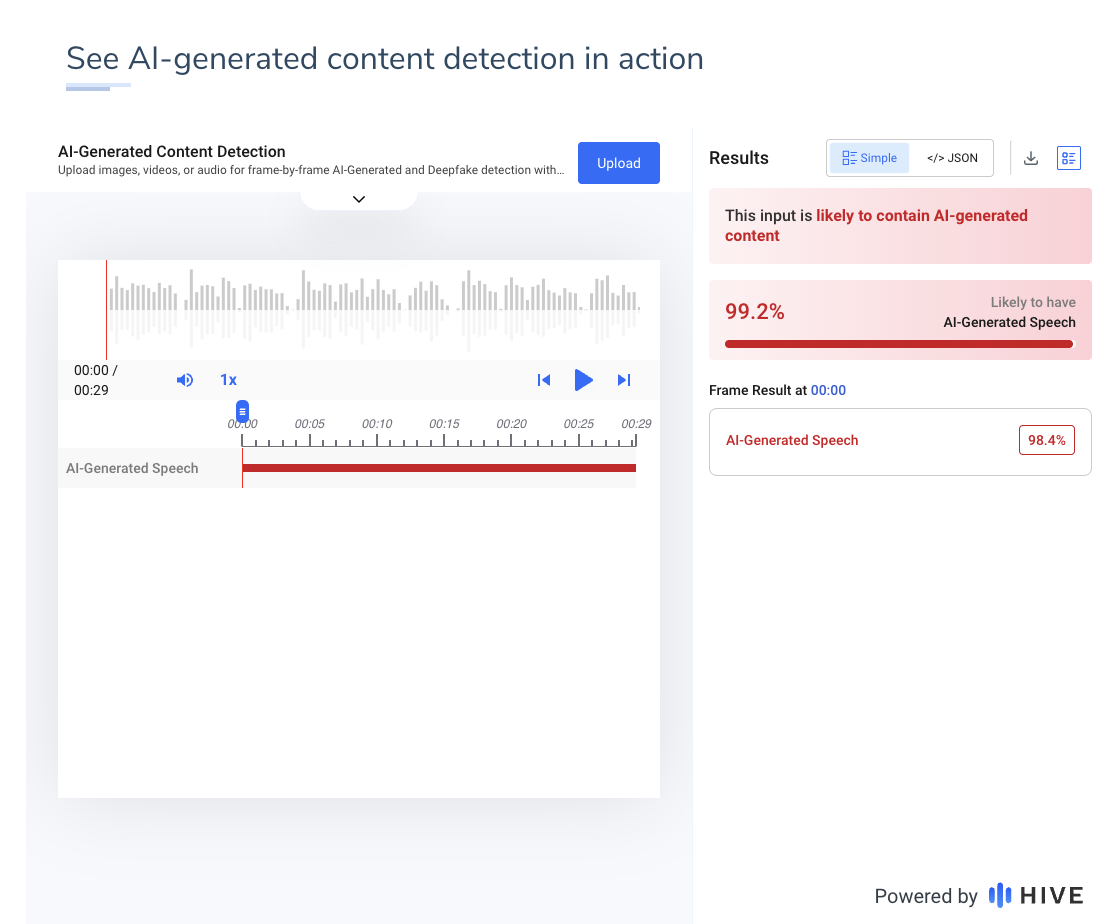
(Image source: Hive Moderation.)
A Google search across the BBC website for the supposed professor's name (archived here) produced one result, but that was a 2017 report (archived here) that was published under the title:
Chungo and Toño, the young men who spent six months missing at the hands of the Salvadoran police.
The article did not discuss anything related to the Philippines. "Maria Elena Reyes," mentioned in the story, was not a professor -- she was a victim of gun violence who had already passed away from her wounds when the 2017 BBC article was published.
Lead Stories searched the website of the University of the Philippines, but Google didn't lead to a match for the person mentioned in the video in question (archived here).
A Google search across the BBC website (archived here) showed only news reports mentioning a different person: American actor James Whitmore (archived here) who died in 2009 (archived here).
In addition to the thumbnail, the video on YouTube discussing an alleged real-life media scandal offered at least four more variations of the supposed BBC host's appearance, who shape-shifted across ages and ethnicities in a matter of seconds. His guest, "Elena Reyes", did so too, switching from formal academic attire to the medical professional uniform, despite the claimed degree in linguistics, a field totally unrelated to medicine: