

Does a real video show a live transparent squid and the organs inside its body? No, that's not true: Google's Gemini detected SynthID signals, determining the video was made with Google AI. There is a type of squid known as a glass squid, which make up the family Cranchiidae and include about 60 species. While the video is fake, there really are squid with mostly transparent bodies, an adaptation which serves as a type of camouflage.
The fake video appeared in a post (archived here) published by the X account @ScienceThing5 on June 30, 2026. It was captioned:
The real invisible man of the ocean. Incredible transparency! 🕵️♂️🐙 Truly a sight to behold.
This is a screenshot from the video:
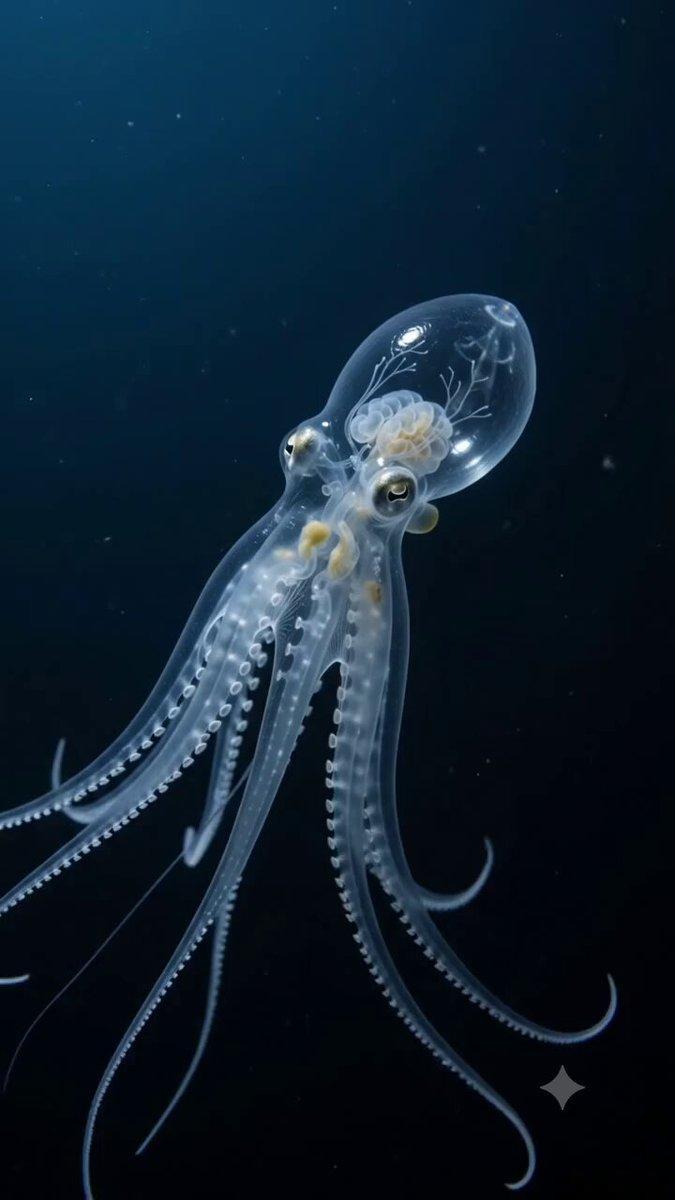
(Image source: @ScienceThing5 post on X.)
In the lower right corner of the screenshot above is the sparkle icon of Google Gemini. An article from Google Design titled, "All That Sparkles Is AI" explains how Google's use of the four-pointed sparkle to represent AI has expanded over the years (archived here). Lead Stories uploaded the video clip to Google Gemini and asked if it had been made with AI (archived here). The response is pictured below:
The video you shared was edited or generated using Google AI, as indicated by SynthID signals detected in both its visuals and audio.

(Image source: gemini.google.com.)
Lead Stories also uploaded the video to Hive Moderation. The AI-generated content detection tool determined with 99.9% confidence that the video was made with AI (pictured below).
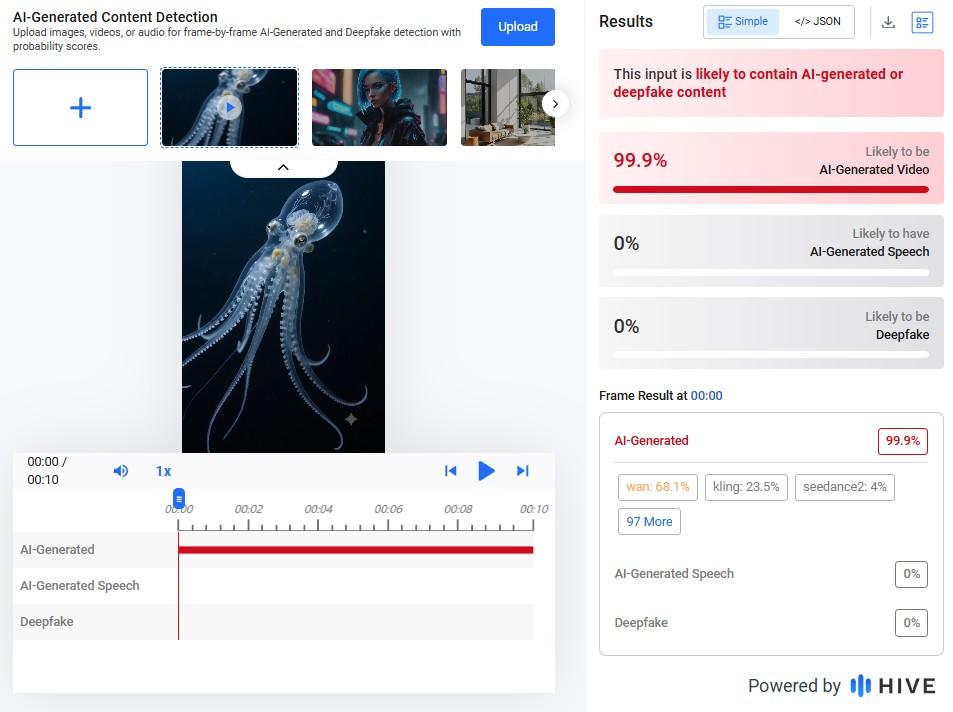
(Image source: Hive Moderation.)
The Monterey Bay Aquarium Research Institute (MBARI) has a page dedicated to the glass squid of the family Cranchiidae (archived here). The article describes the benefit of being transparent in this environment:
Glass squids (family Cranchiidae) live in the boundless waters of the twilight, or mesopelagic, zone. With no protective shell and nowhere to shelter, they need to get creative. Transparency is one way to thrive in a home with few places to hide.
Like other cephalopods, glass squids are covered in tiny pigment sacs called chromatophores. They often keep their chromatophores closed so their skin is basically see through. This invisibility cloak hides them from both predators and prey.
A video from MBARI (embedded below) shows a real glass squid and how the tiny pigment sacs help it become more or less transparent (archived here).