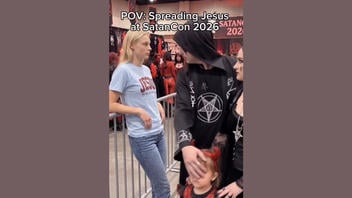
Have you come across viral videos showing how people mock influencers for wearing Christian-themed clothing? Lead Stories has identified several of these clips in recent weeks and determined that many were AI-generated. The people and scenarios depicted there were not real -- social media accounts posted this kind of content to play on religious sentiment, driving likes and shares as a way to promote products sold by a dropshipper.
This article is part of a series of stories examining various types of what is commonly called "AI-slop": short, vertical videos generated with artificial intelligence tools with the aim of going viral, often by exploiting the emotions or curiosity of the viewer with made-up content.
What these 'Mocked for Wearing Christian-themed clothes' videos look like
These clips tell very similar stories. A teenage-looking girl or boy in a hoodie or T-shirt with the word "Jesus" on it enters what is described a "Satan Parade" or a Pride-themed event. In response, participants stare at the person wearing Christian-themed clothes, make faces at them, yell or -- if that person was selling their merch -- spill coffee or red wine on the clothing items, or throw them on the ground and stomp on them. In some cases, couples in underworld or rainbow costumes covered their child's eyes with their hands to prevent the kid from seeing Jesus t-shirt or hoodies.
Some examples
At least two accounts on TikTok specialized in mass-producing such videos, but featured different main characters.
In one instance, the person wearing and selling Jesus-themed clothing introduced herself as "Lily" (archived here) and claimed (archived here, here and here) that it was her who makes FaithWearCo clothes.
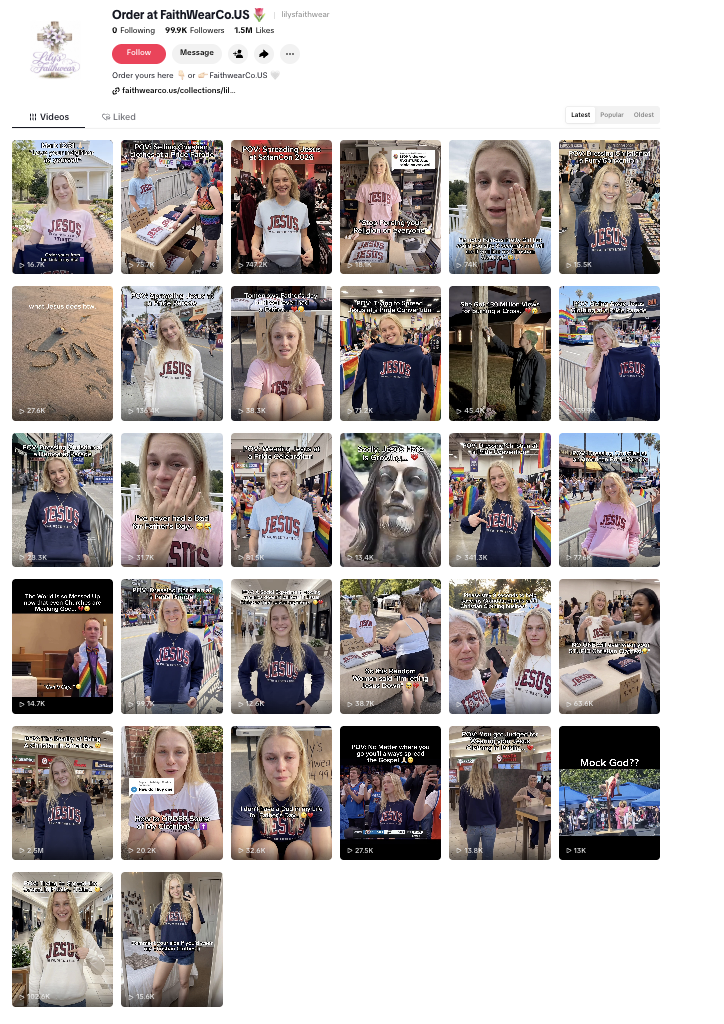
(Image source: @lilysfaithwear account on TikTok.)
We see "Lily" attending "a Satan Parade" (archived here and here):
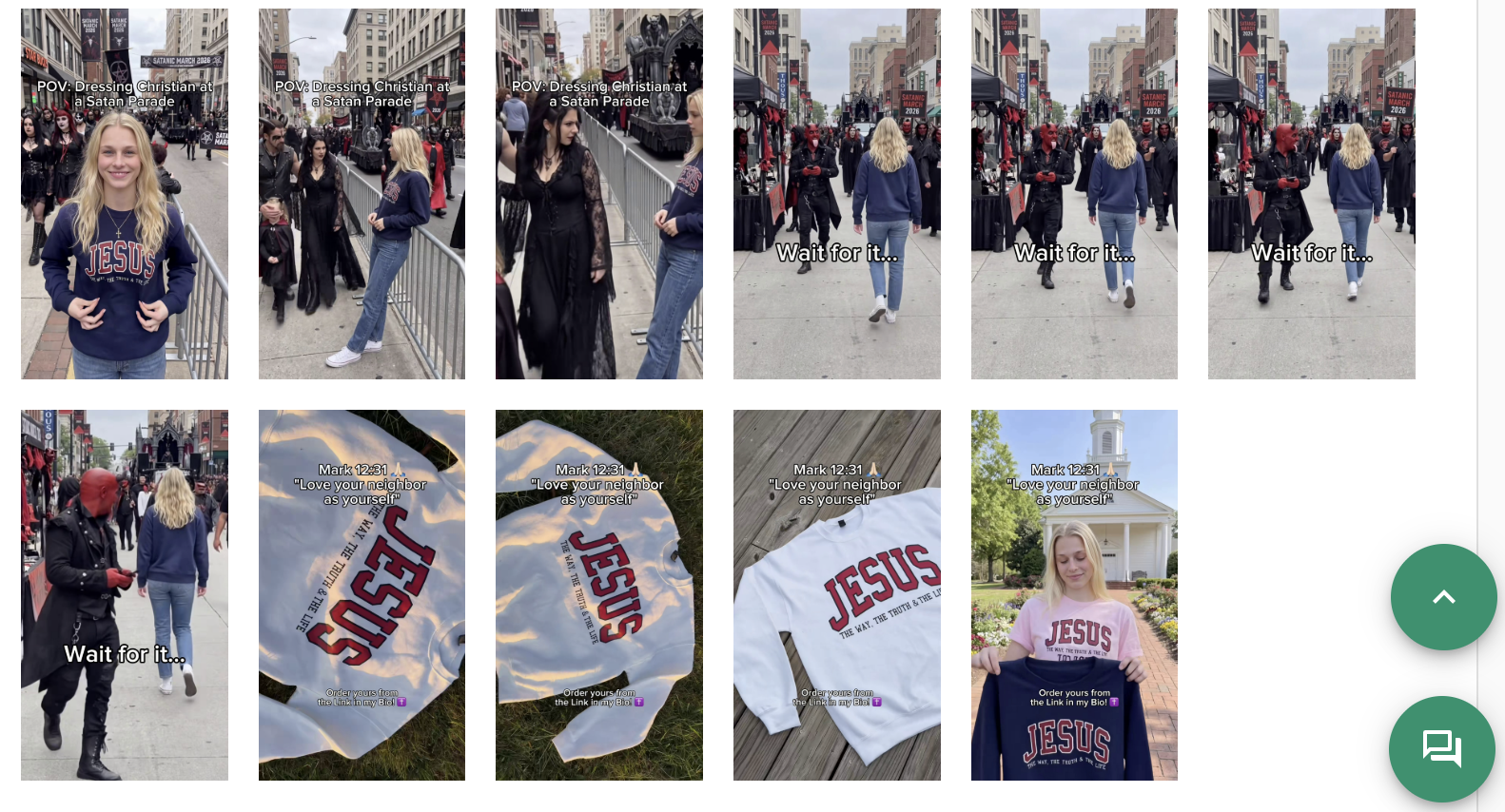
(Image source: post by @lilysfaithwear on TikTok via InVID.)
@lilysfaithwear i can't believe this is a real event 🥲
♬ original sound - Order at FaithWearCo.US 🌷
Here is her selling Christian-themed clothes at a Pride march (archived here, here and here):
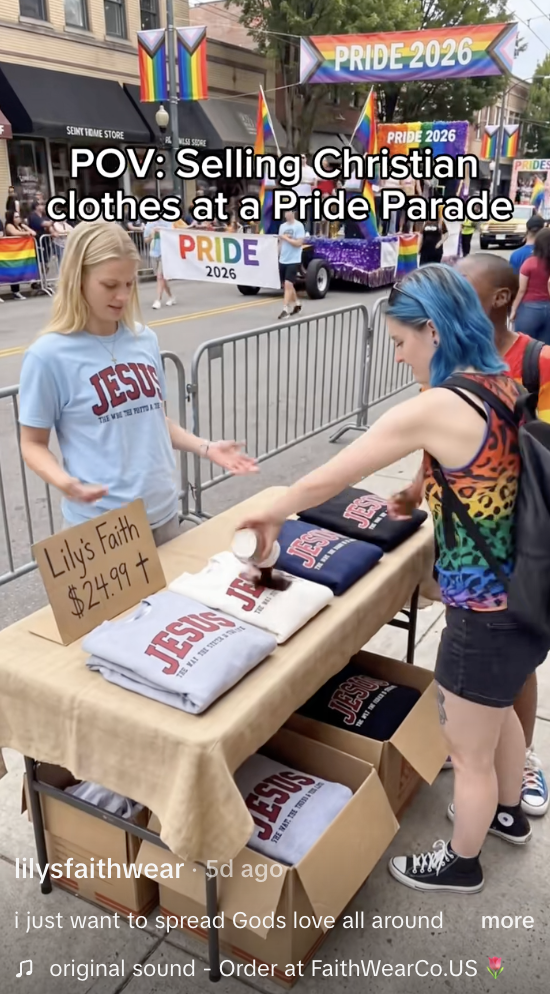
(Image source: post by @lilysfaithwear on TikTok.)
And here is "Lily" at a furry convention (archived here and here):
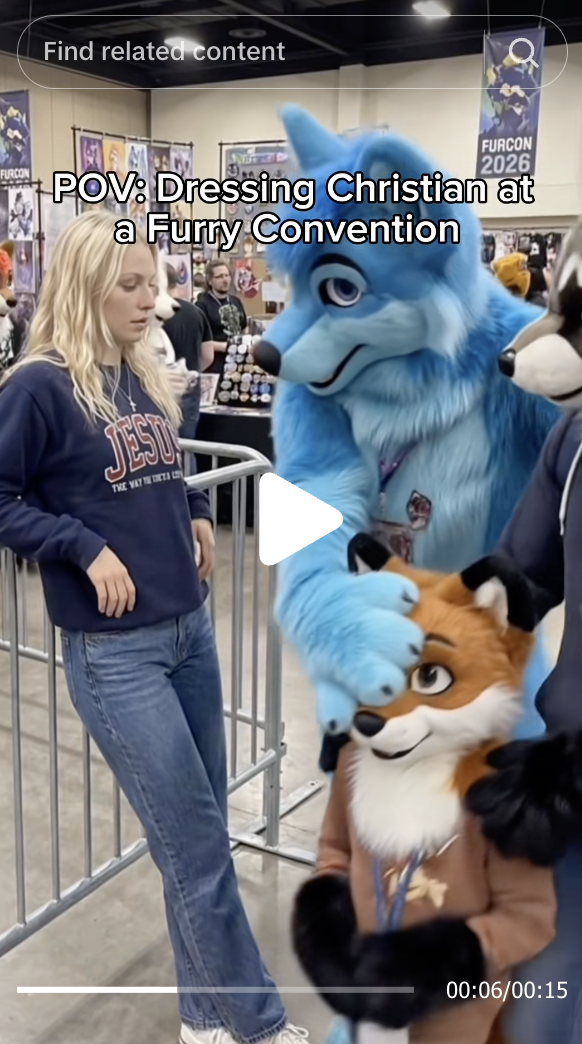
(Image source: post by @lilysfaithwear on TikTok.)
Another account (archived here) featured "Taylor" who also claimed (archived here and here) the ownership of FaithWearCo brand using words nearly identical to those of "Lily" in a similar video.
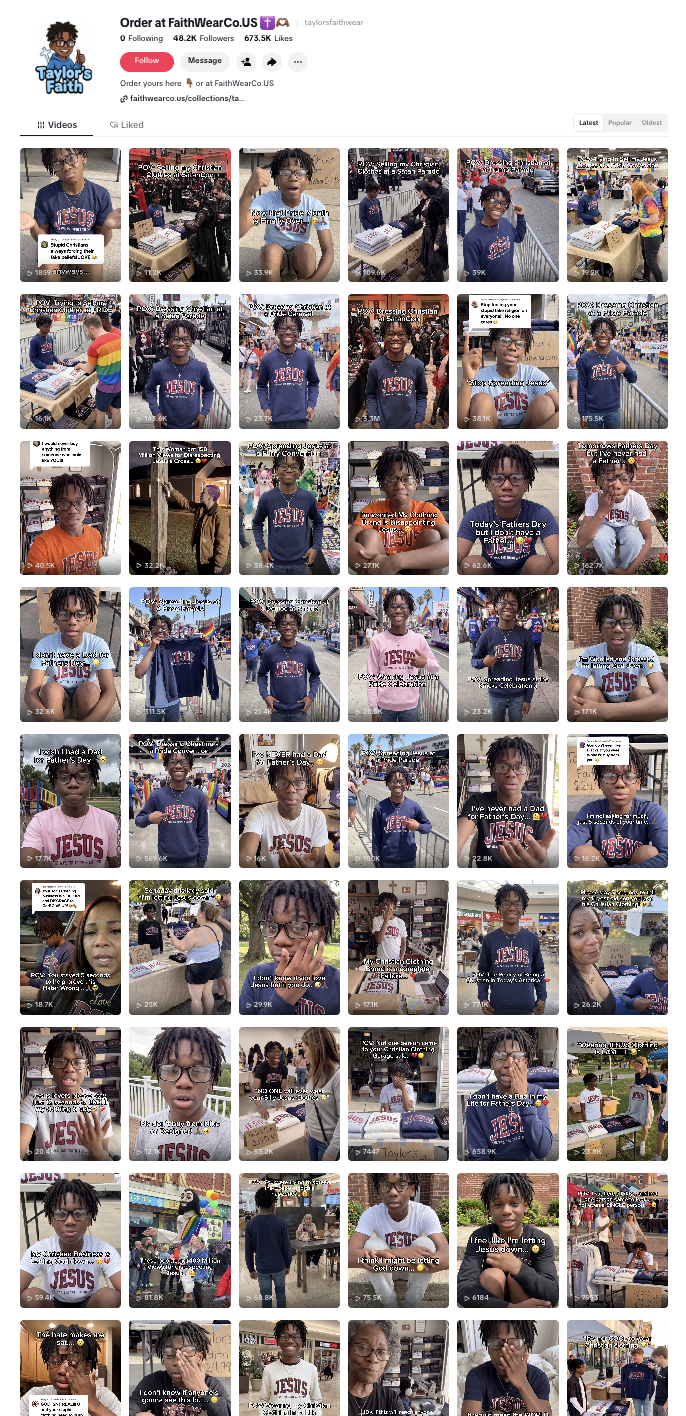
"Taylor" goes not only to Pride-themed events (archived here) and"SatanCon" (archived here) but also to other events such as "the Knicks celebration" (archived here) and a "Trump parade" (archived here). At the latter two, this character receives positive responses to his Jesus-themed outfit. Yet, such variations still don't make this "Taylor" real.
Keywords
Besides the accounts' names (@lilysfaithwear and @taylorsfaithwear), the type of videos reviewed in this prebunk were associated with the following hashtags and keywords: faithwear, faithwearco, #jesus, #christian, #jesusisking, #godisgood, #madeintheusa, #americanmade, #usa, #faithoverfear, #americaneedsjesus, #clothingbrand, #handmade, order at FaithWearCo.US, "Comment 'Amen'", "Comment 'Jesus'", "Would you wear one?", ✝️, 🙏🏾, 🇺🇸.
How to tell they are false
The videos tested by Lead Stories with the Sightengine AI detector scored close to 100% on the probability of them being artificially generated:
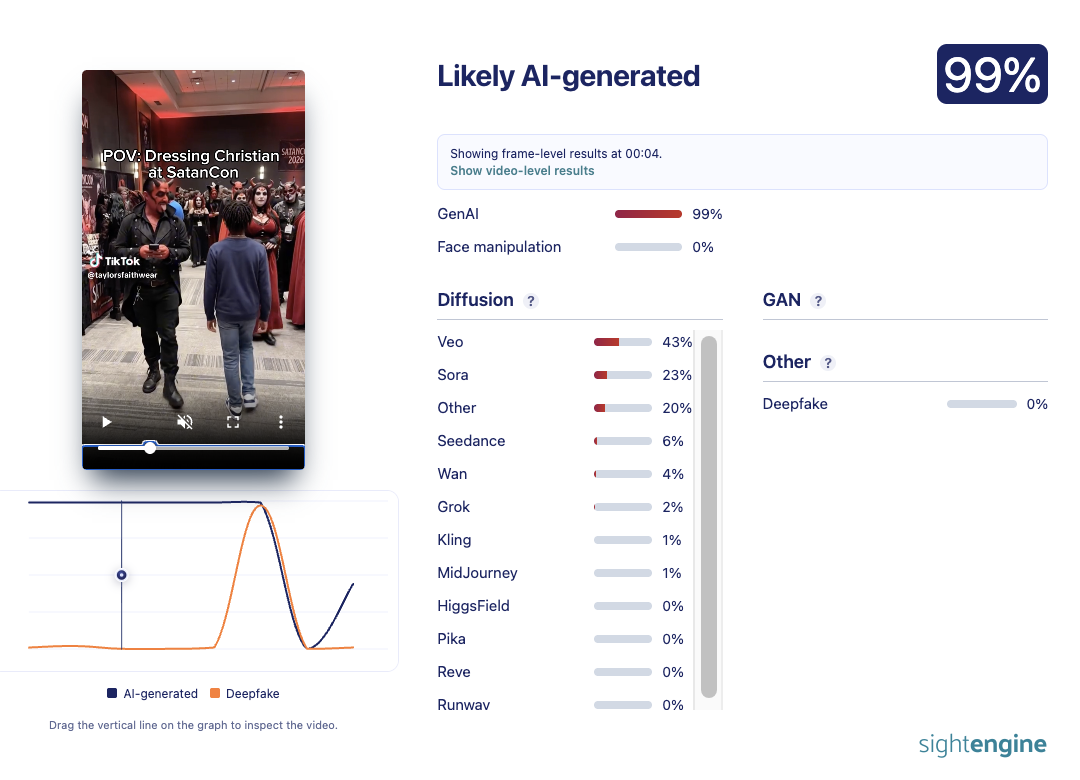
(Image source: Sightengine.)
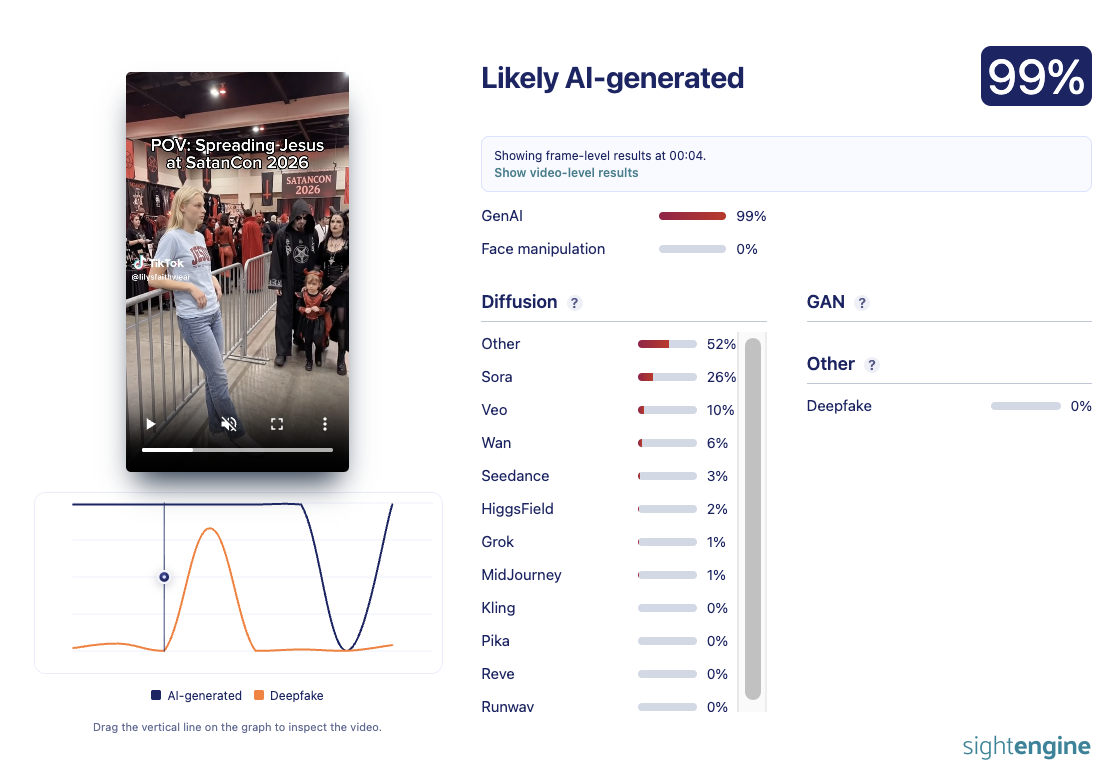
(Image source: Sightengine.)
Content that came from both accounts contained Google SynthID watermarks (archived here) that appear in AI-generated videos and photos:
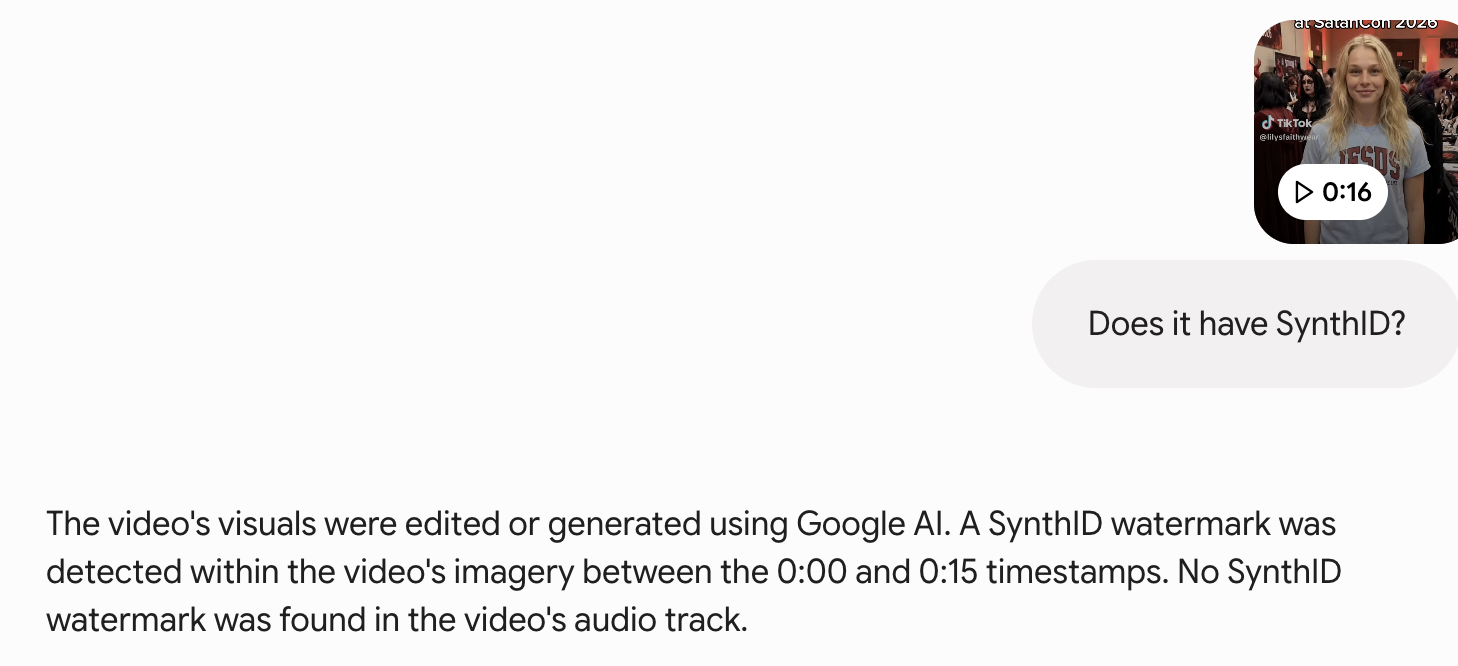
(Image source: Gemini.)
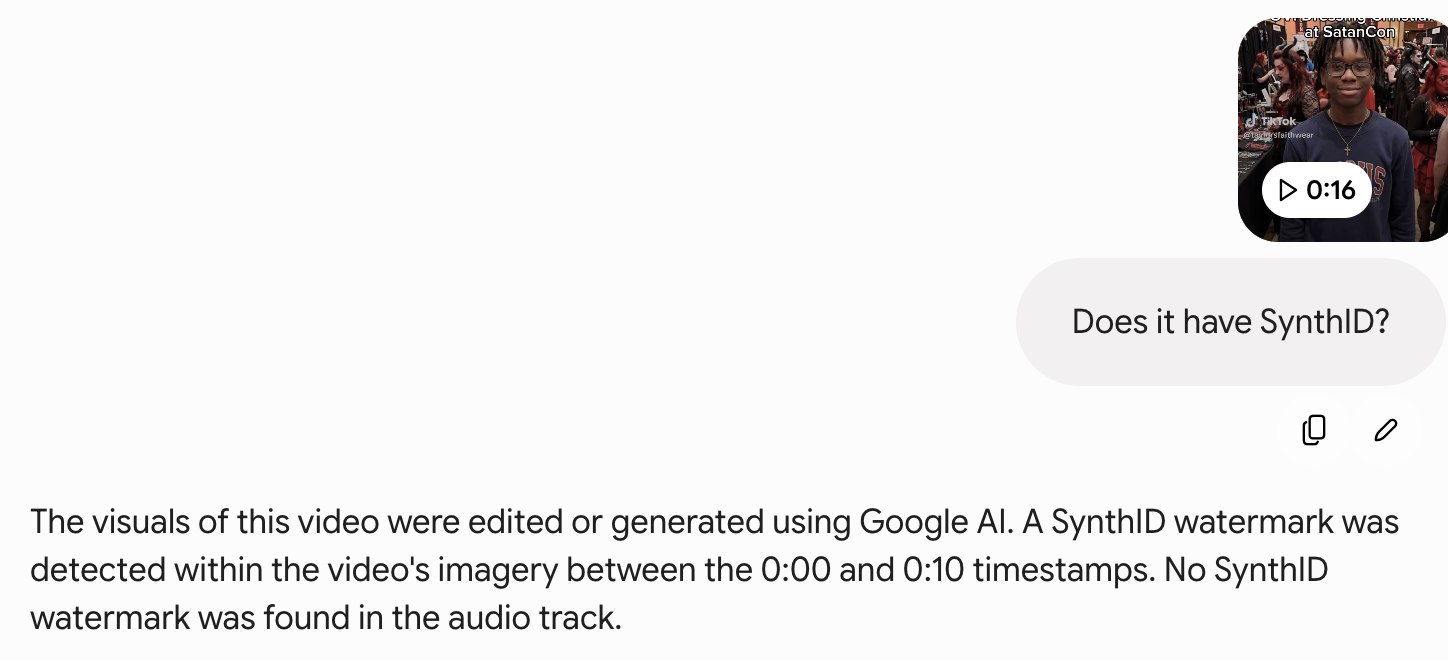
(Image source: Gemini.)
A closer look showed that some actions in the clips didn't make any sense. For example, both "Lily" (at the 00:14 mark in this video, archived here) and "Taylor" (at the 00:08 mark in this video, archived here) use the heat press on the clothes that already have the word "Jesus" printed on them.
Another example is the purported "Democrat parade" featured on both accounts here (archived here) and here (archived here and here). In those clips, people were seen with 2028 Biden Harris campaign merch, even though then-sitting president Joe Biden quit his bid for re-election on July 21, 2024 (archived here and here).
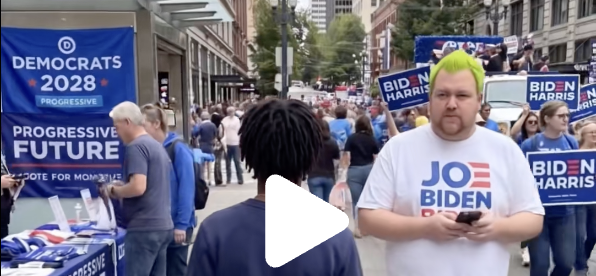
(Image source: post by @taylorsfaithwear on TikTok.)
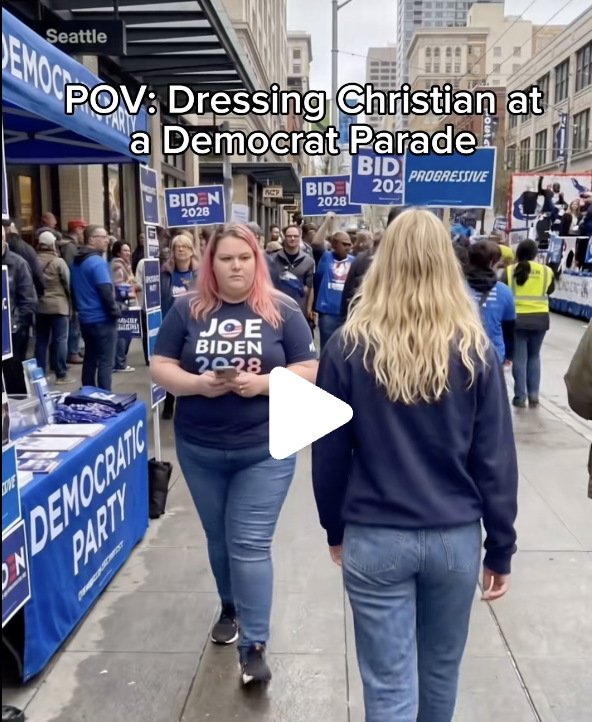
Lead Stories observed striking similarities between the appearance of the characters and their behaviors, which suggested that the videos were created with the same prompt:
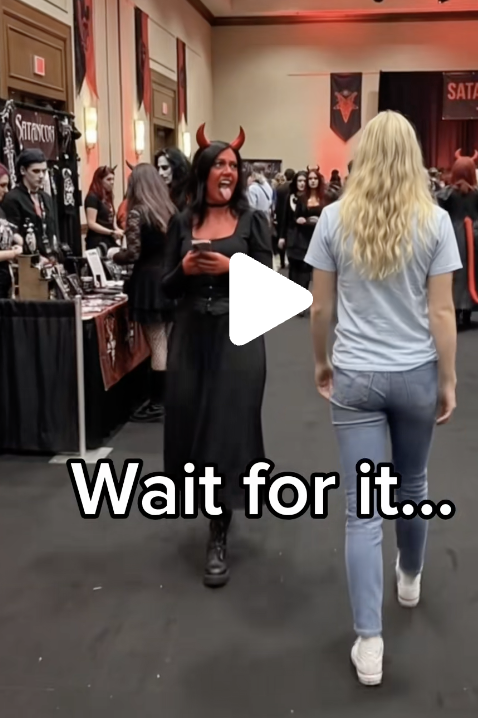
(Image source: post by @lilysfaithwear on TikTok.)
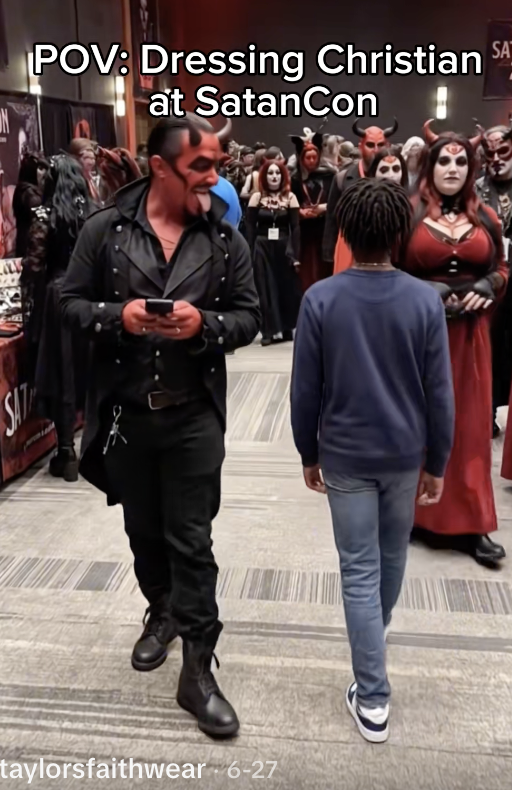
(Image source: post by @taylorsfaithwear on TikTok.)
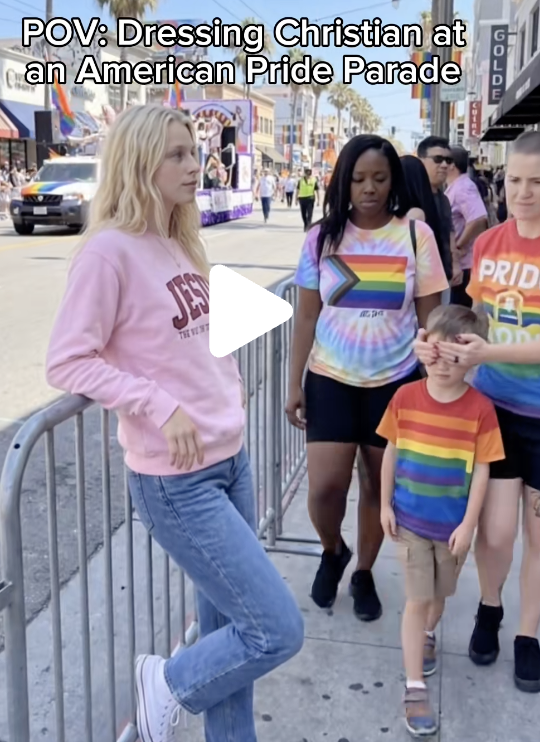
(Image source: post by @lilysfaithwear on TikTok.)
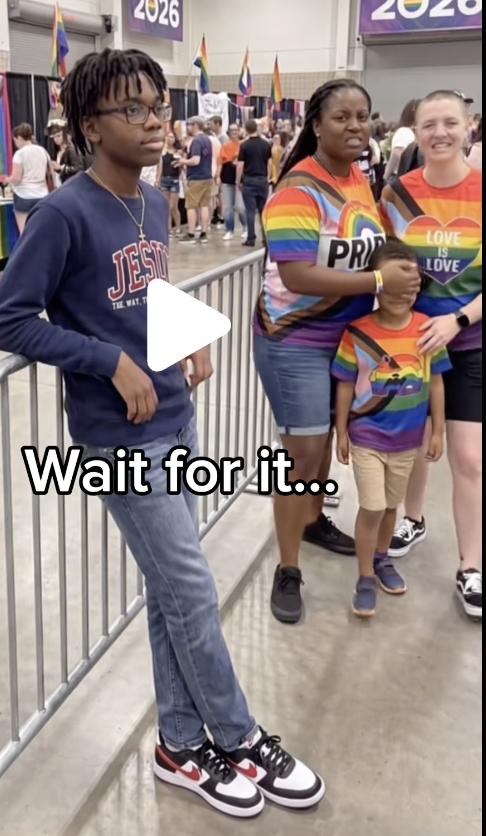
(Image source: post by @taylorsfaithwear on TikTok.)
The accounts of "Lily" and "Taylor" led to two different landing pages on the same website, as seen here (archived here) and here (archived here). In addition, there was the third account (archived here), also on TikTok, that contested the brand's ownership and referred to it as "my site".
Yet, according to WhoIs (archived here), the faithwearco.us website was registered by "Dyllan Toledo" in Tennessee. A Linkedin profile (archived here) associated with this name and this location described the account owner as "6 fig dropshipper", a reference to an e-commerce business model in which someone runs an online store without actual inventory or products where any orders get passed on to other suppliers (often foreign) while marking up the price.
If you see videos like these on social media, here are some things you can try.
First, look for AI-disclaimers added by the platform or the poster. On TikTok they might say "Contains AI-generated media" or "AI-generated" (archived here), on X they read "Made with AI" (archived here) and on Facebook/Instagram they often say "AI info" (archived here). Check the description of the video too: in some cases the creator might have added a note or a hashtag like #AI, #madewithAI or #fiction. Don't forget to check the main page of the account that posted the video either: maybe there is a disclaimer in the bio and in some cases AI use is really obvious when an account is posting dozens and dozens of variations of the same type of video.
Don't stop at the account that posted the video: maybe they copied it from somewhere else. Use a tool to take a screenshot of the first frame of the video and run it through a reverse image searching tool to see where else on the internet it appears. It may have originated on an account that posts satire, AI-creations or actual art.
If you are still not sure, try downloading the video itself. There are several AI detection tools that can tell you if there are watermarks or other technical characteristics present in the video that would indicate it was likely made with AI.
Finally, use common sense: if the video shows an event that would otherwise be newsworthy, use a news search engine to check if it has been reported on by a news service you trust. Also pay close attention to the video itself: look for physical impossibilities or glitches typical of AI-generated footage like:
- People or things appearing (or disappearing) out of thin air
- Objects behaving in physically impossible ways (heavy objects falling slowly, rigid objects bending...)
- Garbled writing, oddly shaped letters or signs
- People or objects blending into or moving through each other
- Inconsistencies between different shots of the video (extra architectural elements in buildings, changing backgrounds, differences in clothing or hairstyle)
- An audio track that sounds strange: flat, unnatural speech, scripted-sounding yelling from bystanders ("Did you see that? OMG!"), sound effects being out of sync with events.
Unsure about a video? Email [email protected] and we will take a look!
These materials were developed in 2026 for the Prebunking at Scale project, with support from the European Fact-Checking Standards Network. If you share this on social media, use #prebunkingatscale.