
Did Barron and Melania Trump, Prince Harry Mountbatten-Windsor, Eminem and Vince Gill each "quietly spend $10 million" to build churches without seeking publicity? No, that's not true: The fake images and nearly-verbatim fake stories appear on Facebook pages that send users to made-for-advertising sites. The church-building stories, featuring more than a dozen different celebrities, are the Christmas 2025 entrant in a string of fake news ploys by publishers based mostly in Vietnam and targeting American social media users.
The Trump version of the fake story appeared in a Dec. 13, 2025 post (archived here) on the "Celeb Newsflash US" Facebook page. It opened: "🎄 Melania and Barron T.r.u.m.p Quietly Spent $10 Million to Build a Church -- Then Show Up Together to Decorate It for Christmas." The post continued:
For months, no one knew where the funding came from. A small church quietly rose in a struggling neighborhood, finished without press or ceremony. Only later did it emerge that Melania and Barron T.r.u.m.p had covered the $10 million cost.
And on a cold December evening, they arrived side by side, sleeves rolled up, carefully placing lights and ornaments themselves. Neighbors watched in stunned silence as the meaning of the moment slowly set in: this wasn't for attention it was for the community.
👉 What Melania and Barron did inside the church after the doors closed is in the first comment.
#BreakingNews #TrendingNow #ViralMoment #hot #lifestyle
This is what a selection of almost identical posts looked like on Facebook at the time of writing:
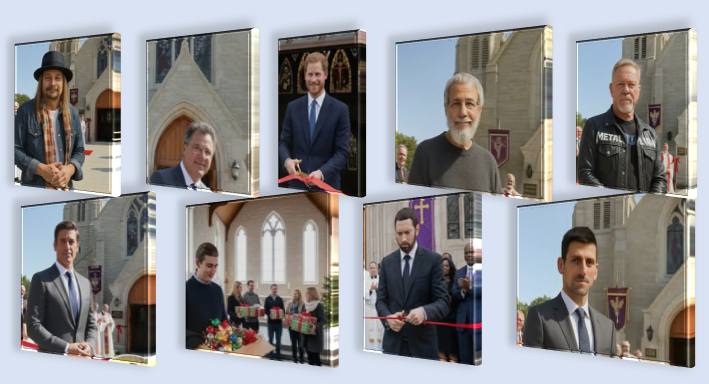
(Image source: Lead Stories screenshots of example pages on Facebook, arranged into a comparison chart by Lead Stories.)
To read the whole story, Facebook users are sent to the Comments, where there is a link to an ad-heavy website that profits from user traffic.
Using search terms "Spent $10 Million to Build a Church" on Facebook, Lead Stories found a long list of other celebrities featured in near-identical stories about each luminary showing up alone to hang Christmas decorations in a $10 million church with no street address or even city or denomination:
- Rocker Bob Seger
- TV Anchor David Muir
- Tennis star Novak Djokovic
- Country star Chris Stapleton
- Rocker James Hetfield
- Rocker Jimmy Page
- Famously Muslim singer Yusuf Islam, also known as Cat Stevens
- Irish pop star Ronan Keating
- Seattle rockers Ann and Nancy Wilson
- Rocker Kid Rock
- TV Anchor Rachel Maddow
- Motown giant Smokey Robinson
- Irish songwriter Niall Horan
- Country legend Dolly Parton
- Opera star Andrea Bocelli
- Hearthrob Tom Jones
- New York Attorney General Letitia James
- Vice President JD Vance
- F1 driver Lewis Hamilton
Here's a graphic display of the stories:

(Image source: Lead Stories gif created by applying Chrome Capture extension to Facebook search.)
The Facebook pages show the "Viet Spam" pattern of fake content:
Lead Stories in 2025 documented more than 60 series of so-called "VietSlop" content on Facebook, which follow this pattern
- Near-identical wording and photos;
- Cheaply-made AI content to draw traffic to ad-heavy websites;
- Page transparency listings showing pages are managed from Vietnam and other non-U.S. locales.
Recycled Identical Stories
The same story appears on every Facebook page: $10 million quietly spent on a church that the celebrity arrives to decorate one night, all alone:

(Image source: Lead Stories screenshots of the opening paragraphs of a selection of the church stories on Facebook.)
Obvious AI generation
It's the kind of content that can be almost instantaneously generated on an AI chatbot, then pasted onto Facebook pages. Although AI detection apps have varying degrees of sophistication, sometimes the fake news generators leave an obvious clue, as they did with the story about country star Vince Gill. In lower right corner of the lower right photo of Gill is a Google Gemini watermark. Gemini is the internet giant's generative AI image creator, which places the diamond-shaped logo on its product:
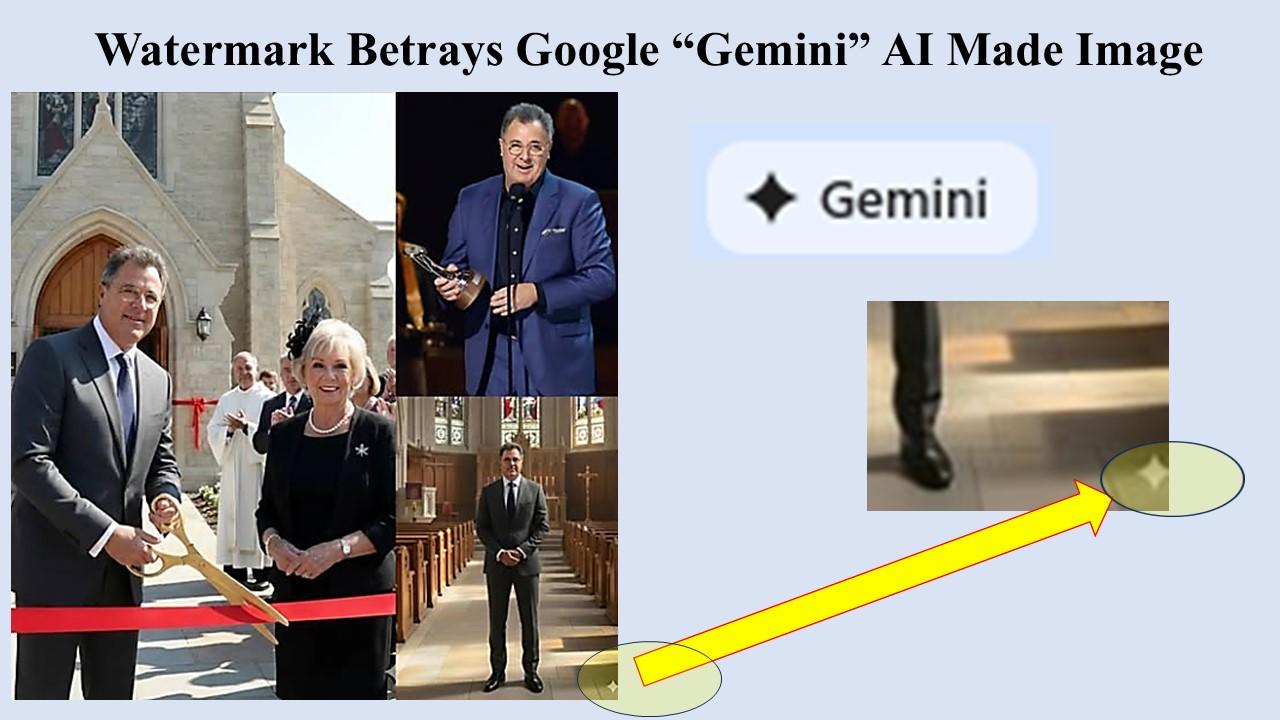
(Image source: Lead Stories screenshots arrange into illustration with added highlight marks showing the Gemini watermark on images at The Okie Sound page on Facebook.)
In each case, the Facebook posts direct users to click on links in the comments, taking them off Facebook to an advertising-heavy website such as the linked-to site for the Chris Stapleton story. Users are swarmed by pop-up ads on a page that within seconds looked like this:
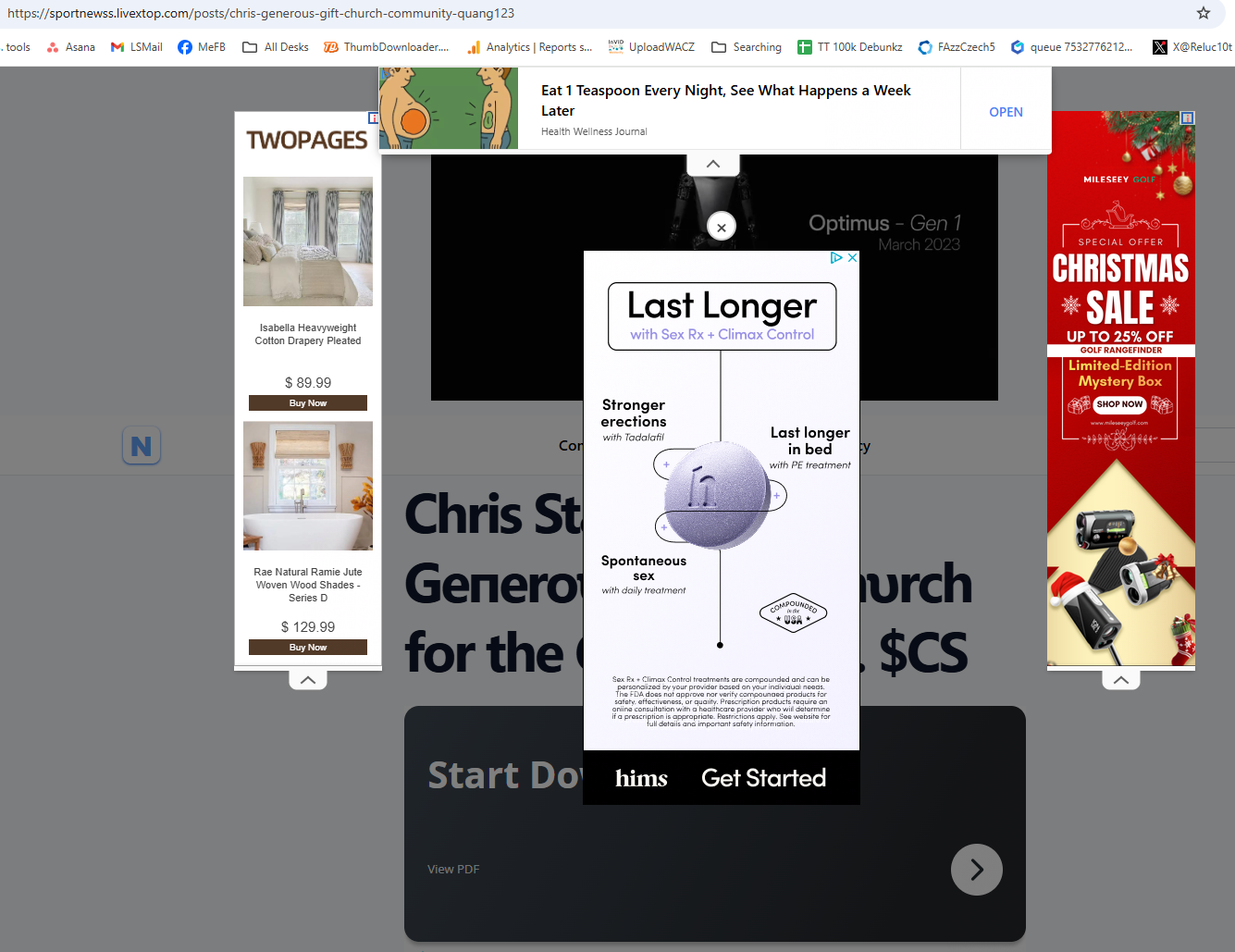
(Image source: Lead Stories screenshot of https://l.facebook.com/l.php?u=https%3A%2F%2Fflowpeak.live%2Fposts%2Fchris-generous-gift-church-community-quang123)
Originating in Vietnam or other overseas locales
As is almost always the case with multiple duplicate fake stories like this, the Facebook page is managed from Vietnam. In the case of the Stapleton page, Facebook transparency data shows a number of host countries, but with most of the page's managers based in Vietnam:
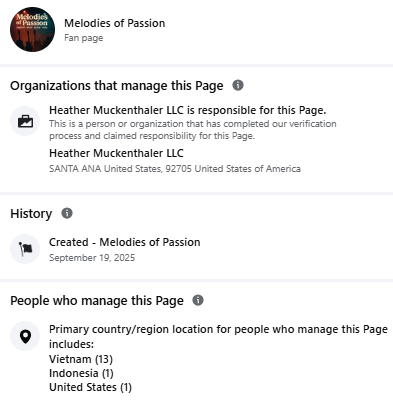
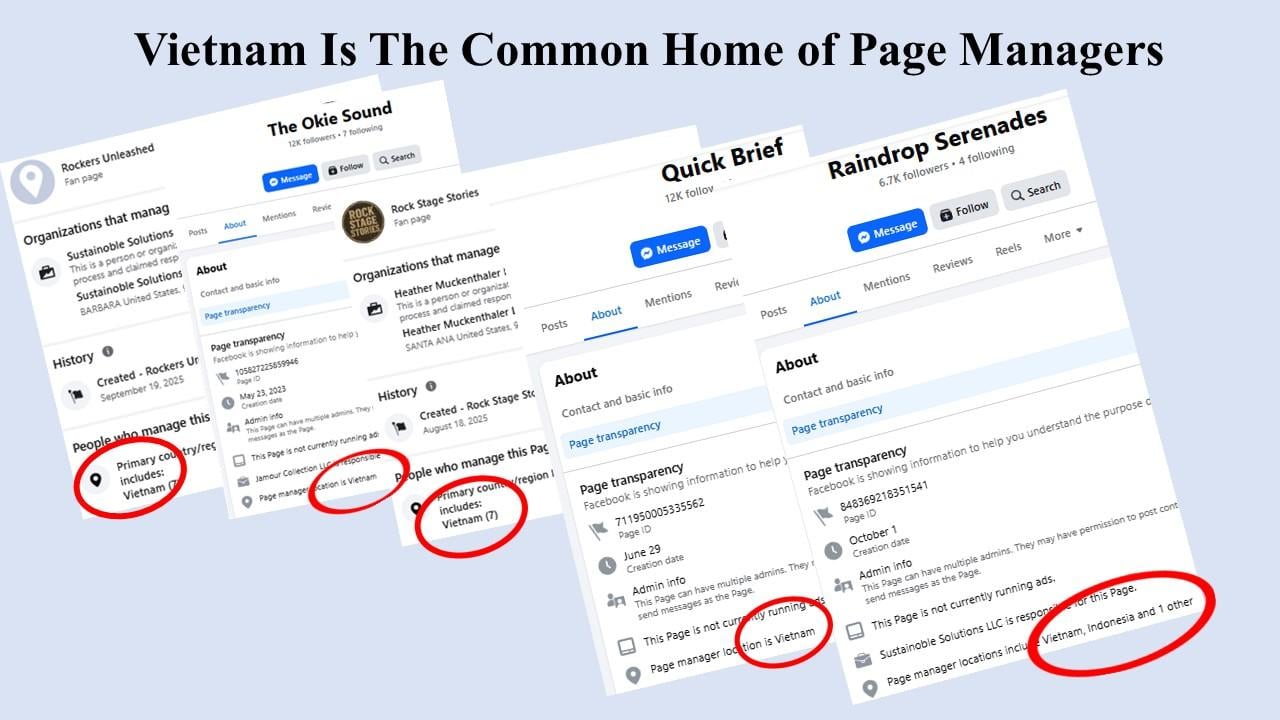
Lead Stories sampled the other Facebook posts, finding the same Vietnam home nation for pages posting about Kid Rock, Vince Gill, Bob Seger, David Muir and Niall Horan:
Lead Stories searched the Google News index of thousands of news sites, using the key phrase "quietly spent $10 million to build a church" and found no mention (archived here) of any of the 20 celebrities listed in this fact check, even though the Facebook posts were illustrated with daylight photos of ribbon cutting ceremonies and other events on the church steps that would have been newsworthy, given the prominence of each of the performers and athletes.
Other signs of inauthentic or rule-bending content:
The Gill story headline is full of homoglyphs, marked in pink. These are text characters that resemble letters from the Latin alphabet but are actually characters from another alphabet. In the sample below the lowercase "n" and "u" are represented by look-alike characters.This is useful in efforts to bypass AI detectors.
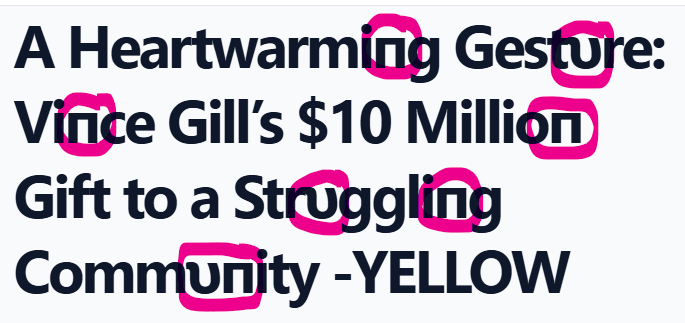
(Image source: Lead Stories screenshot, with pink highlighting added, of post at The Okie Sound page on Facebook.)
There are several reasons bad actors might use homoglyphs, for example to avoid search engine or ad network blocking, or plagiarism detection -- but there are no reasons why a legitimate news outlet would do this.