STORY UPDATED: check for updates below.

Does an image show an actual Minneapolis warehouse with tiny indoor cottages for homeless people? No, that's not true: The image used is AI generated. There is, however, a warehouse in Minneapolis that holds boxy private dwellings for homeless people. They resemble the containerized housing U.S. troops live in on some overseas military bases. The Avivo Village is a legitimate housing development but the image used is not the actual one from the website of the charity that runs it.
The image appeared in a December 10, 2025 post on Facebook account @Fact27 (archived here). It opened:
In Minneapolis, an unusual neighborhood exists entirely inside a warehouse, where rows of tiny houses line wide indoor "streets" under a high roof. Each micro-home is just big enough for a bed, a small desk, storage and a door that locks, giving unhoused residents something most shelters can't: a private, secure space that feels like their own. Instead of cots in a crowded hall, people have four walls, a light they control and a place to shut out the world when they need quiet.
This is what the image in the post looked like on Facebook at the time of writing:

(Image Source: Lead Stories screenshot from facebook.com/fact27.)
The post describes an innovative housing project of tiny homes inside a warehouse for homeless people in Minneapolis. A Google search for keywords found the Avivo Village, which appears to be the initiative in question. According to the Avivo website (archived here):
Avivo Village is a first-ever, indoor community of 100 secure, private dwellings or "tiny houses" that provides shelter and wraparound services to individuals experiencing unsheltered homelessness. Avivo Village is located in Minneapolis. All services at Avivo Village are designed to support each person, with a goal of moving into permanent housing in the community and/or taking next steps toward their well-being.
However, the image on the website does not show an idyllic group of white clapboard homes; instead, it depicts a minimalist collection of box-style units, as this screenshot shows:
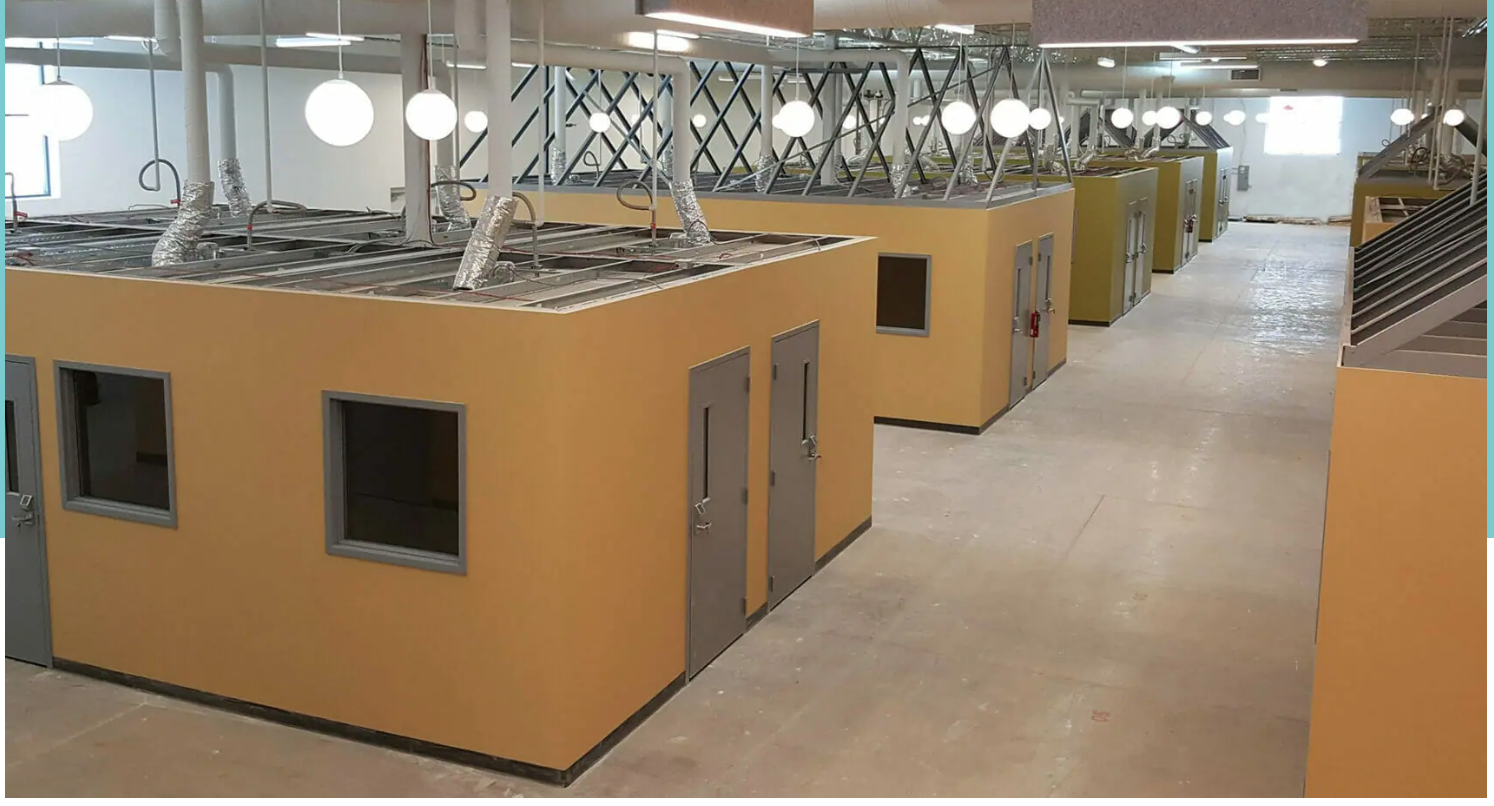
(Image source: avivomn.org website.)
Lead Stories ran the image used in the post through the HIVE Moderation AI detection tool and it said the image was 99.9% likely to contain AI-generated or deepfake content, as this screenshot shows:
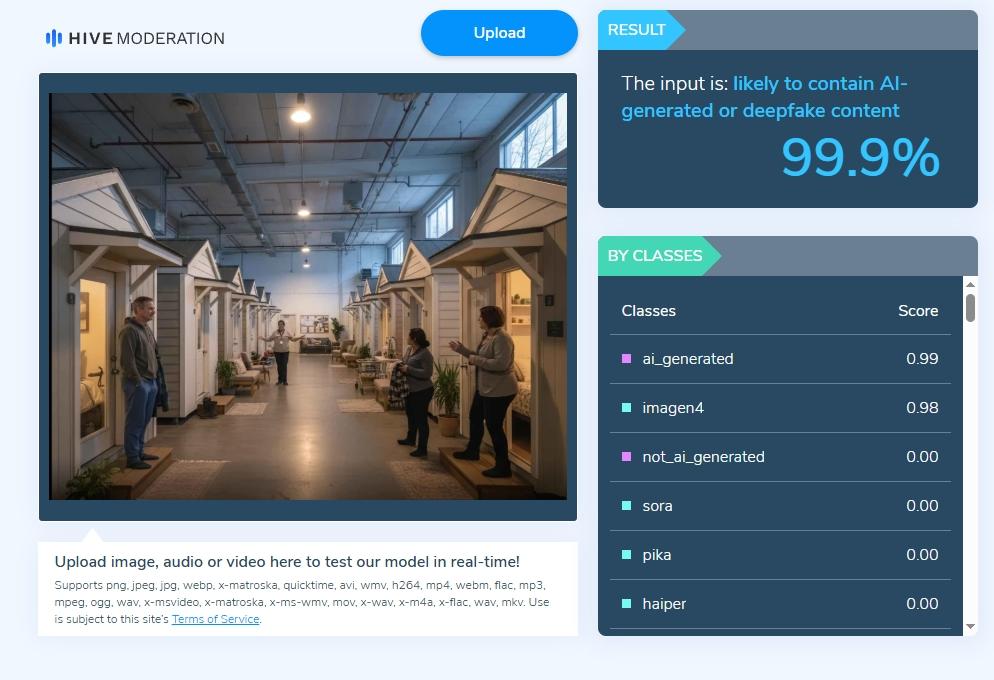
(Image Source: Lead Stories screenshot from hivemoderation.com.)
Updates:
-
2025-12-12T09:01:25Z 2025-12-12T09:01:25Z Updated description of Avivo.