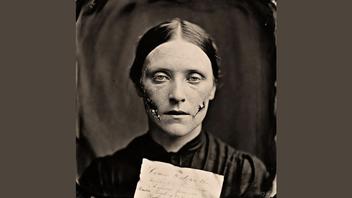
Do viral posts tell a real-life story about a Connecticut woman named "Ada Morrison" who was committed to a psychiatric hospital for "excessive reading and intellectual pretensions unsuitable for woman"? No, that's not true: Lead Stories extensively researched available records but found no mention of the story outside of social media platforms. Those posts were illustrated by an AI-generated image.
The claim appeared in a post (archived here) on Facebook where it was published on December 29, 2025. It opened:
Ada Morrison was committed to Connecticut asylum in 1893, age thirty, by husband who wanted younger wife. Commitment reason: 'excessive reading and intellectual pretensions unsuitable for woman.' Ada had taught school before marriage, read constantly, discussed politics. Husband said this proved mental instability. Two doctors examined her for ten minutes, agreed intelligent woman was clearly insane. Ada was locked in asylum for four years, labeled insane for being educated. She escaped eight times. Caught seven times. Succeeded once. Took four years of attempts--climbing windows, picking locks, bribing guards, hiding in laundry carts. Ada's intelligence that got her committed was same intelligence that freed her. This tintype from 1897 shows Ada after final successful escape, age thirty-four, displaying scars from previous attempts--broken arm from second-floor fall, burn marks from climbing hot steam pipes, lash marks from punishment after failed escapes. She holds commitment papers declaring her 'mentally deficient with delusions of intellectual capability.' Ada had graduated college. Taught school for six years. Read Latin and Greek. Asylum declared this insanity. Her husband declared it embarrassing. Her intelligence declared it crime. Ada spent four years proving she was sane enough to escape place she was imprisoned for being smart. Ada reached New York after escape, changed name to Sarah Bennett, worked as clerk hiding education level to avoid suspicion. Never contacted family--they'd supported commitment. Never remarried--couldn't trust man with legal power over her freedom. Lived quietly for thirty-eight years, died in 1935, age seventy-two, having spent thirty-eight years hiding intelligence that had nearly destroyed her. Ada had been imprisoned for reading. Spent rest of life pretending she barely could. That was survival in world that called educated women insane. After her death, landlady found Ada's room filled with books--hundreds of volumes hidden behind false wall. Ada had kept reading despite risk, kept learning despite having been punished for it, kept thinking despite it being dangerous for woman in her era. Also found: diary documenting eight escape attempts with detailed notes about asylum security, guard rotations, lock mechanisms. Ada had been brilliant enough to escape asylum that imprisoned brilliant women. Her commitment papers are now in women's history museum: 'Ada Morrison was committed for reading too much. Escaped asylum eight times before succeeding. Spent 38 years hiding intelligence that prison couldn't contain. She was insane for being smart. World was insane for calling that illness.'
This is what the attached image looked like on Facebook at the time of writing:
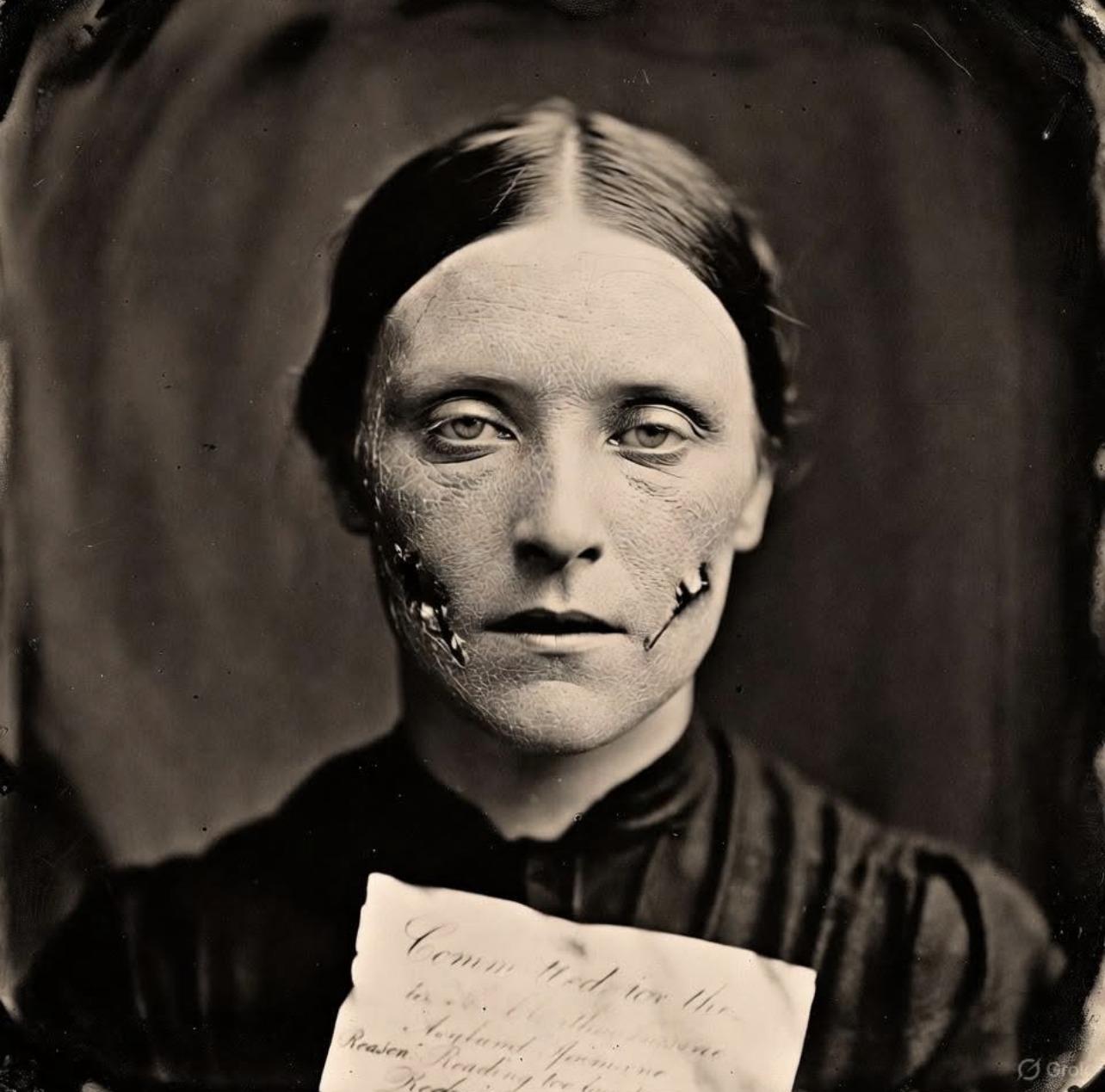
(Image source: Lead Stories screenshot of post at facebook.com)
No records of the case
The post on Facebook clearly said that the story of this woman was so well-known that at least one museum had a collection dedicated to her. It means that if the story were true, the chances are that it would have been mentioned in academic scholarship, historical newspapers or other archival materials.
However, searches across Google Scholar (archived here), Library of Congress, New York Public Library's research catalogue and Articles Plus led to nothing:
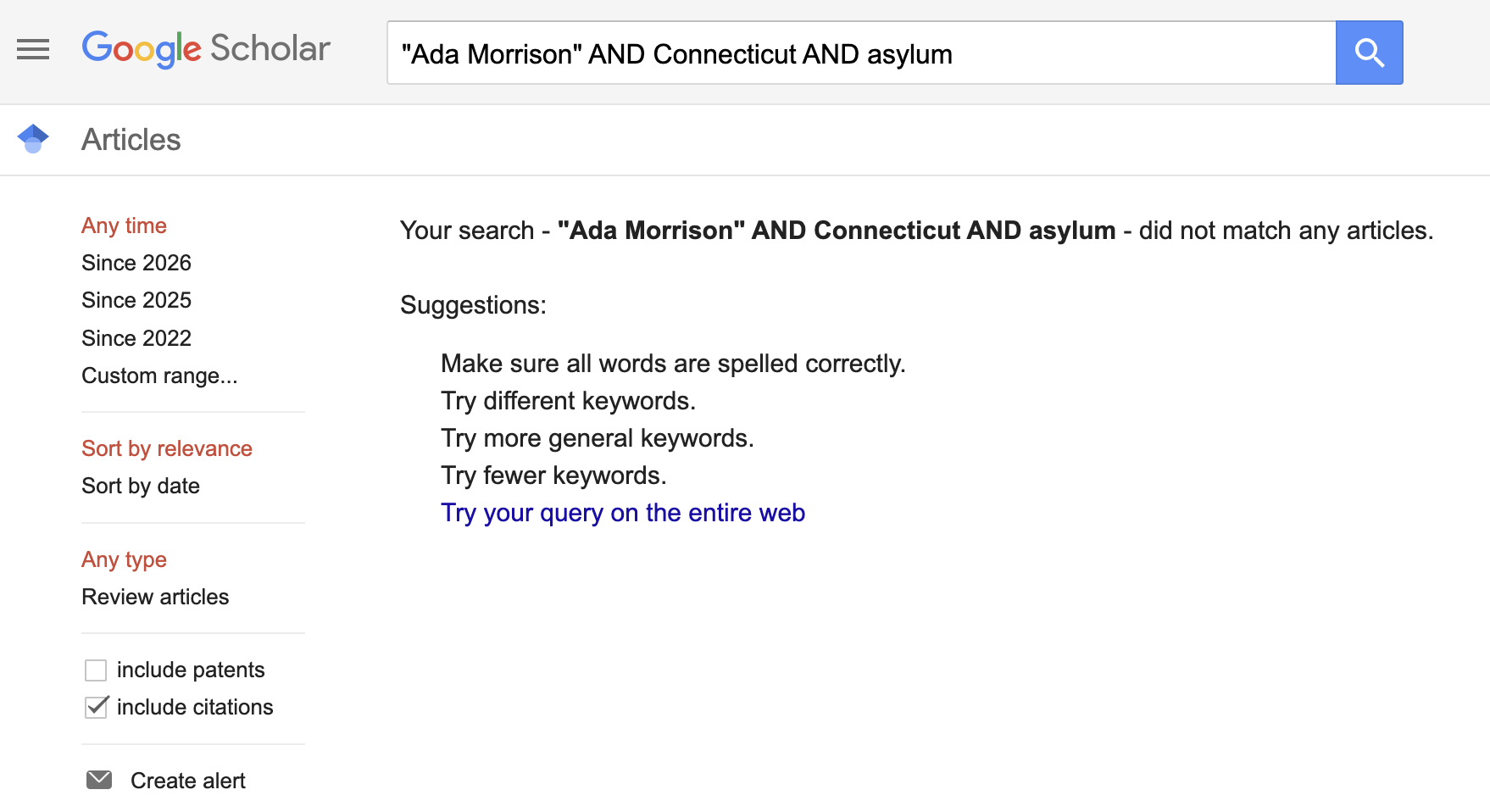
(Image source: Lead Stories screenshot of page at scholar.google.com)
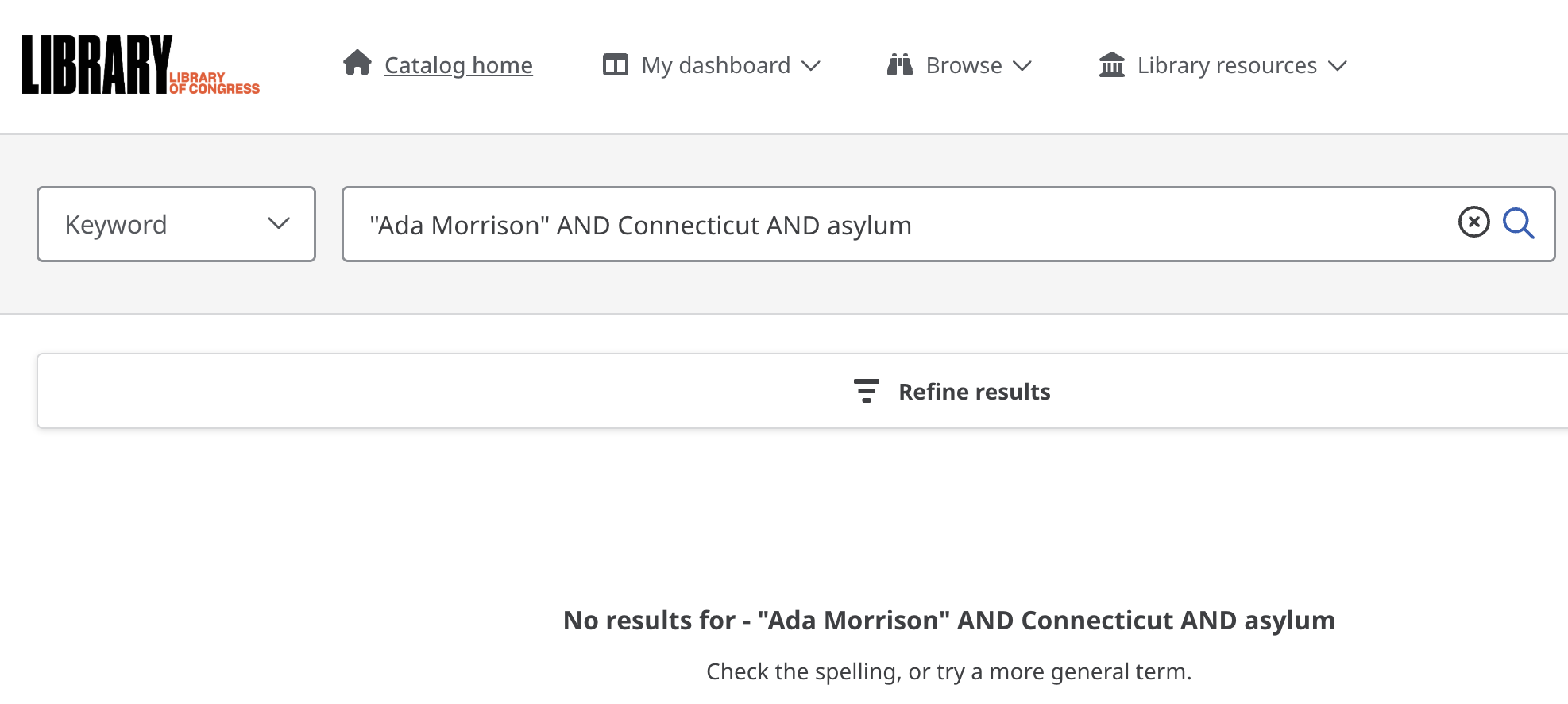
(Image source: Lead Stories screenshot of page at search.catalog.loc.gov)
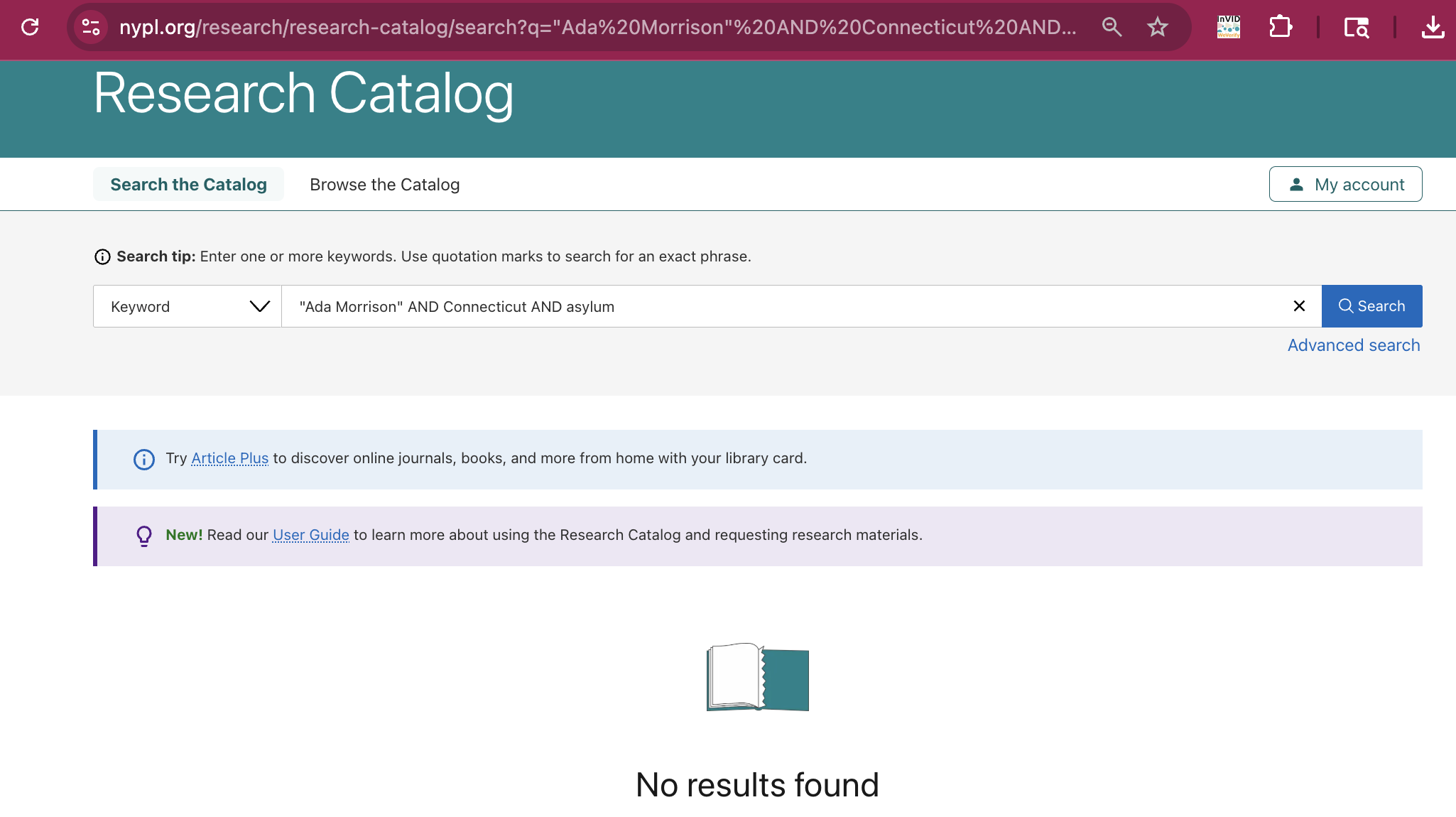
(Image source: Lead Stories screenshot of page at nypl.org)
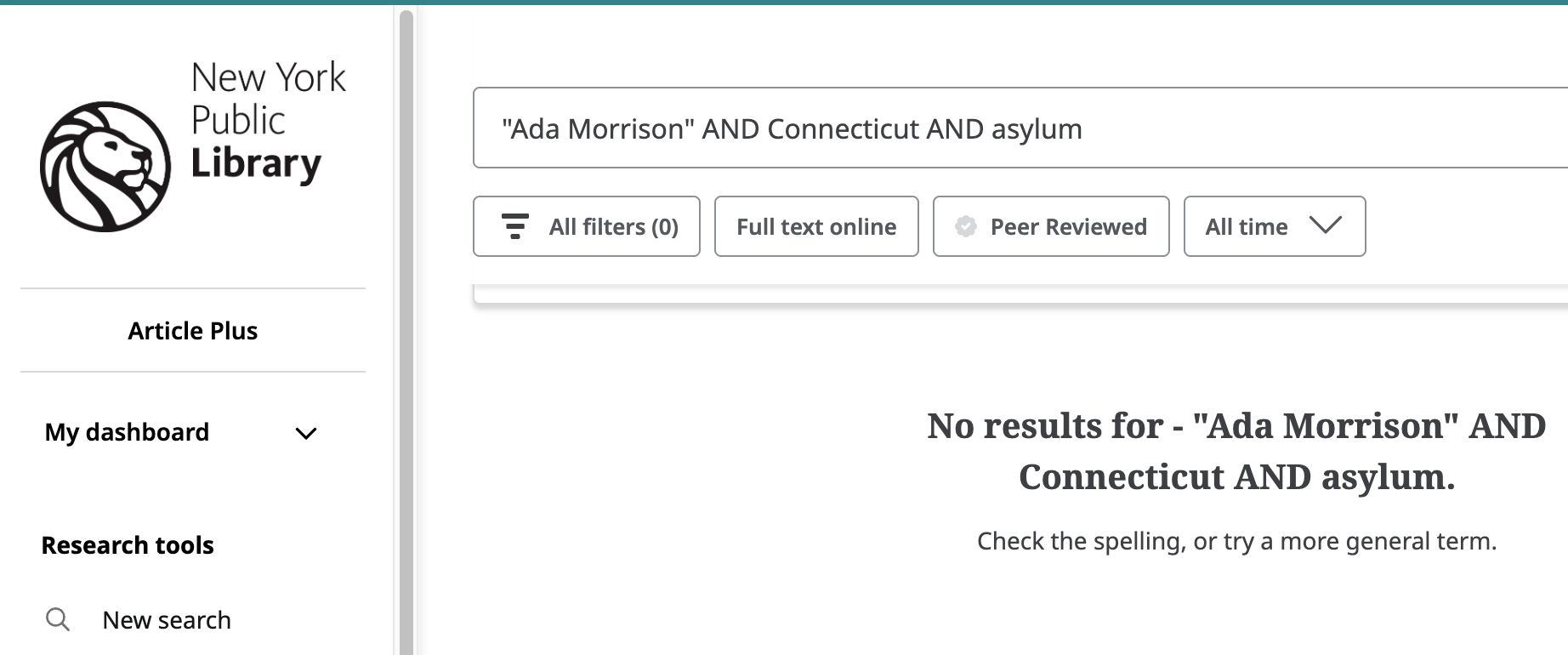
(Image source: Lead Stories screenshot of page at research.ebsco.com)
A search across the Library of Congress collection of historical newspapers yielded a single search result from March 11, 1892, but it was irrelevant since it showed a dispatch mentioning two women, each with one part of the full name, not one woman named Ada Morrison: 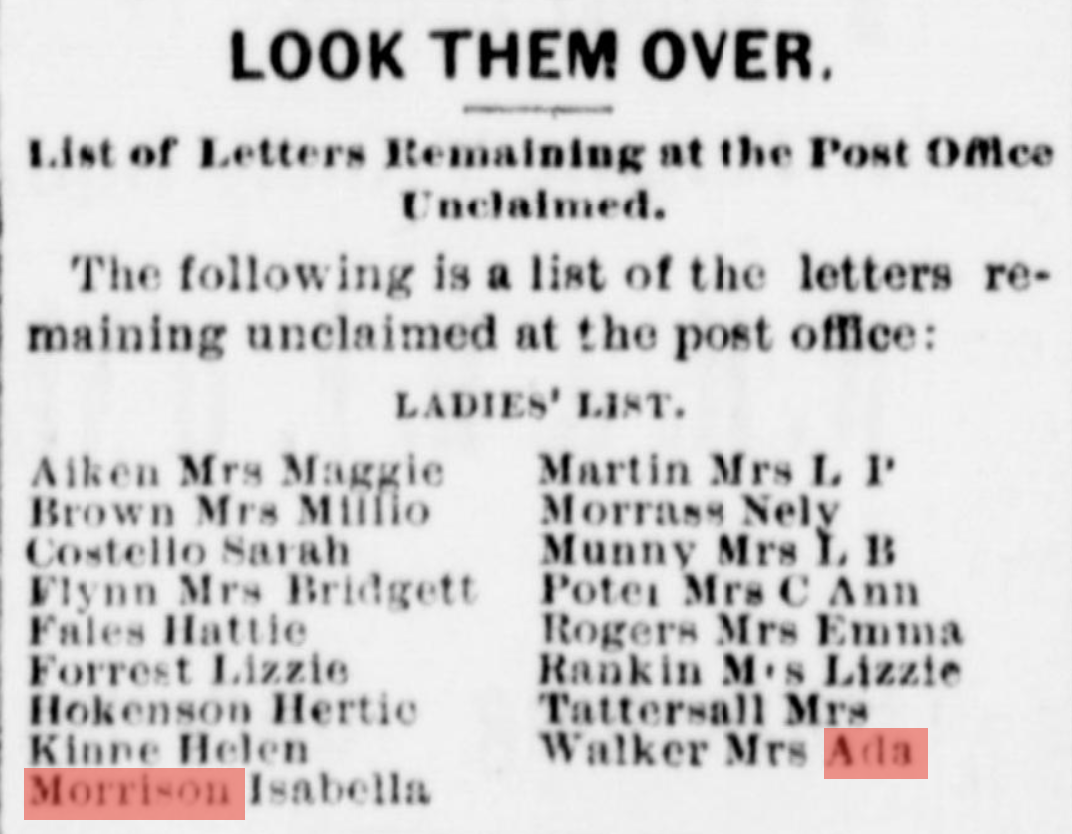
(Image source: Lead Stories screenshot of page at search.catalog.loc.gov)
Lead Stories additionally searched several specialized ProQuest collections, but that did not produce any confirmation of the supposed Ada Morrison's story, either:

(Image source: Lead Stories screenshot of page at proquest.com)
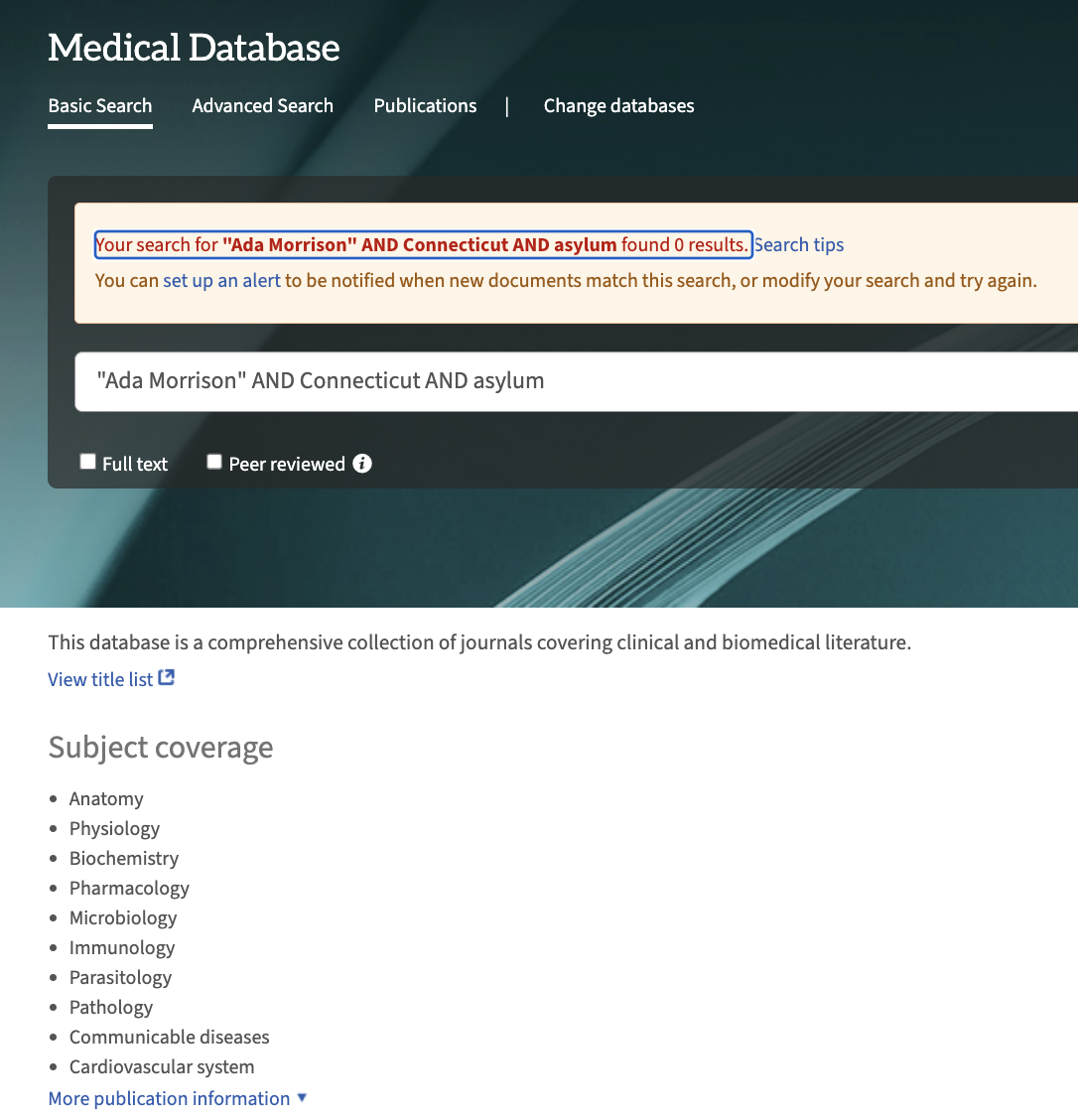
(Image source: Lead Stories screenshot of page at proquest.com)

(Image source: Lead Stories screenshot of page at proquest.com)

(Image source: Lead Stories screenshot of page at proquest.com)

(Image source: Lead Stories screenshot of page at proquest.com)
The only two results found on ProQuest covered unrelated areas:

(Image source: Lead Stories screenshot of page at proquest.com)
AI-generated image
According to Google's About This Image tab, the picture of a woman with scars on her face in the post reviewed in this fact check was suspiciously recent:
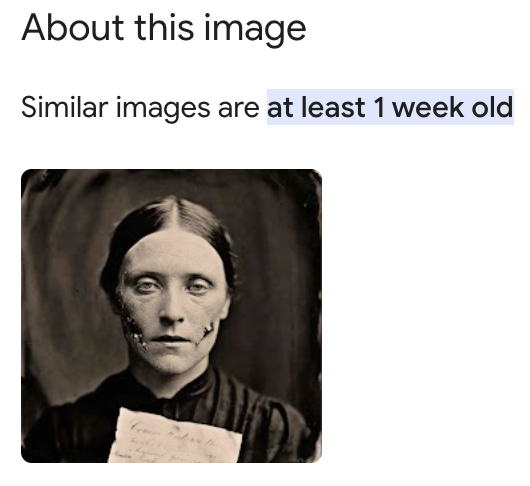
(Image source: Lead Stories screenshot of page at google.com)
The image exhibited several hallmark signs consistent with AI. One was the illegible letter:
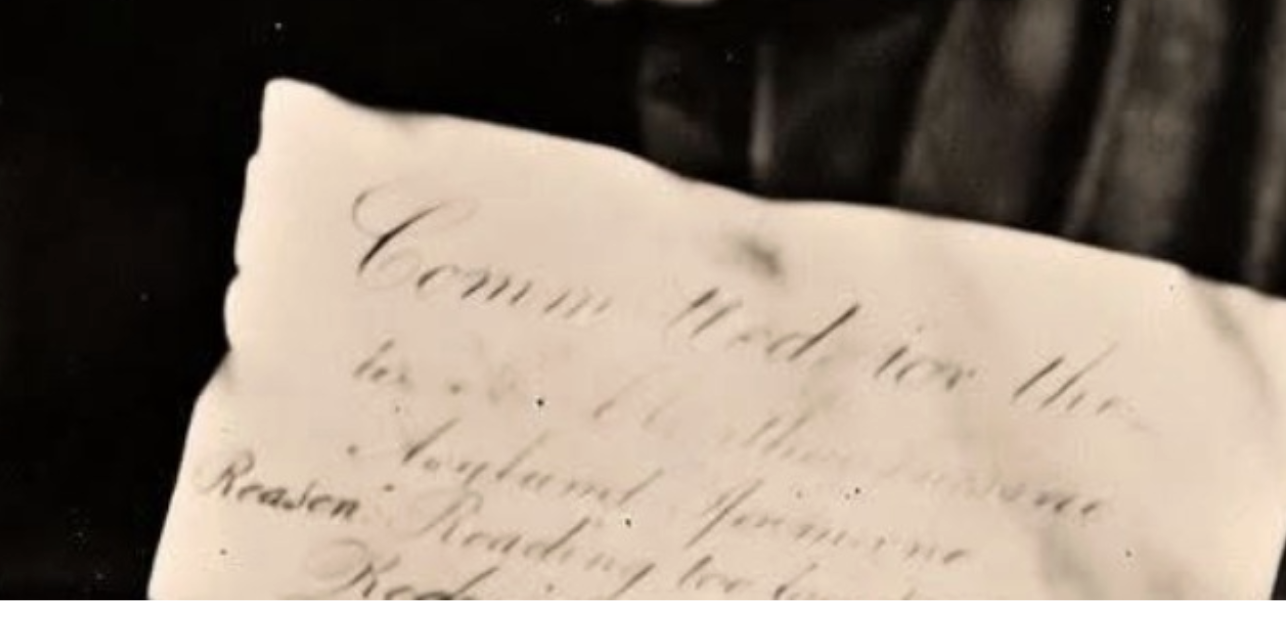
(Image source: Lead Stories screenshot of post at facebook.com)
It was noticeable that the woman's facial oval did not show the characteristic age-related changes (archived here) that would be consistent with numerous deep wrinkles on her skin. Moreover, aging somehow did not affect the woman's neck, which showed a stark contrast with the condition of her face. Furthermore, "Ada Morrison" had an issue with her ears. One seemed to be missing; another one was situated much higher and was much smaller than it would have been anatomically correct.
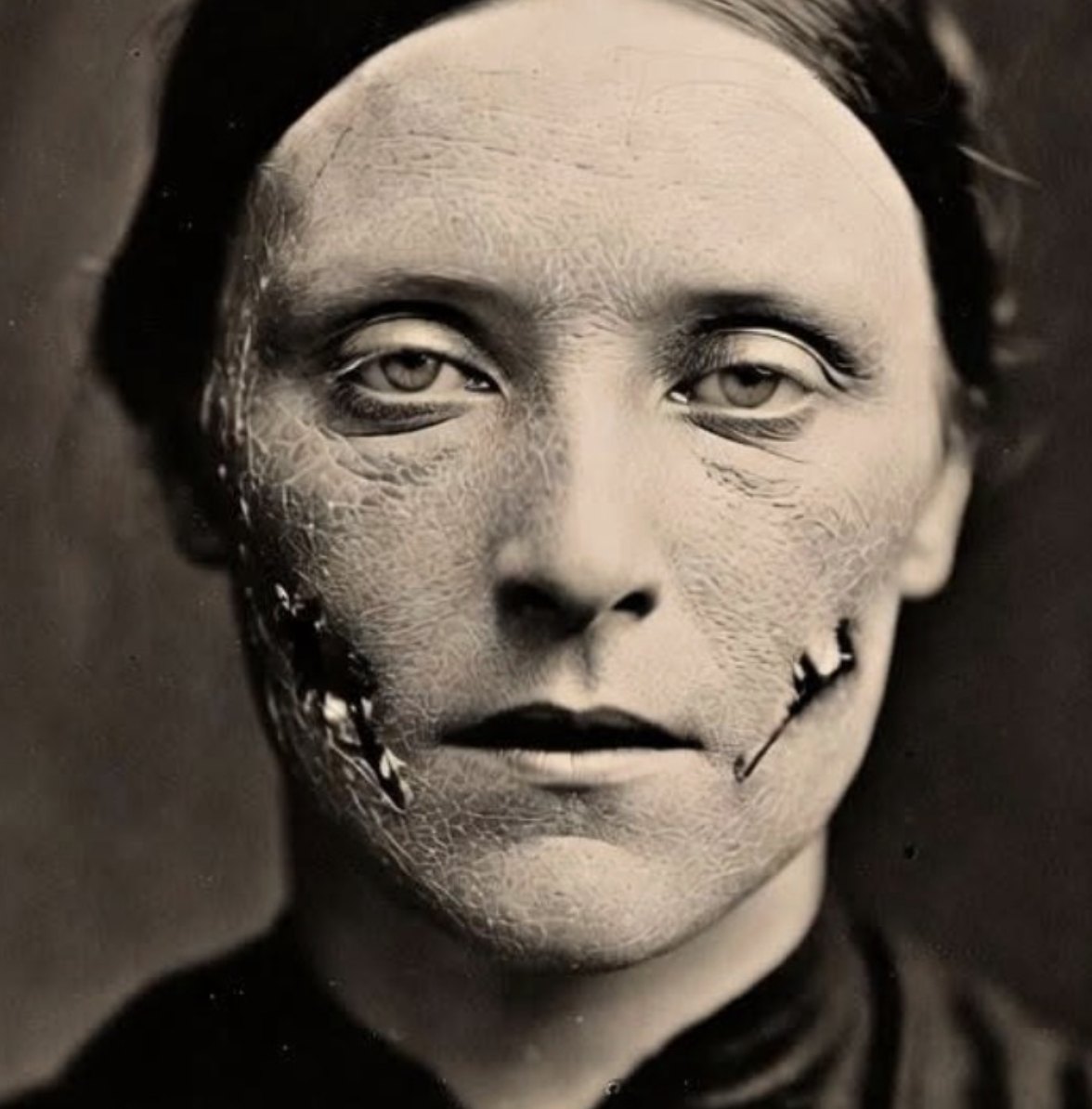
(Image source: Lead Stories screenshot of post at facebook.com)
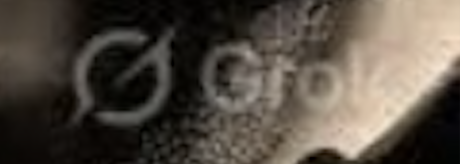
The bottom right corner of the picture contained a visible watermark pointing to a specific AI content generation tool, Grok:
(Image source: Lead Stories screenshot of post at facebook.com)
Three online AI detection tools -- InVid, Hive Moderation and AI or Not -- confirmed that the technology generated the image:
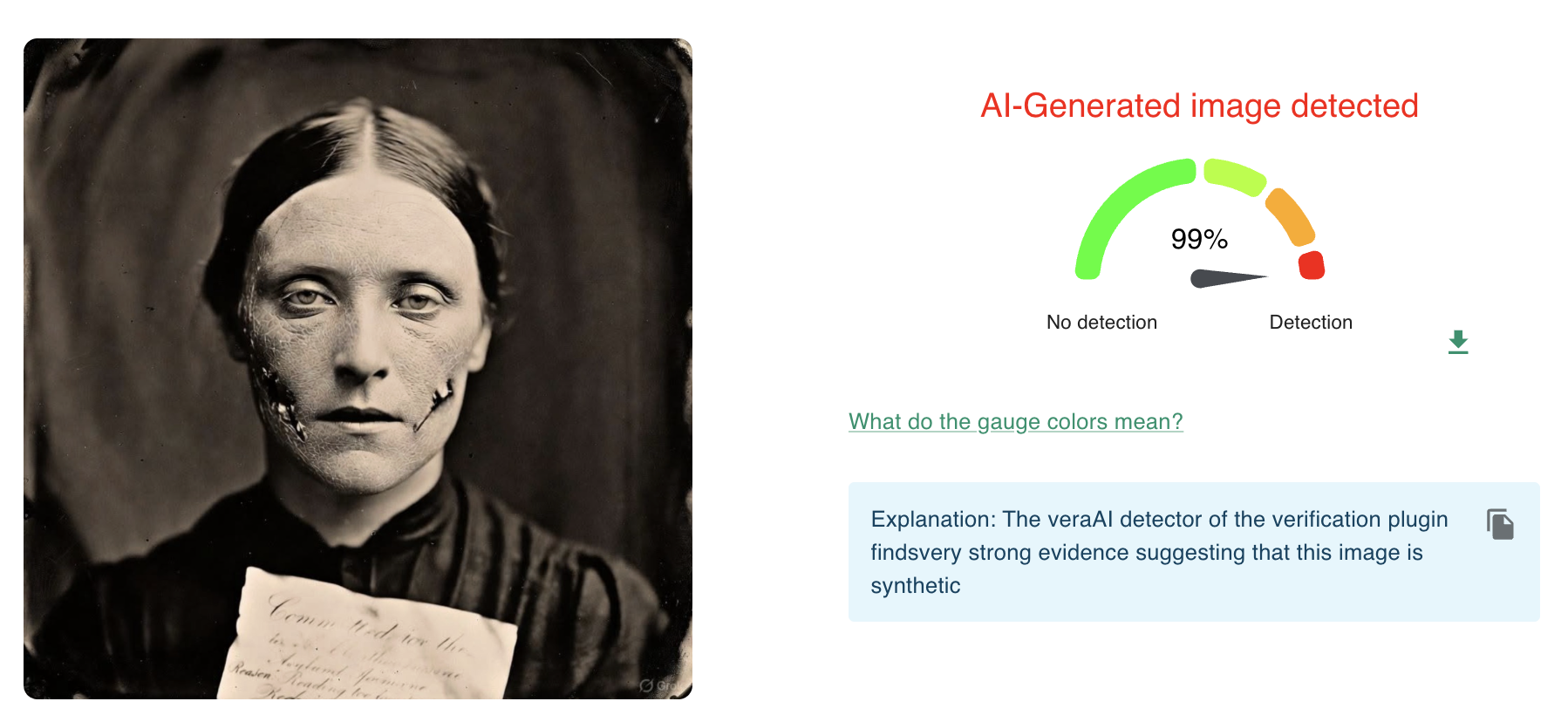
(Image source: Lead Stories screenshot of page via InVid)
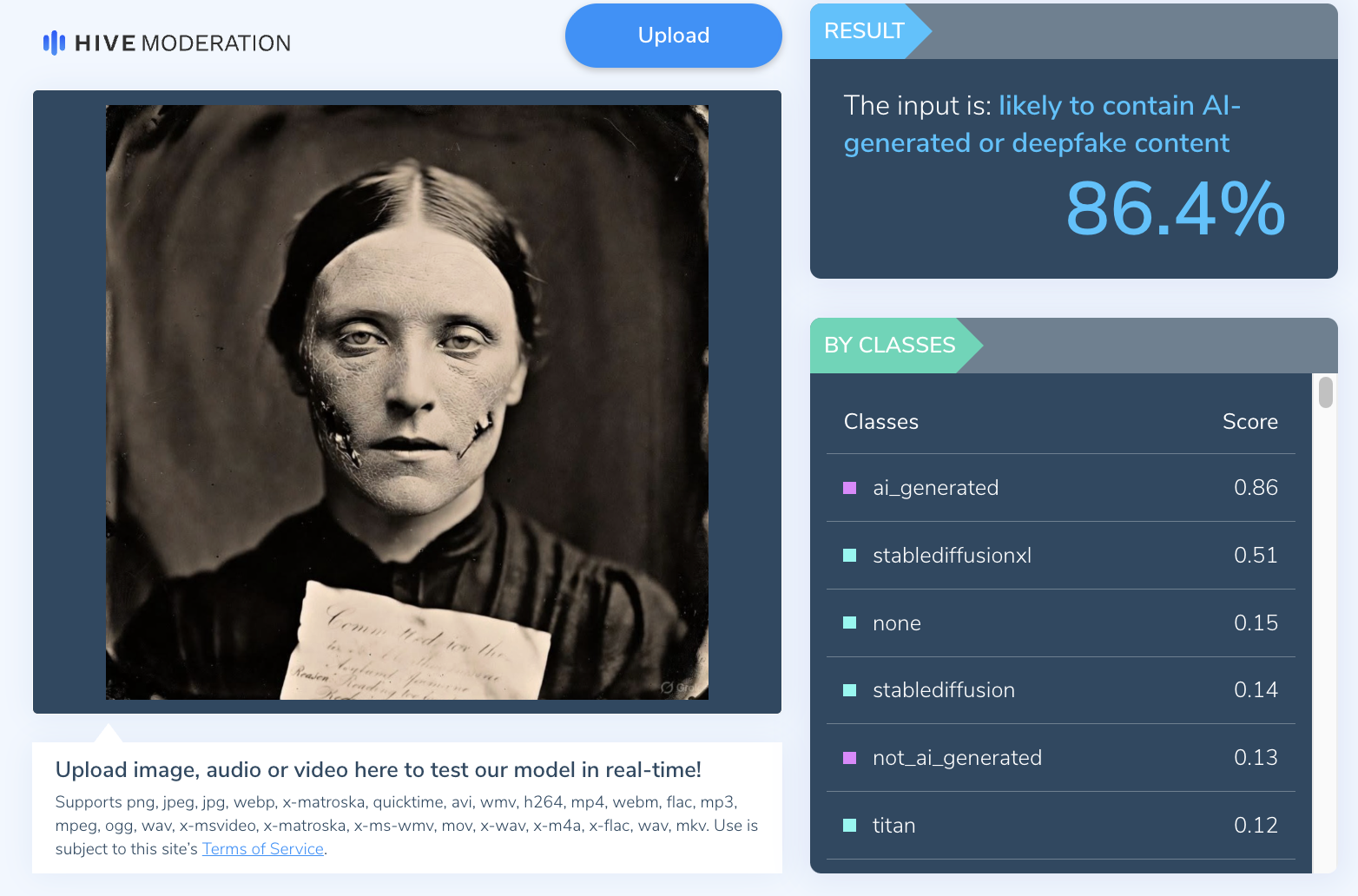
(Image source: Lead Stories screenshot of page at hivemoderation.com/ai-generated-content-detection)
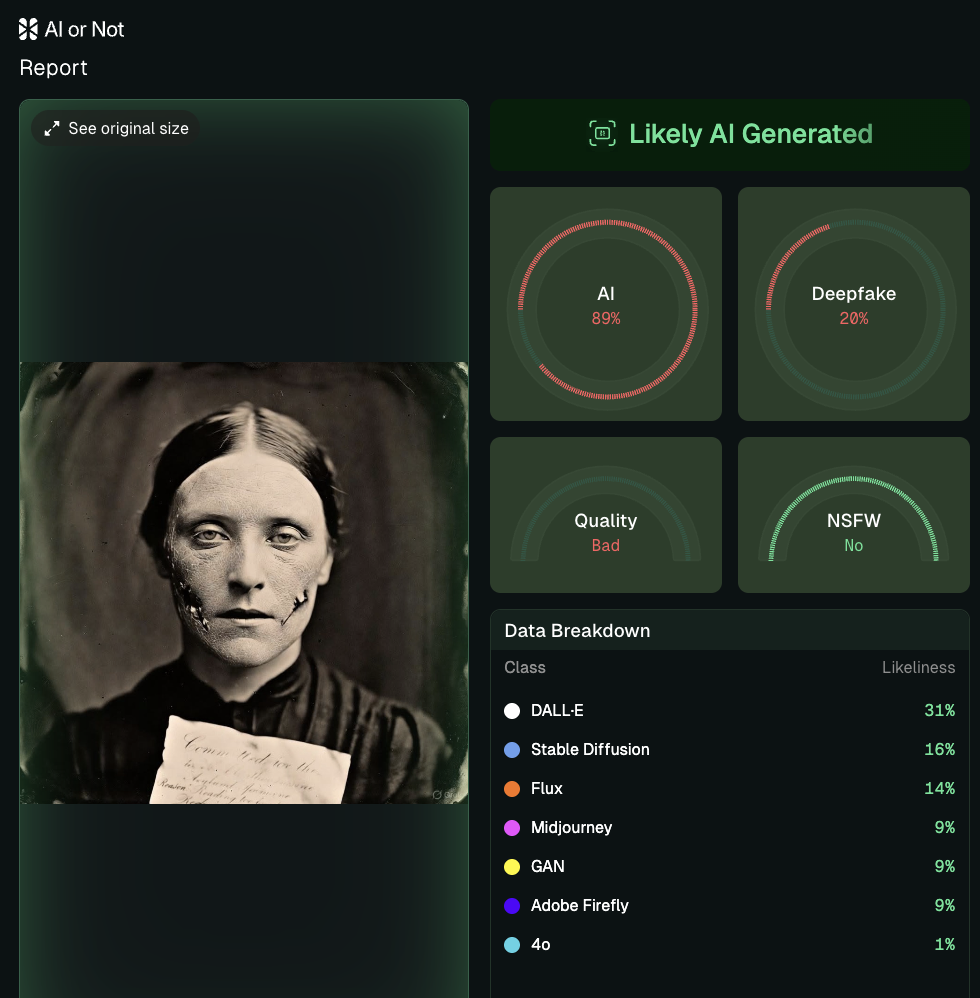
(Image source: Lead Stories screenshot of page at aiornot.com)
Stories of abuse at a New York City mental health facility were documented in the late 1880s by female journalist Nellie Bly, who got herself committed to get access to sources. The image in question did not show her and was not a modified version of her authentic images.