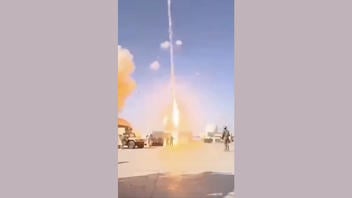
Does a viral video claiming to show a strike on a U.S. military base in Jordan or the Gulf actually show such an attack? No, that's not true: Lead Stories' analysis found multiple inconsistencies pointing to AI, including a fake U.S. flag missing all 50 stars that represent the 50 states. The video did not originate from a credible media organization: It first appeared on Chinese social media platforms.
The claim appeared in a post (archived here, here and here) on X where it was published on March 10, 2026. The caption read:
🚨 BREAKING China leaks what is happening at U.S. bases in Jordan and the Gulf -- truly dangerous and terrifying...
This is what the attached video looked like on X at the time of writing:

(Image source: post by @IBN_Now on X.com.)
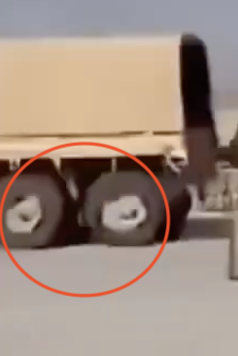
Artifacts strongly pointing to AI show up in the video right away. At the 00:02 mark, we see a vehicle whose wheels have unusually shaped, deformed centers:
(Image source: post by @IBN_Now on X.com.)
At the 00:05 mark, a servicemember is missing a hand. There is no blood, which suggests that the missing hand is an AI artifact rather than an actual injury:
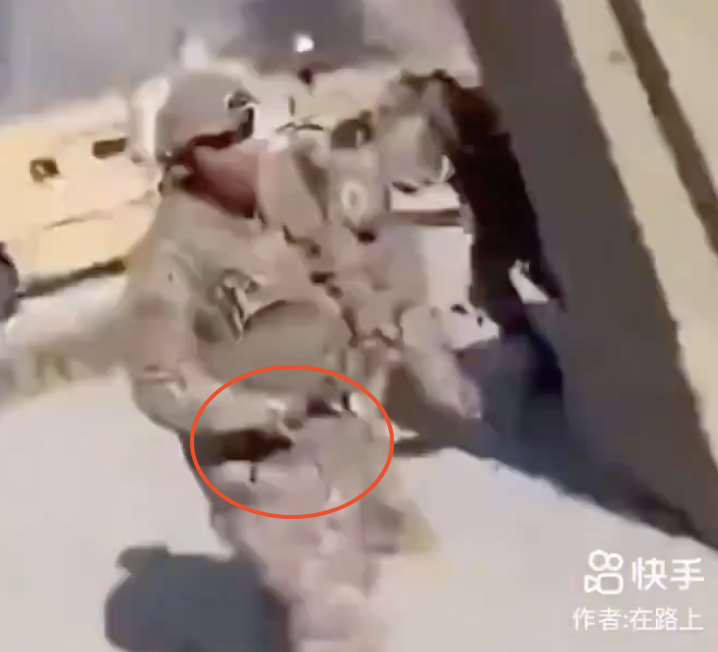
(Image source: post by @IBN_Now on X.com.)
At the 00:08 mark, a person's arm disappears as they start to run:
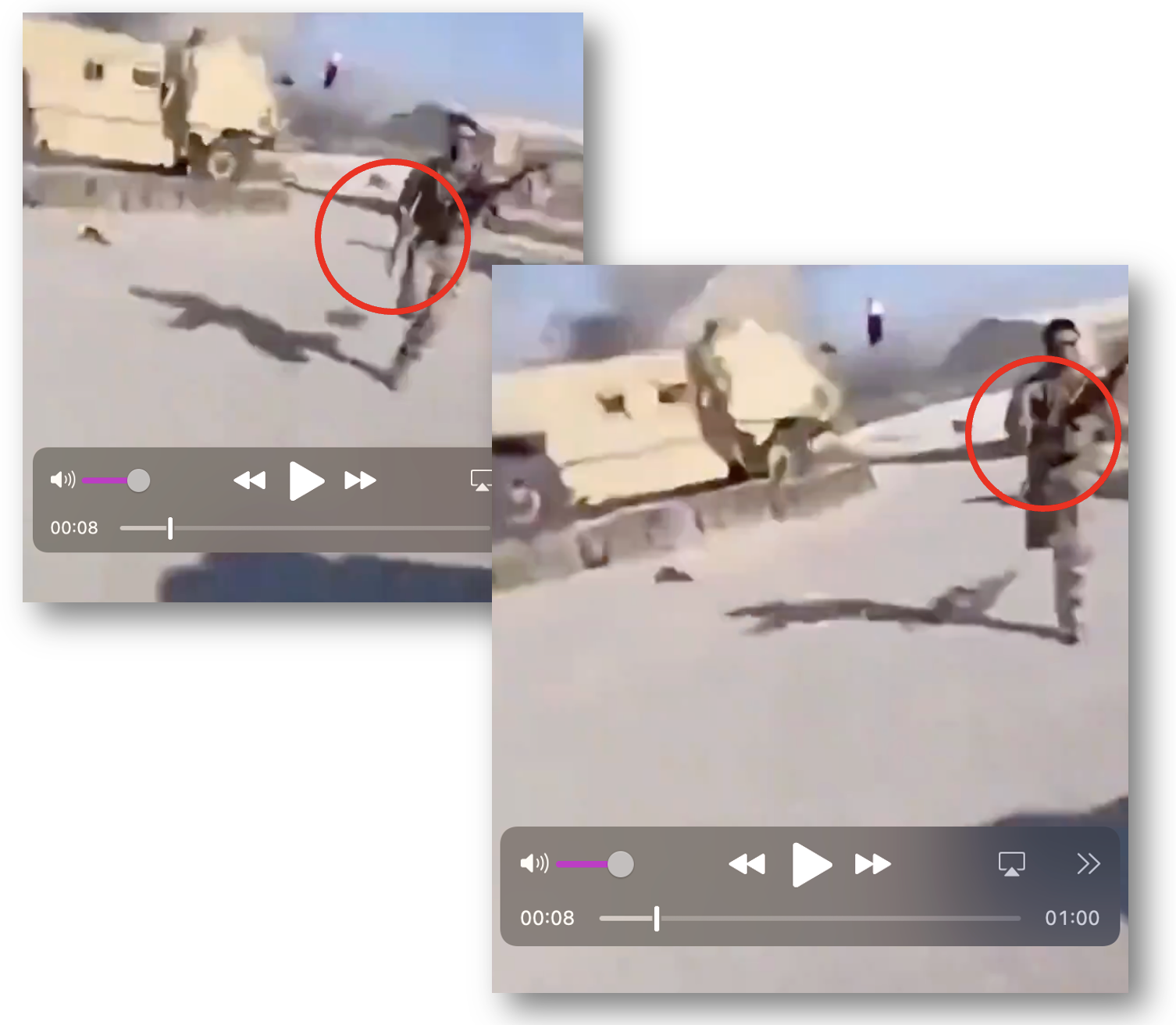
(Image source: post by @IBN_Now on X.com.)
At the 00:10 mark, a fictional American flag enters the frame. It looks different from the real U.S. flag, which consists (archived here) of 13 red and white stripes representing the 13 original colonies and 50 white stars on a blue background representing the 50 states.
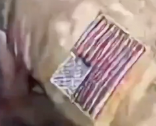
(Image source: post by @IBN_Now on X.com.)
At the 00:50 mark, we see something that appears to be a reverse explosion: At first, there is a tremendous blast on the ground, but a second later, an object resembling a weapon flies into the sky from the base -- without appearing to be a retaliatory U.S. missile:
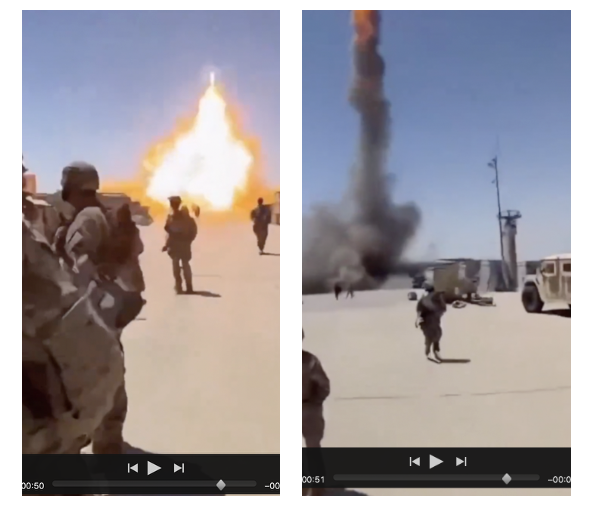
(Image source: post by @IBN_Now on X.com.)
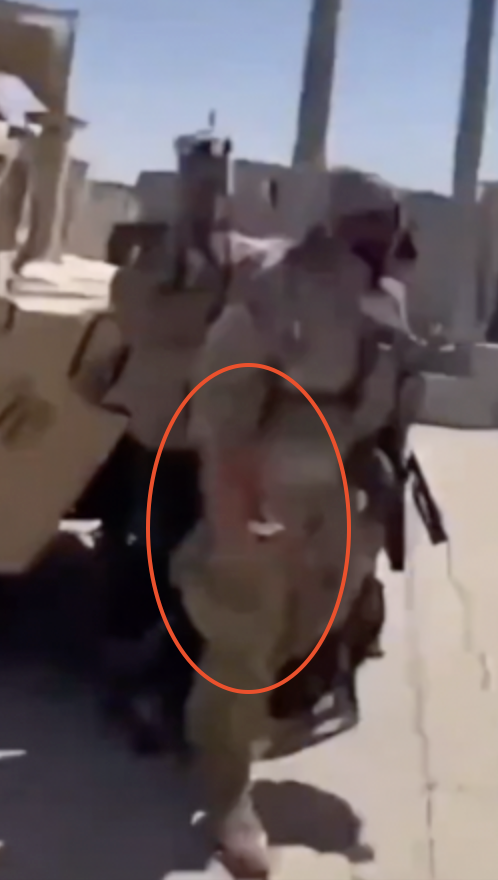
At the 00:53 mark, a servicemember's arm seamlessly blends into their military fatigues in a fashion typical of AI-generated videos:
(Image source: post by @IBN_Now on X.)
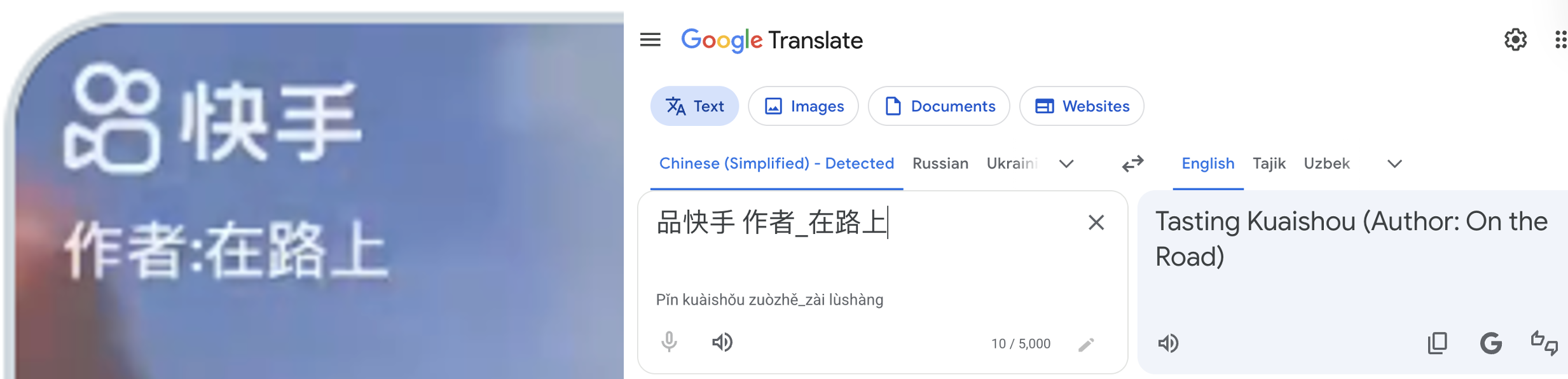
The video contained a watermark in Chinese that appeared in the top left corner at first, but then migrated to the bottom right corner:
(Image sources: post by @IBN_Now on X.com; Google Translate.)
Kuaishou (archived here) was a reference to China's second-biggest publicly traded social media platform, based in Beijing. According to the Wall Street Journal, the company's profits exceeded expectations in the fall of 2025, primarily because of its AI video-generating tool, Kling AI.
Lead Stories was unable to locate the video on Kuaishou but found it on another Chinese website, NetEase (archived here), where it was published on March 10, 2026. That company described itself as "a leading internet and game services provider centered around premium content" that "develops and operates some of the most popular and longest-running mobile and PC games available in China and globally," as translated by Chrome. The video (archived here) was uploaded there with a disclaimer. As translated to English by Chrome, it said:
Disclaimer: Sourced from the internet; please verify carefully.
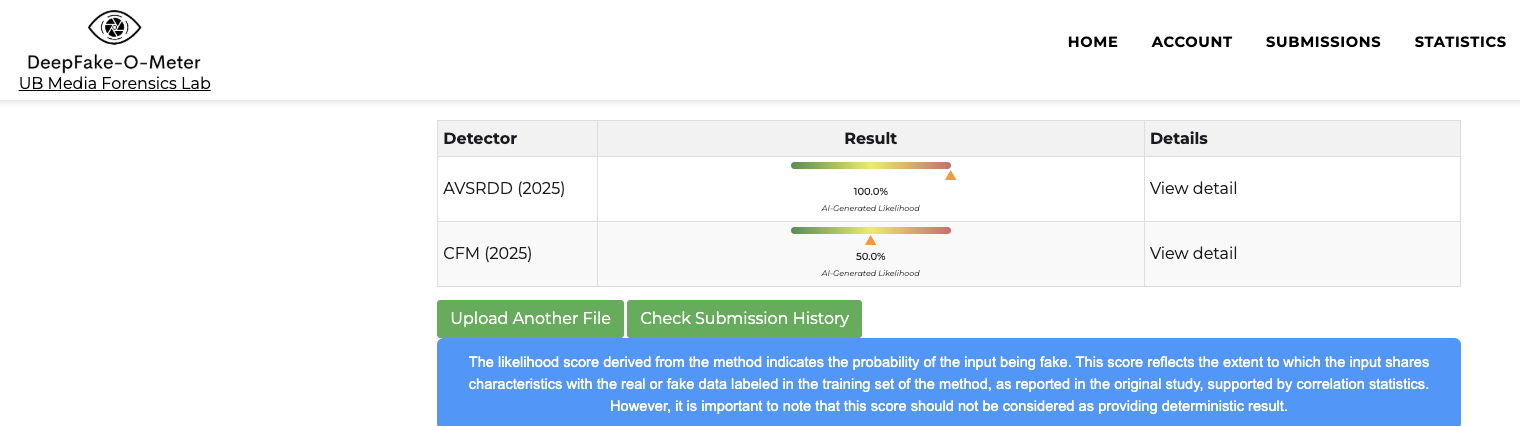
The two most recent models from 2025 for detecting AI-generated content available in the DeepFake-o-meter suggested that the video contained AI-generated frames:
(Image source: DeepFake-o-Meter.)
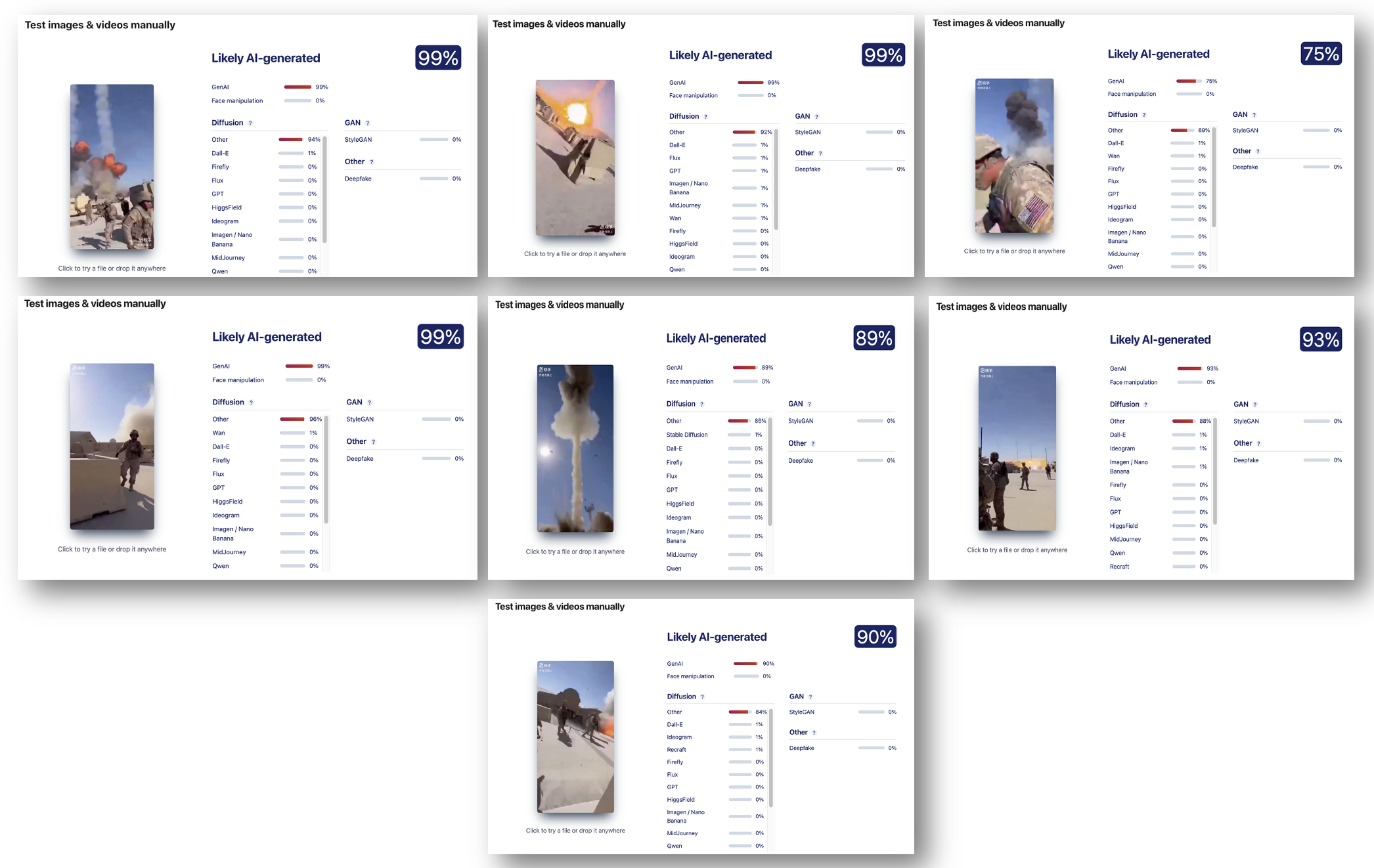
When Lead Stories tested keyframes produced via InVid in another AI detection tool, Sightengine, it also showed that the probability of the clip being AI-generated was high: between 75% and 99%.
(Image source: Sightengine.)