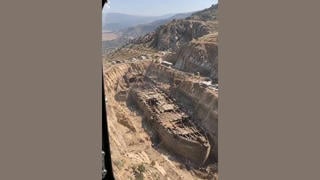
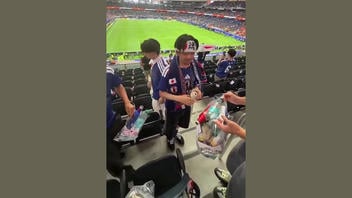
Does a video show Japanese soccer fans "destroy stadium after defeat by Brazil"? No, that's not true: The video has been reversed -- when played forward it shows scenes of Japanese fans collecting litter after the match with the Netherlands. This footage predates the June 29, 2026, match with Brazil, and was already circulating online after the match with the Netherlands on June 14, 2026. The tradition of tidying up the stadium after a match has been widely reported since Japan's first World Cup in 1998.
The reversed video appeared in a post (archived here) published by the X account @RaiqueTavares on June 29, 2026. It was captioned:
🚨 Japan Fans DESTROY the stadium after defeat to Brazil
This is a screenshot from the video: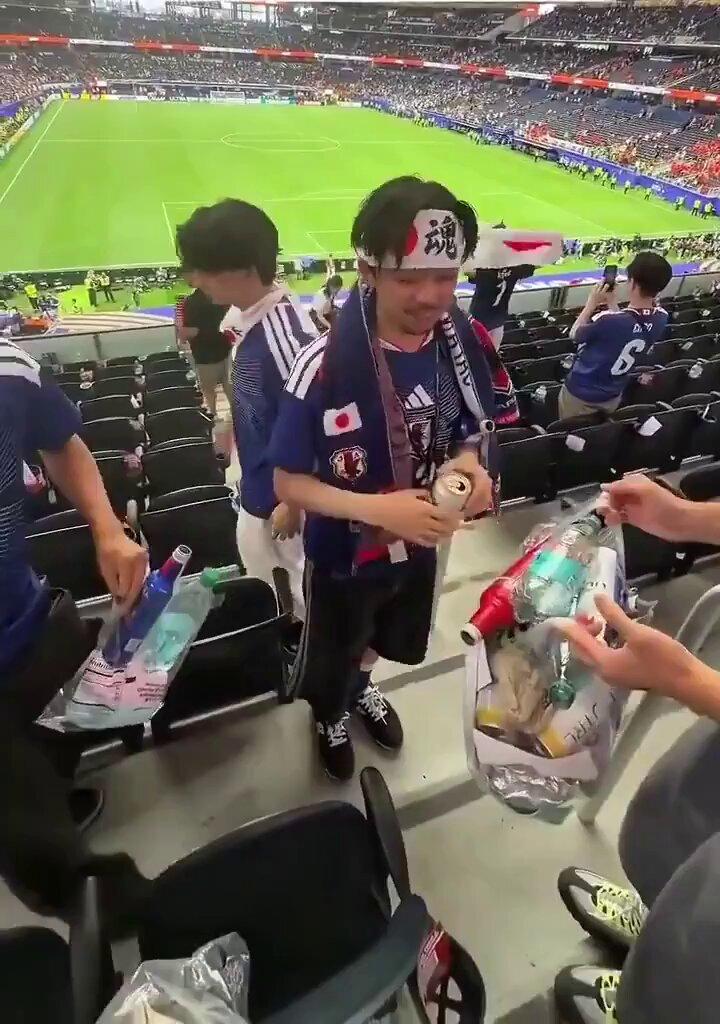
(Image source: post by @RaiqueTavares on X.)
The 12-second video contains four clips of the fans in the stands. When viewed in reverse they appear to be carefully distributing trash around the stadium -- but the people walking up and down the stadium steps backwards gives away the trick. The video was presented in reverse. All four clips also appear to show the Netherlands fans in bright orange jerseys in the mix in the background.
A video short published on YouTube on June 15, 2026, titled, "Japanese Fans did It Again" (archived here) includes all four of the clips in the @RaiqueTavares video (played forward) plus one more. The final clip shows a young man who was pictured picking up trash in an earlier clip, saying:
This is Japanese culture.
A June 15, 2026, article from AFP (Agence France-Presse) is titled, "'This is our culture': Japan fans clean up World Cup stadium" (archived here). The article begins:
Japan fans left the stands spotless after their World Cup opener against the Netherlands in Texas on Sunday, saying it was 'Japanese culture' to tidy up after themselves.
Spectators stayed behind after the 2-2 draw to make sure they left the stadium as they found it, meticulously picking up litter and stuffing it into blue plastic bags.
Another 31-second video short on YouTube shows about 20 short clips of Japanese fans cleaning stadiums, including three of the four clips in the @RaiqueTavares video (archived here). The short, published on June 14, 2026, mentions the outcome of the June 14, 2026, match with the Netherlands, thus demonstrating that this compilation, containing some older clips, was published shortly after the match.
Before fans use blue plastic bags to collect trash, the bags are used during the game to show team spirit, with fans inflating them and holding them high. The tradition of cleaning up the stadium goes back at least to the time when Japan qualified for their first World Cup in 1998, as The Associated Press reported in an article titled, "Why you may see Japanese soccer fans cleaning up the stadium after World Cup games" (archived here). A 1997 photo on Getty Images shows the National Stadium in Tokyo awash in the color blue, with fans rooting for their team, nicknamed Samurai Blue, at a qualifying match with South Korea (archived here).
As for the match against Brazil? A June 29, 2026, video on YouTube from local news channel KHOU 11 in Houston (embedded below) shows the Japanese fans maintained the tradition (archived here).