

Is a review of an unpublished draft study a statistically valid analysis comparing chronic disease outcomes in vaccinated versus unvaccinated children? No, that's not true: The analysis is based on a 2020 draft study that was never published because an internal review identified "serious flaws in the data and methodology," according to Michigan-based Henry Ford Health System. Public health and infectious disease experts said the study's design and significant differences between the vaccinated and unvaccinated groups make it difficult to draw reliable conclusions about the long-term health effects of childhood vaccination.
The claim appeared in a post and video (archived here) by Nicolas Hulscher (@NicHulscher) on X on June 17, 2026. It read:
THE LARGEST VAXXED VS. UNVAXXED BIRTH COHORT STUDY EVER CONDUCTED FOUND VACCINATED CHILDREN ARE SICKER ACROSS ALL 22 CHRONIC DISEASE CATEGORIES
1. Cancer: +54%
2. Autism: +180%
3. Neurodevelopmental disorders: +1254%
4. Autoimmune disease: +1120%
5. Motor disability: +810%
6. Speech disorder: +803%
7. Mental health disorders: +696%
8. Asthma: +553%
9. Developmental delay: +412%
10. Atopic disease: +386%
11. Seizure disorder: +216%
12. Food allergy: +128%
13. Neurological disorder: +26%
14. Any chronic condition: +250%Observed ONLY in vaccinated children:
15. ADHD 💉
16. Diabetes 💉
17. Brain dysfunction 💉
18. Behavioral disability 💉
19. Learning disability 💉
20. Intellectual disability 💉
21. Tics 💉
22. Other psychological disability 💉Our peer-reviewed reanalysis of the landmark Henry Ford birth cohort study found 22 out of 22 chronic disease categories were proportionally higher in vaccinated children. ZERO exceptions.
The CDC's unlawful vaccine regime has poisoned the nation.
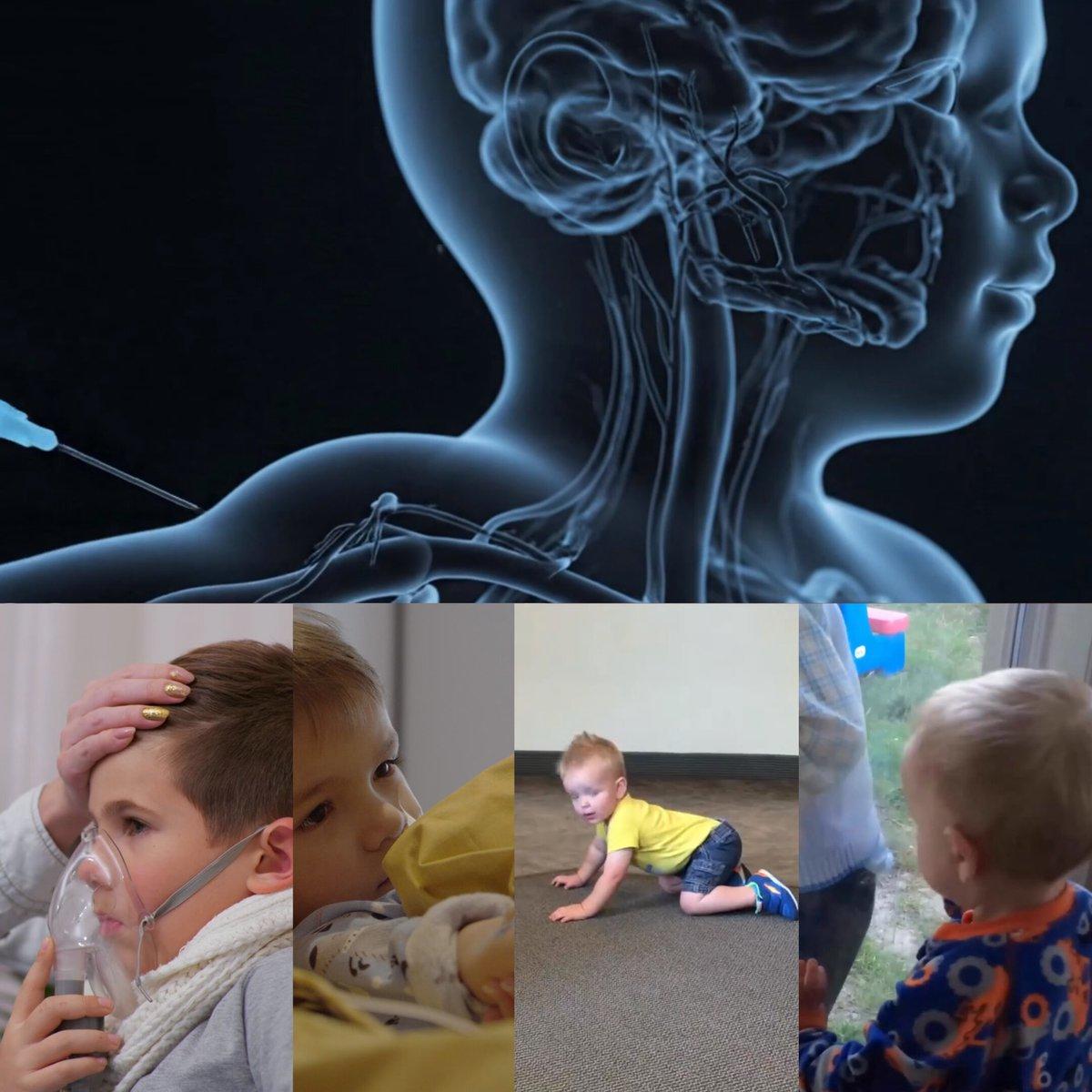
This is what a still from the video looked like:
(Image source: post by @NicHulscher on X.)
Hulscher included the data breakdown in a second post (archived here) on X on June 17, 2026. It read:
This is one of the clearest population-level datasets ever produced demonstrating that the CDC's childhood vaccine schedule is a MAJOR driver of chronic disease, neurodevelopmental injury, and early-life morbidity: ijvtpr.com/index.php/IJVT
This is what the graphic in the post looked like on X at the time of writing:
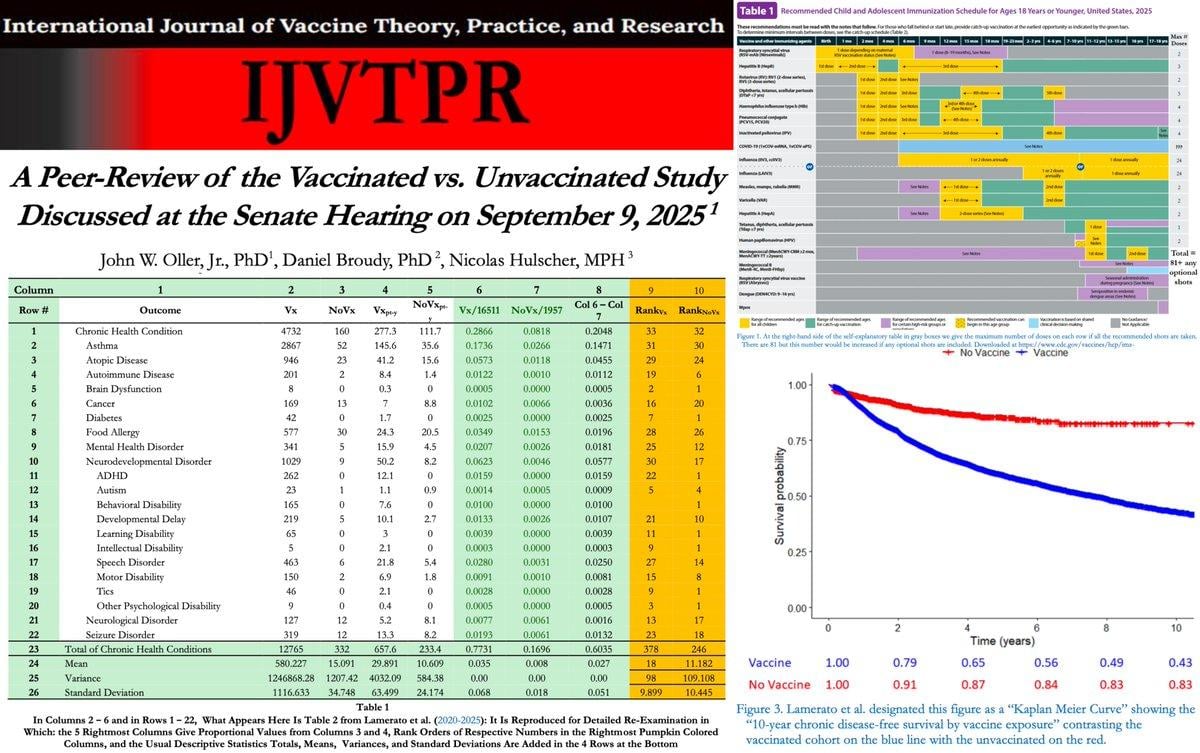
(Image source: Composite of figures from A Peer Review of the Vaccinated vs. Unvaccinated Study Discussed at the Senate Hearing on September 9, 2025)
In a Sept. 12, 2025, Substack article (archived here), Dr. Jake Scott, a Stanford professor in the Division of Infectious Diseases who also testified at the Senate hearing, said the draft study that was reviewed in late 2025 and included in the June 2026 social media post was a "fundamentally flawed analysis." Scott continued:
The analysis followed approximately 18,500 children from Henry Ford Health System, comparing 16,500 vaccinated to 2,000 unvaccinated children. It reported that vaccinated children had 2.5 times higher rates of chronic disease overall, with some conditions showing 3-to-6-fold increases.
These alarming numbers collapse under scrutiny.
The problems begin with the groups being fundamentally incomparable. Every baseline characteristic differed significantly between vaccinated and unvaccinated children: sex, race, birth weight, prematurity, respiratory distress, birth trauma. The magnitude of these baseline imbalances suggests these groups likely differ on unmeasured factors too: socioeconomic status, parental age, environmental exposures, urban versus rural residence. Detroit's well-documented pollution and water quality issues could vary dramatically by neighborhood.
When your starting differences mirror your ending differences, you haven't shown vaccines cause disease. You've just shown your groups aren't comparable.
Citing similar concerns as Scott, Jeffrey Morris, a professor of public health and preventive medicine at the University of Pennsylvania's Perelman School of Medicine, said in an article published in The Conversation (archived here) on Sept. 26, 2025:
I can say definitively that the study by Henry Ford Health researchers has serious design problems that keep it from revealing much about whether vaccines affect children's long-term health.
Morris continued:
To study long-term diseases in children, it's crucial to track their health until the ages when these problems usually show up. Many conditions in the study, like asthma, ADHD, learning problems and behavior issues, are mostly diagnosed after age 5, once kids are in school. If kids are not followed that long, many cases will be missed.
However, that's what happened here, especially for children in the unvaccinated group.
About 25% of unvaccinated children in the study were tracked until they were less than 6 months old, 50% until they were less than 15 months old, and only 25% were tracked past age 3. That's too short to catch most of these conditions. Vaccinated kids, however, were followed much longer, with 75% followed past 15 months of age, 50% past 2.7 years of age and 25% past 5.7 years of age.
The longer timeline gave the vaccinated kids many more chances to have diagnoses recorded in their Henry Ford medical records compared with the nonvaccinated group. The study includes no explanation for this difference.
When one group is watched longer and into the ages when problems are usually found, they will almost always look sicker on paper, even if the real risks are the same. In statistics, this is called surveillance bias.
Scott noted the same bias:
Think of it this way: if you only take your car to the mechanic once a year versus every month, the monthly visitor will have more problems documented. Not necessarily because their car is worse, but because someone is looking more often.
In the Henry Ford study, vaccinated children averaged about seven medical visits yearly while unvaccinated children averaged only two. Many conditions require multiple visits for diagnosis. ADHD typically needs three to four encounters and cannot be diagnosed before age four according to American Academy of Pediatrics guidelines.
Among unvaccinated children, the small fraction who were eventually diagnosed averaged about 5 visits per year. The majority averaged only 1 to 2 visits per year, far too little contact for conditions that require multiple encounters to diagnose.
Ford Health said in a news release (archived here) published on September 26, 2025, that the draft study was "immediately shelved upon the first internal peer review because of serious issues with its data and methodology." The healthcare system said the flaws in the draft included:
- The vaccinated and unvaccinated groups were very different from each other. The unvaccinated group included more boys, more white children, and fewer children born prematurely or with breathing problems at birth.
- The unvaccinated group was much smaller than the vaccinated group.
- The unvaccinated children were followed for a much shorter period of time. One-quarter were tracked only through 6 months of age, and 75% were tracked only through age 3, before many chronic childhood conditions can be reliably diagnosed.
- The study compared children who received multiple vaccines with children who received none, rather than examining the effects of individual vaccines.
- The analysis did not account for how many vaccines children received or how much time passed between vaccination and the onset of illness.
- The study also did not account for changes in childhood vaccination recommendations over time.
The Ford Health press release added:
The draft was never considered for submission to journals because it did not remotely come close to meeting the rigorous scientific standards the system demands -- the same standards journals have, too.
Based on those flaws, the public health experts said the unpublished draft study does not provide a statistically reliable basis for comparing chronic disease outcomes between vaccinated and unvaccinated children.