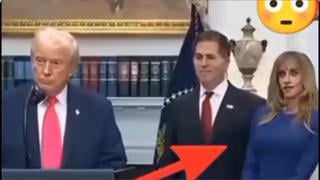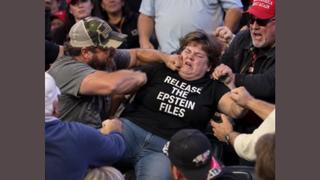
Recognizing false claims and fake videos shared on social media is a challenge for U.S. voters as the 2026 midterm elections approach. That is why Lead Stories and several other fact-checking organizations active in North America are joining forces in a first-of-its-kind collaboration: a joint newsletter sharing their best election-related work. It features an overview of fact check articles that examine viral false claims, as well stories about AI-generated images and videos. Sign up at https://leadstories.com/USMidtermsNewsletter to have it emailed to you every week.
Election-year collaborations have long been common among fact-checkers in countries such as France, Brazil, and Nigeria, but they've been rare in the more competitive U.S. media environment -- making this the first joint campaign of its kind among U.S. fact-checkers.
The increased spread of inaccurate information, driven by political polarization and AI-generated falsehoods, is pushing U.S.-based fact-checkers to combine efforts.
"There's a rising tide of both fakery and public mistrust as we head toward 2026 Election Day," said Angie Drobnic Holan, director of the International Fact-Checking Network. "I'm happy to see that U.S. fact-checkers realize their collective work is a bulwark against inaccurate and false information across the political spectrum. The newsletter will help other news organizations and content creators better sort out fact from fiction as they cover the 2026 elections."
The collaboration, which includes both large wire sources and independent newsrooms, includes the following organizations:
Factcheck.org bills itself as a "consumer advocate" for voters; it aims to reduce the level of deception and confusion in U.S. politics. Established in 2003, it focuses on politics and public policy with specialties in campaign messaging and science. It is a project of the Annenberg Public Policy Center of the University of Pennsylvania.
Lead Stories says that it "fact-checks at the speed of likes" and focuses on rapidly debunking falsehoods spread via social media. Founded in 2015 by former CNN journalist Alan Duke and technical lead Maarten Schenk, Lead Stories offers specialized feeds for political falsehoods about the left ("blue feed") and the right ("red feed"), as well as feed dedicated to debunking AI-generated deepfakes.
PolitiFact aims "to give citizens the information they need to govern themselves in a democracy." It specializes in fact-checking elections at the federal and state levels, and fact-checks public policy and congressional actions year round. It tracks President Donald Trump's campaign promises through its MAGA-Meter. Part of the Poynter Institute, PolitiFact won the Pulitzer Prize for its fact-checking of the 2008 presidential election.
AFP Factcheck is part of Agence France-Presse, a France-based multi-lingual news service with a mission "to provide accurate, balanced and impartial coverage of news wherever and whenever it happens in the world on a continuous basis." AFP is known for its comprehensive world coverage and transnational investigations. AFP won the Global Fact-Checking Award's Gold Standard prize in 2025 for an investigation on a coordinated network spreading disinformation about the South China Sea.
Factchequeado is a nonpartisan organization that bridges the information gap in Spanish for more than 68 million Latinos. According to the BBC, they are the largest collaborative initiative against Spanish-language misinformation in the United States
All five organizations are verified signatories of the International Fact-Checking Network's Code of Principles. The code sets universal standards for fact-checking organizations on accuracy, transparency, and independence, with rigorous outside verification for signatories on an ongoing basis.