Was Gadi Eisenkot declared the new prime minister of Israel, as of Oct. 30, 2026, replacing Benjamin Netanyahu in this role as a result of the 2026 legislative election? No, that's not true: Lead Stories found no credible reports confirming such a change in established Hebrew- or English-language news outlets. As of this writing, the PM's Office government page didn't show any post-election updates.
The claim appeared in a post (archived here) on X where it was published by @FablexUG on Oct. 30, 2026. It read:
🚨Gadi Eisenkot finally declared the new prime Minister of Israel 🇮🇱 Netanyahu now awaits to be summoned to the ICC for his war crimes as @grok confirmed.
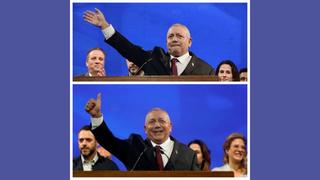
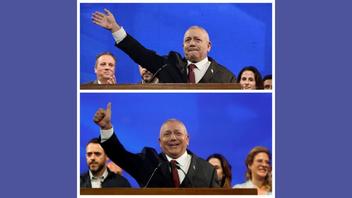
This is what the image attached to the post looked like on X at the time of writing:
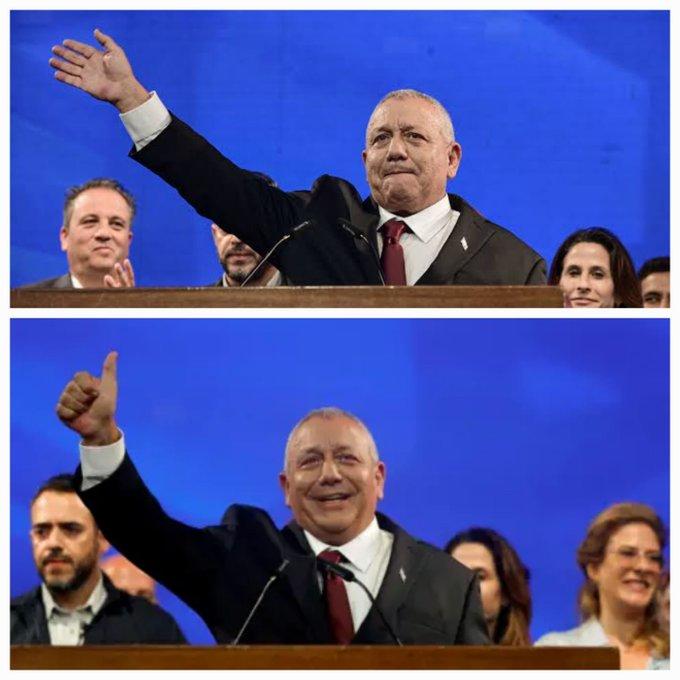
(Image source: post by @FablexUG on X.)
The thumb-up image from X could also be found on the Reuters database (archived here) where it was uploaded under the caption that read:
Israel holds first general election since October 7 Hamas attack
Former military chief Gadi Eisenkot, leader of the Yashar party, gives a thumbs up following the exit polls at his party headquarters, on the evening of Israel's national election, in Tel Aviv, Israel October 28, 2026. REUTERS/Shir Torem TPX IMAGES OF THE DAY
Yet, the caption said nothing about Eisenkot being confirmed as the prime minister.
Israel's 2026 legislative election was held on Oct. 27, 2026 (archived here), and former general Eisenkot (archived here) was considered a major challenger to Netanyahu. However, as of Oct. 30, 2026, which is the day of this article's publication, no clear winner has emerged (archived here). Netanyahu's party came first but still failed to win a majority; Eisenkot's party came second, but, as of this writing, the outcome didn't appear to have been formally finalized.
On Oct. 30, 2026, Nadav Shelef (archived here), a University of Wisconsin-Madison Harvey M. Meyerhoff Professor of Modern Israel Studies at the Department of Political Science addressed the claim via email, answering Lead Stories' inquiry:
That is false.
He continued:
The official results are not even in yet (that will happen on Wednesday). Once that happens, the President will hold consultations with the leaders of all parties elected to the Knesset to get their recommendation for who should be given the first chance to form a government. The President can choose any MK (member of the Knesset - L.S.) to do so, but generally it will be either the leader of the largest party or the person most likely to be able to form a coalition (which may be someone else). Then, the parties will embark on a process of negotiations to see if a sufficient number of members of parliament would agree to form a coalition. If that is the case, a new government will be elected (by the Knesset). If not, the president may give another MK the chance to form a government. If that effort is also unsuccessful, new elections are called.
This process was also described in an NPR article (archived here).
As of this writing, the website of the Israeli PM Office (archived here) didn't appear to show any post-election updates.
Lead Stories searched for the Hebrew spelling of Eisenkot's full name (archived here) on Google News Israel, but the matches said nothing (archived here) about him being confirmed to become the country's next prime minister. A similar search on the English-language section of the Google News website (archived here) website yielded zero reports corroborating the claim, as of Oct. 30, 2026.