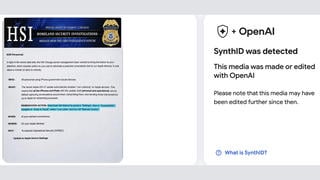
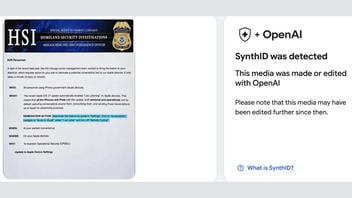
Is a viral image of a Homeland Security Investigations memo about Apple devices a real document? No, that's not true: Four online AI detectors, Pangram, Sightengine, ZeroGPT and SynthID, determined that the picture was very likely AI-generated. SynthID also indicated that it was made or edited with OpenAI.
The claim appeared in a post (archived here and here) on X where it was published by @awinston on Nov. 17, 2026. The caption read:
They're not wrong. Adjust your devices when you update.
The text in the image read:
HSI
SPECIAL AGENT IN CHARGE | CHICAGO
HOMELAND SECURITY INVESTIGATIONS
MESSAGE FROM THE CHIEF INTELLIGENCE OFFICERAOR Personnel:
In light of the recent data leak, the HSI Chicago senior management team wanted to bring the below to your attention, which requires action on your part to eliminate a potential vulnerability tied to our Apple devices. It only takes a minute (or less) to remedy.
WHO: All personnel using iPhone government issued devices.
WHAT: The recent Apple iOS 27 update automatically enables 'Live Listening' on Apple devices. This means that all the iPhones and iPads with this update, both personal and operational, are by default capturing conversations around them, transcribing them, and sending those transcriptions up to Apple for advertising purposes.
REMEDIATION ACTION: Deactivate this feature by going to 'Settings', then to 'Accessibility', navigate to 'Audio & Visual', select 'Live Listen' and turn off 'Remote Control'.
WHEN: At your earliest convenience
WHERE: On your Apple devices
WHY: To maintain Operational Security (OPSEC)
Update to Apple Device Settings
This is what the image attached to the post looked like on X at the time of publication:
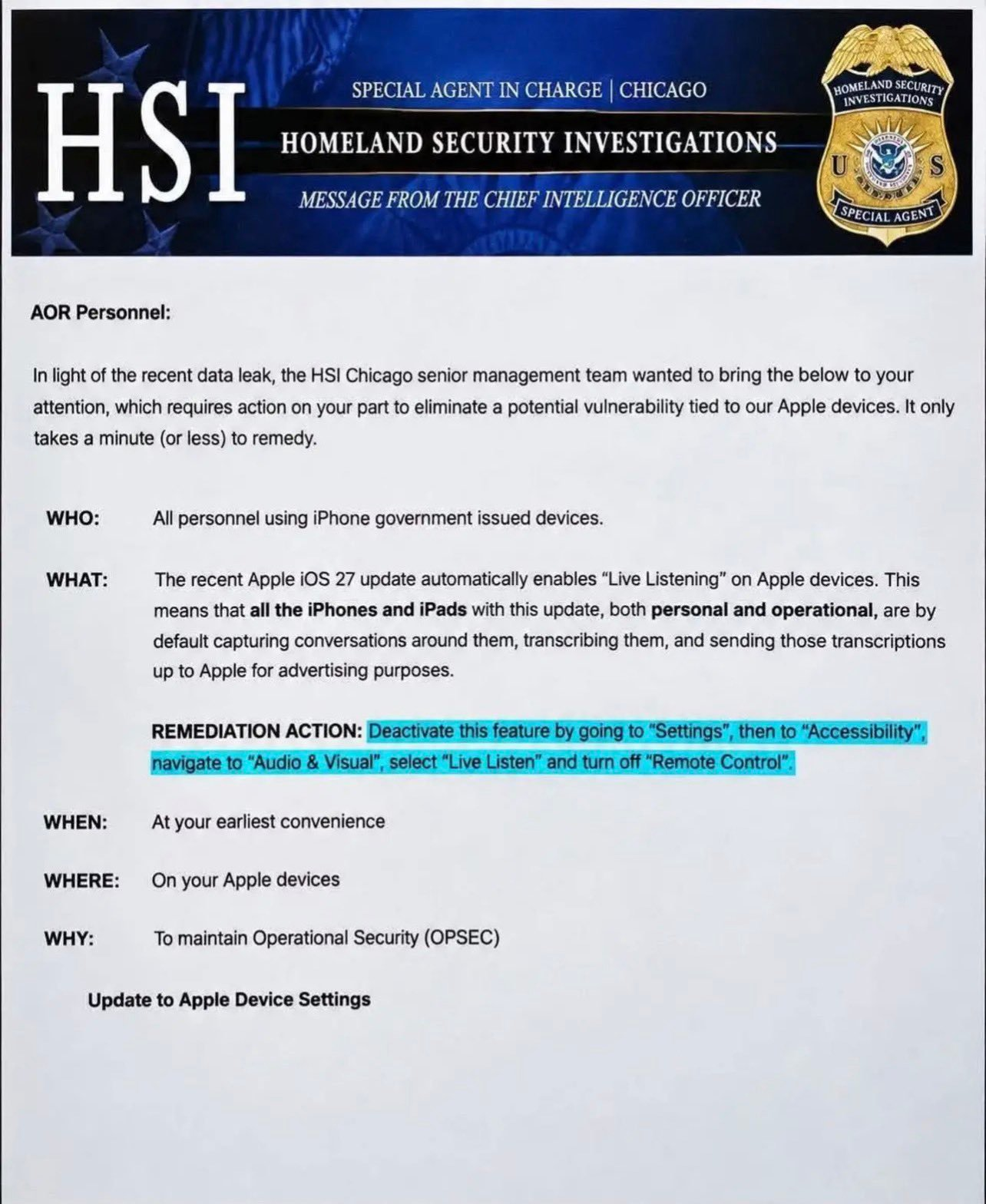
(Image source: post by @awinston on X.)
The post circulated on Nov. 17, 2026, the day Apple experienced an outage, according to AP (archived here and here) and The New York Times (archived here), a timing that may help explain why it drew attention. But the supposed memo shared on social media was not an authentic document.
Online AI detection tool Pangram showed that it was very likely that the viral image was a product of generative AI:
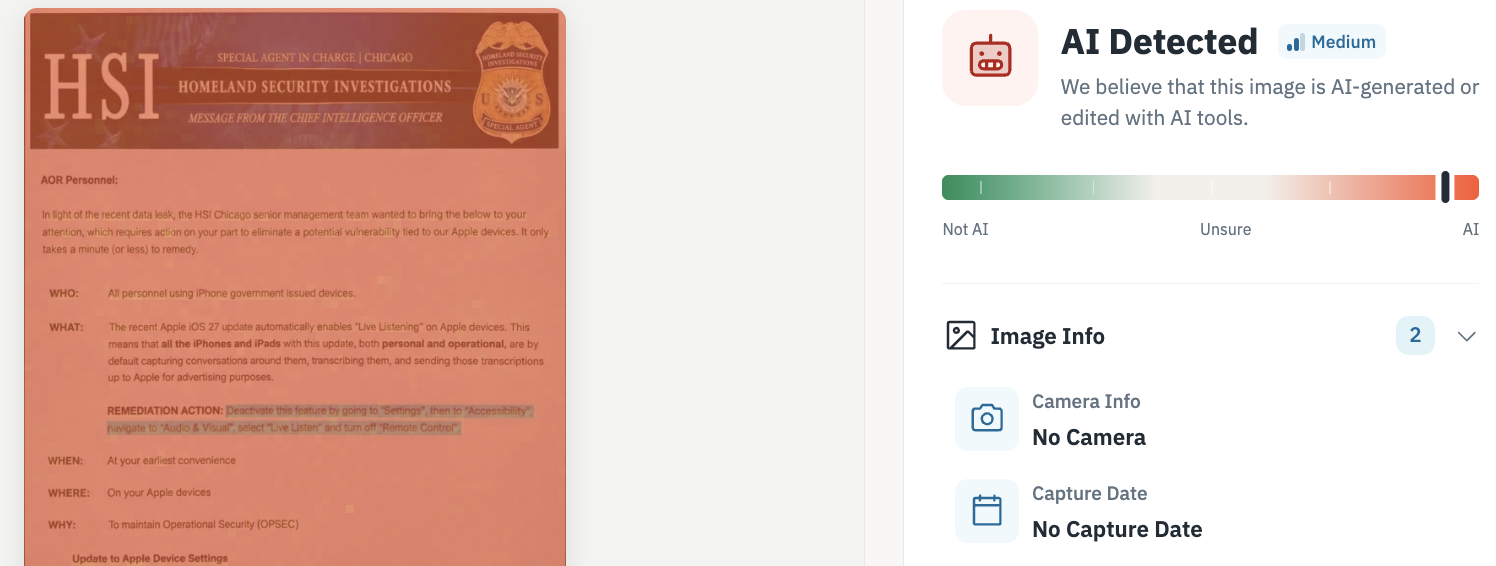
(Image source: Pangram.)
Sightengine, which is another detector, estimated that the picture was 98% likely to contain AI:
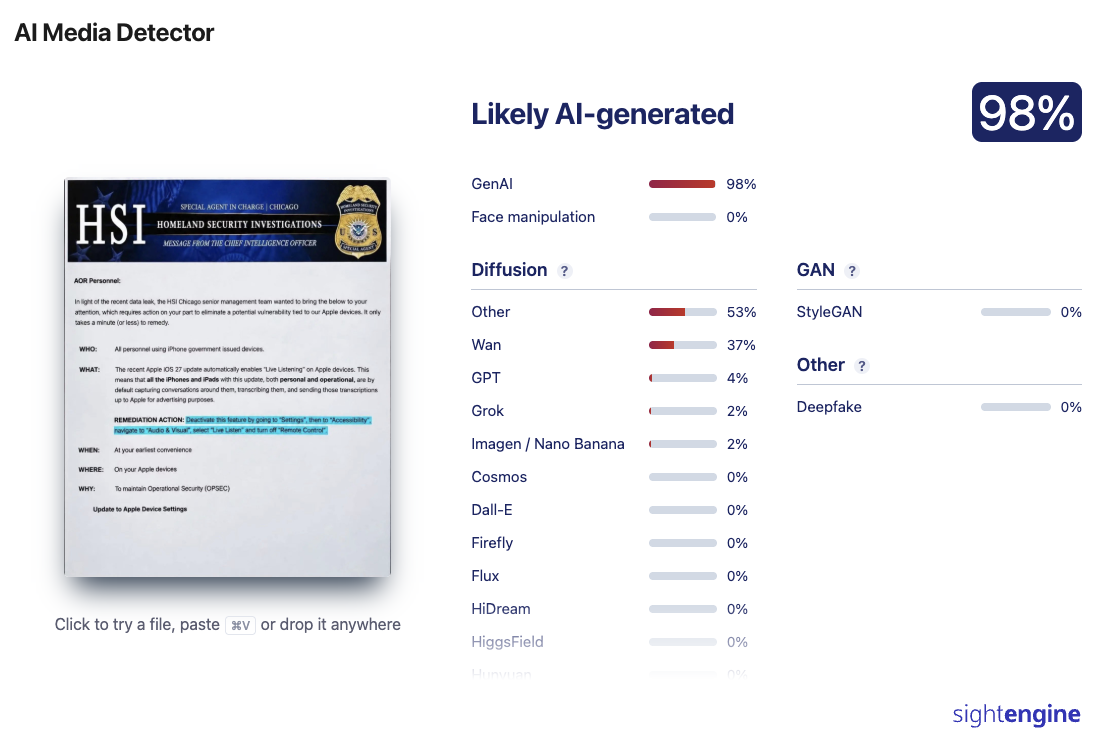
(Image source: Sightengine.)
One more tool, ZeroGPT, put the probability that the image showed an authentic document at 1%:
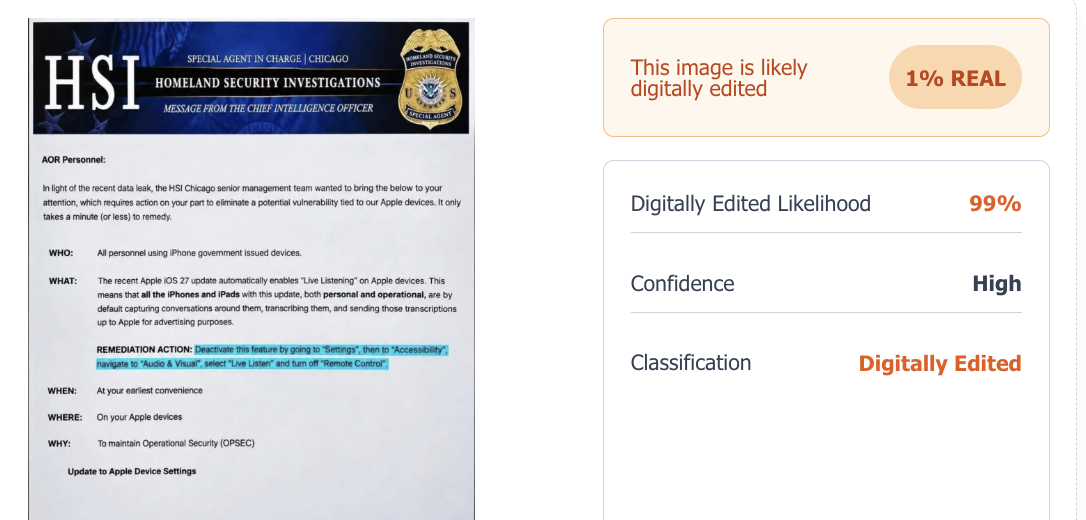
(Image source: ZeroGPT.)
Finally, SynthID (archived here), which detects invisible watermarks in AI-generated content, said that "this media was made or edited with OpenAI":
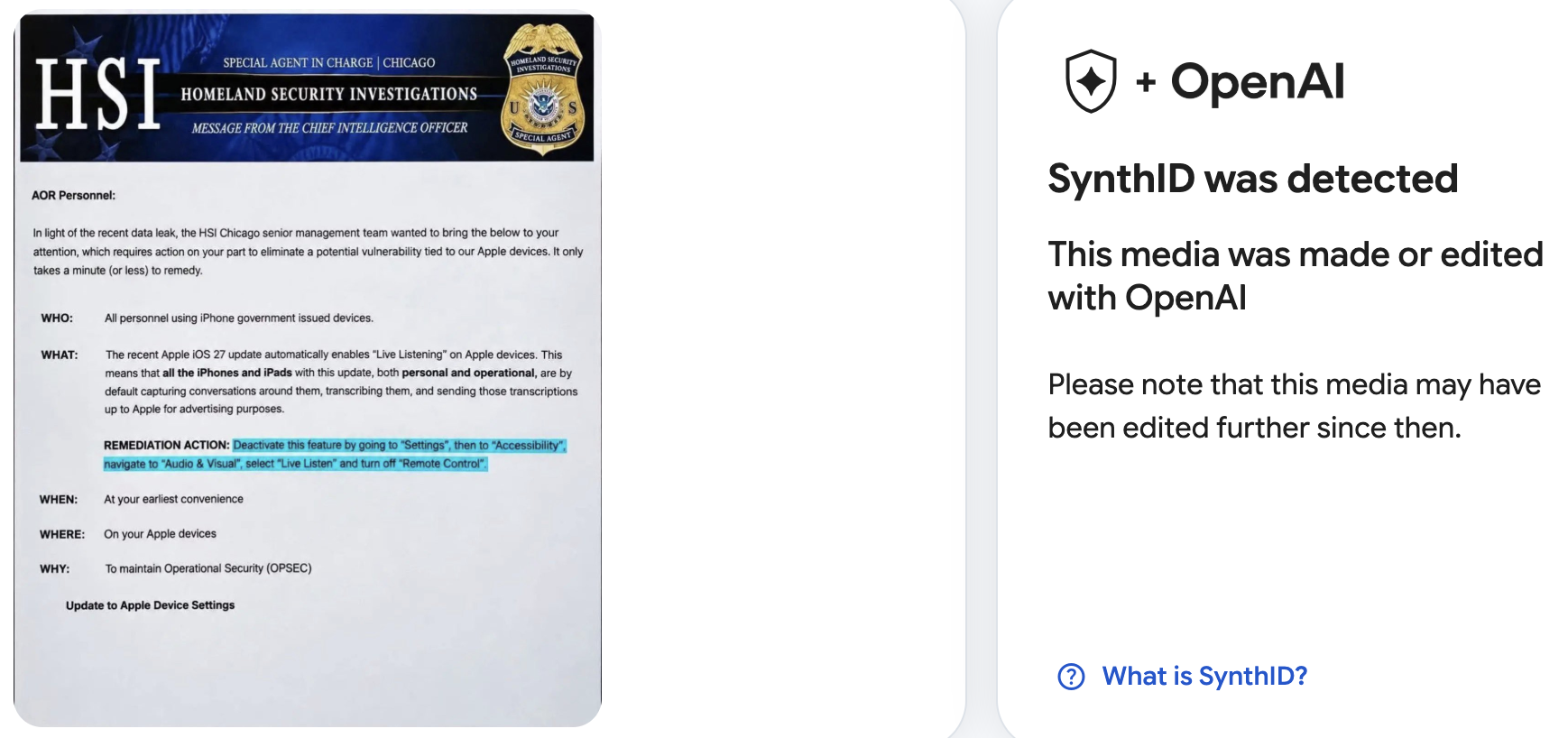
(Image source: SynthID.)
Lead Stories contacted the Department of Homeland Security and Apple for comments. This article will be updated as appropriate once a response is received.