
Did 3,330 "solid red" Republican counties vote Democrat in the 2026 midterms? No, that's not true: There are not that many counties in the United States. According to the National Association of Counties, 3,069 counties administer elections at the local level. The claim also confuses counties that administer elections with counties that vote as a single political bloc. Within the same county or state, election results can vary among congressional districts, other voting jurisdictions and communities.
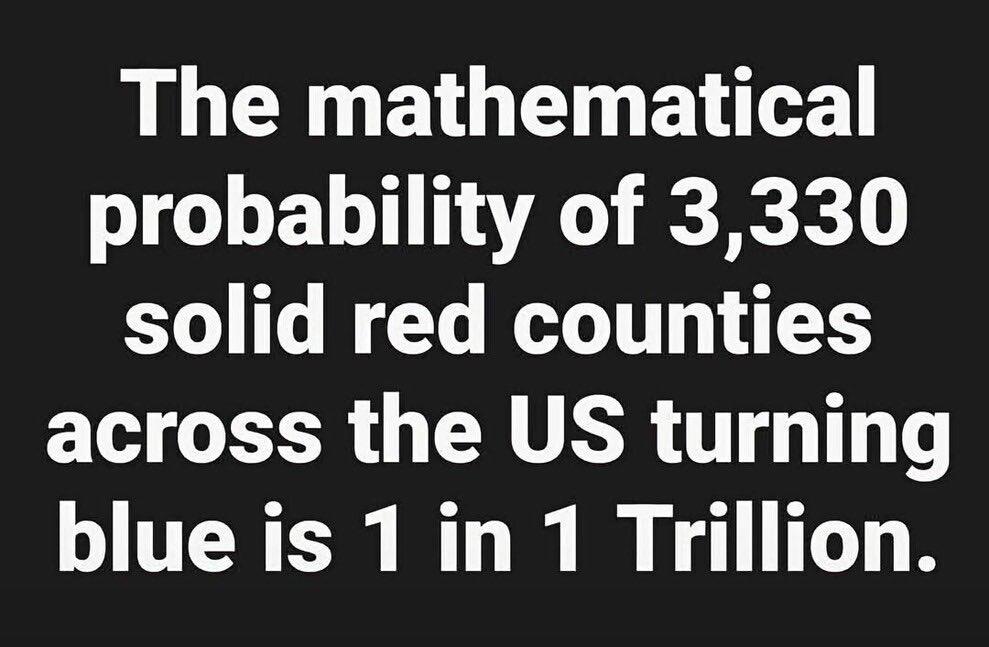
The claim appeared in a post by the @political_rock account on X on Nov. 17, 2026. It read:
The mathematical probability of 3,330 solid red counties across the US turning blue is 1 in 1 Trillion.
This is what the post looked like on X at the time of writing:
(Image source: post by @political_rock on X.)
The meme appears to be a reaction to the blue wave in the 2026 midterm elections, when Democrats flipped control of the U.S. House. Republicans held a 220-215 majority before the election, while Democrats emerged with a 257-171 advantage afterward, with some races still undecided as of Nov. 18, 2026.
The premise of the meme is flawed from the start. There are not 3,330 counties in the United States. According to the National Association of Counties, 3,069 counties administer elections at the local level.
The meme also treats counties as if they vote as single political blocs. In reality, voters cast individual ballots, and election results can vary among congressional districts and other voting jurisdictions within the same county. A county's overall results do not necessarily reflect how every voter or congressional district within it voted.
In the 2026 midterms, the electorate dramatically shifted toward the Democratic Party, but Republicans still tallied more than 42% of the vote, compared to 56% for Democrats in House races. In the 2024 House vote, Republicans held 51% of the vote to 48% for Democrats. Neither was a winner-take-all situation.
2026 House vote
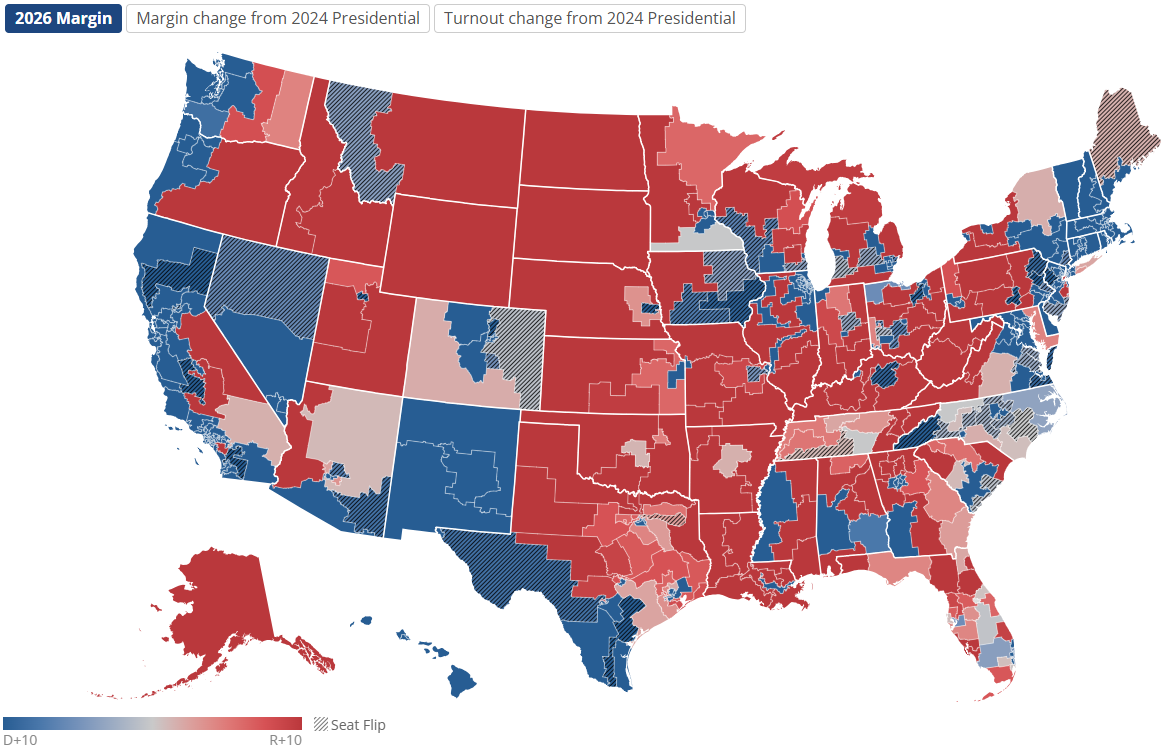
Although these maps break down results by congressional district rather than county, they show Republicans retaining large areas of the country while winning by narrower margins in many of the districts they carried. At the same time, Democrats strengthened their overall position.
The first map shows Democrats with a 257-to-171 advantage over Republicans, with seven seats still undecided.
(Image source: The Cook Political Report.)
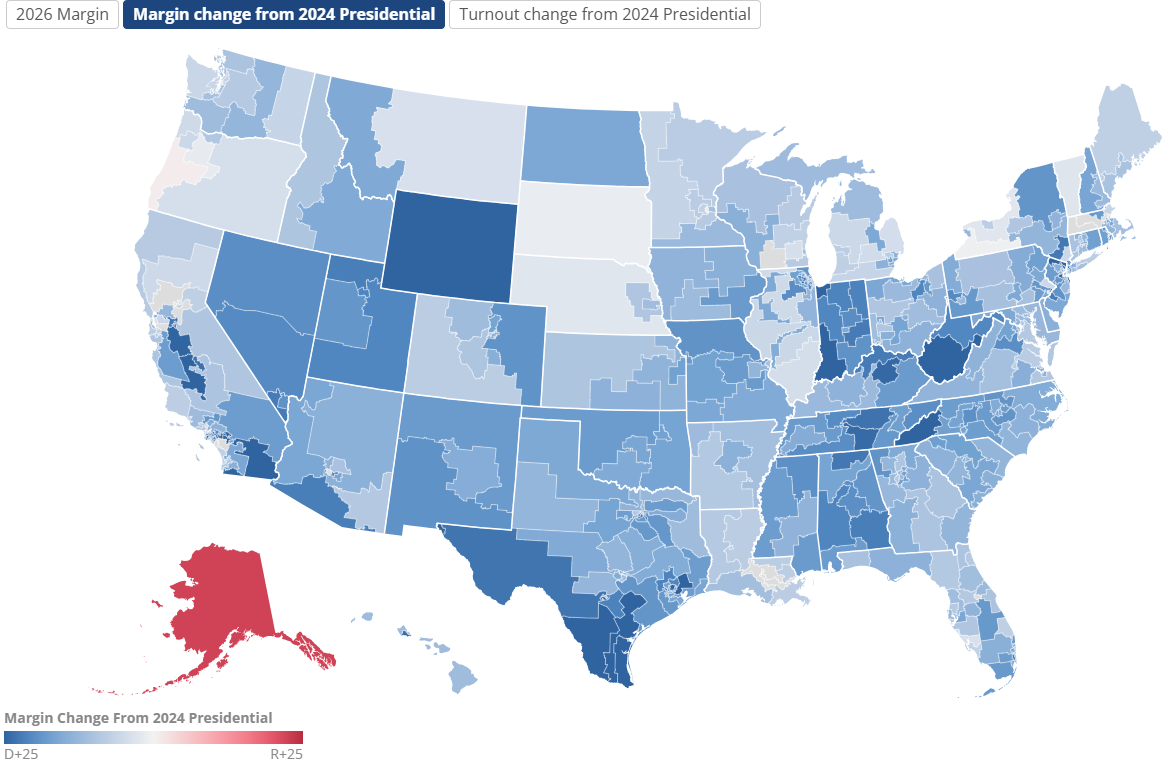
The second map shows how voting margins shifted between the 2024 presidential election and the 2026 midterms. Even in states and congressional districts won by Republicans (see above), the margin shifted toward Democrats in all but a small number of cases:
(Image source: The Cook Political Report.)
News searches
Lead Stories searched Google News and Yahoo News and found no matching reports about the claim from established news outlets using the search terms: "solid red," "counties," "Democrat" and "midterms."