
Does a viral video actually document an attack by a giant reptile? No, that's not true: After a visual inspection, Lead Stories found signs of AI-generated content in the video. Three online detectors concluded the clip was between 99 and 99.9% likely made by generative AI.
The claim appeared in a post (archived here and here) on X where it was published by @FUn_zone89 on July 21, 2026. It opened:
टी-शर्ट में खाने जैसा क्या था😳
Logged-in users in English-speaking countries, however, immediately saw the automatic translation from Hindi that read:
What was it like eating in a T-shirt? 😳
Google Translation offered a slightly different version:
What was there to eat on the T-shirt? 😳
And so did DeepL:
What was so appetizing about the T-shirt? 😳
This is what a 10-second video shared in the post looked like on X at the time of writing:
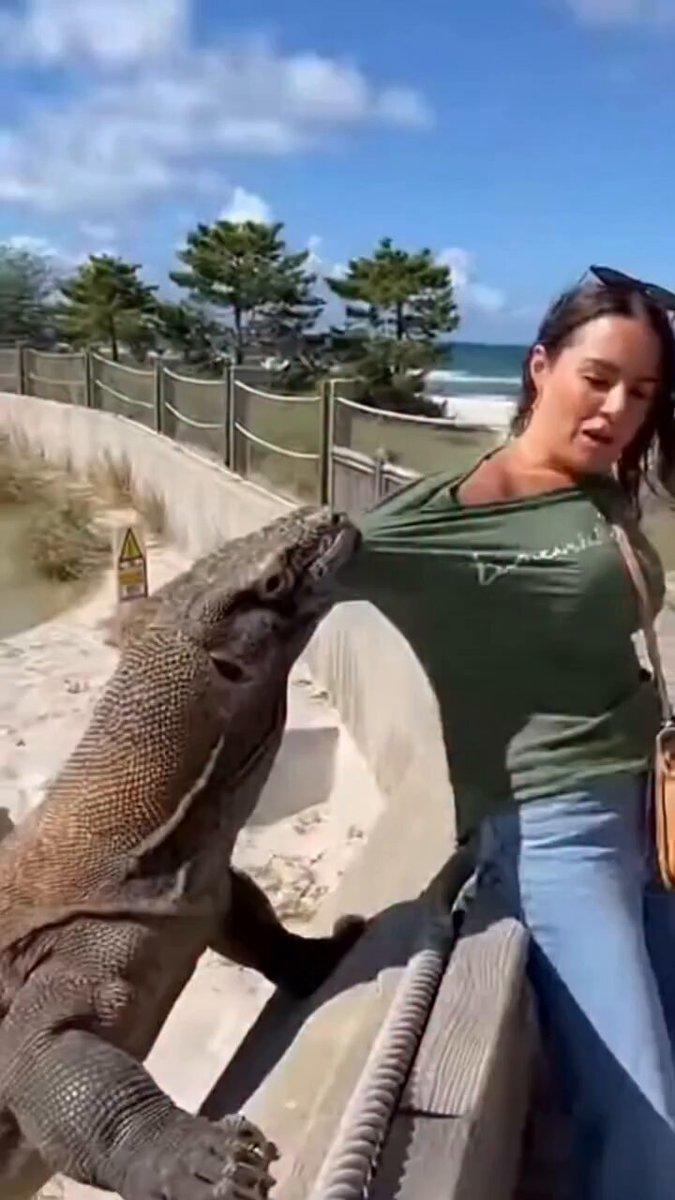
(Image source: post by @FUn_zone89 on X.)
The clip claims to show a reptile known as Komodo dragon (archived here and here) attacking a woman in broad daylight.
When Lead Stories tested the video with the Hive Moderation online AI detector, it said that the clip was 99.9% likely to have been generated by AI:
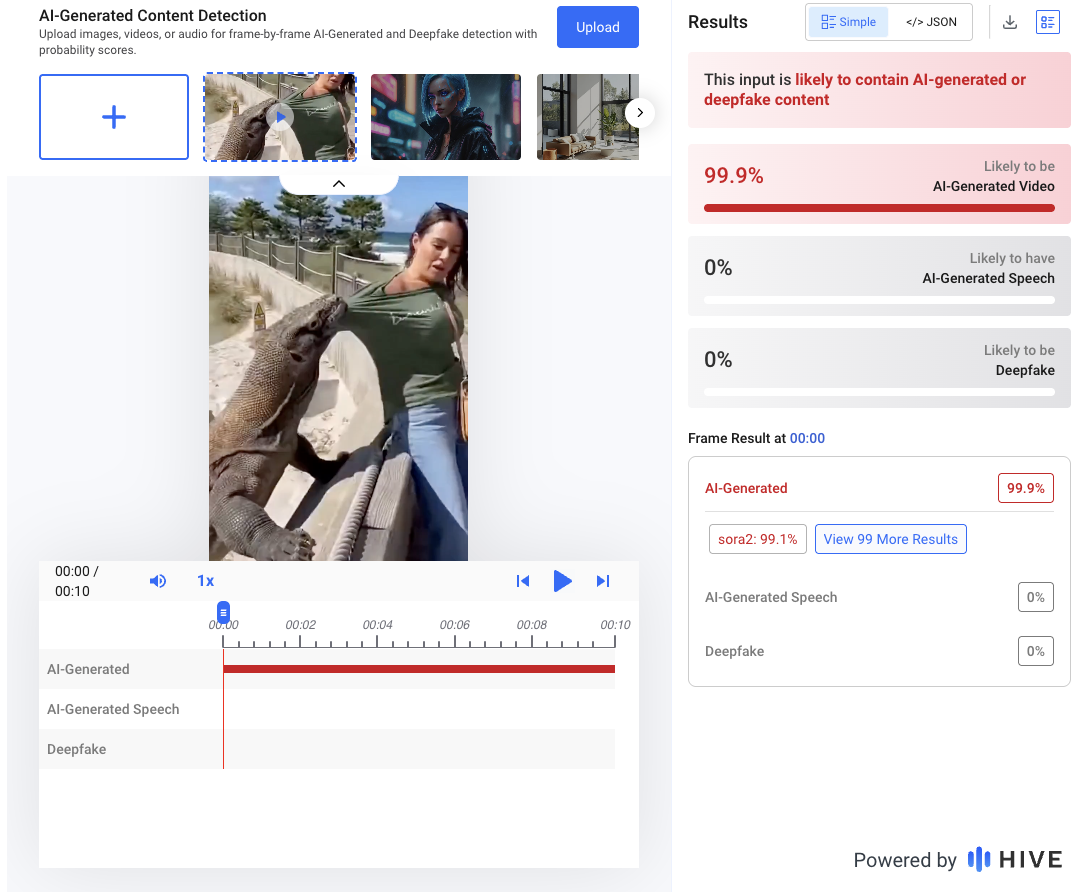
(Image source: Hive Moderation.)
Another detector, Sightengine, confirmed: The odds of the clip being a product of generative AI were 99%.
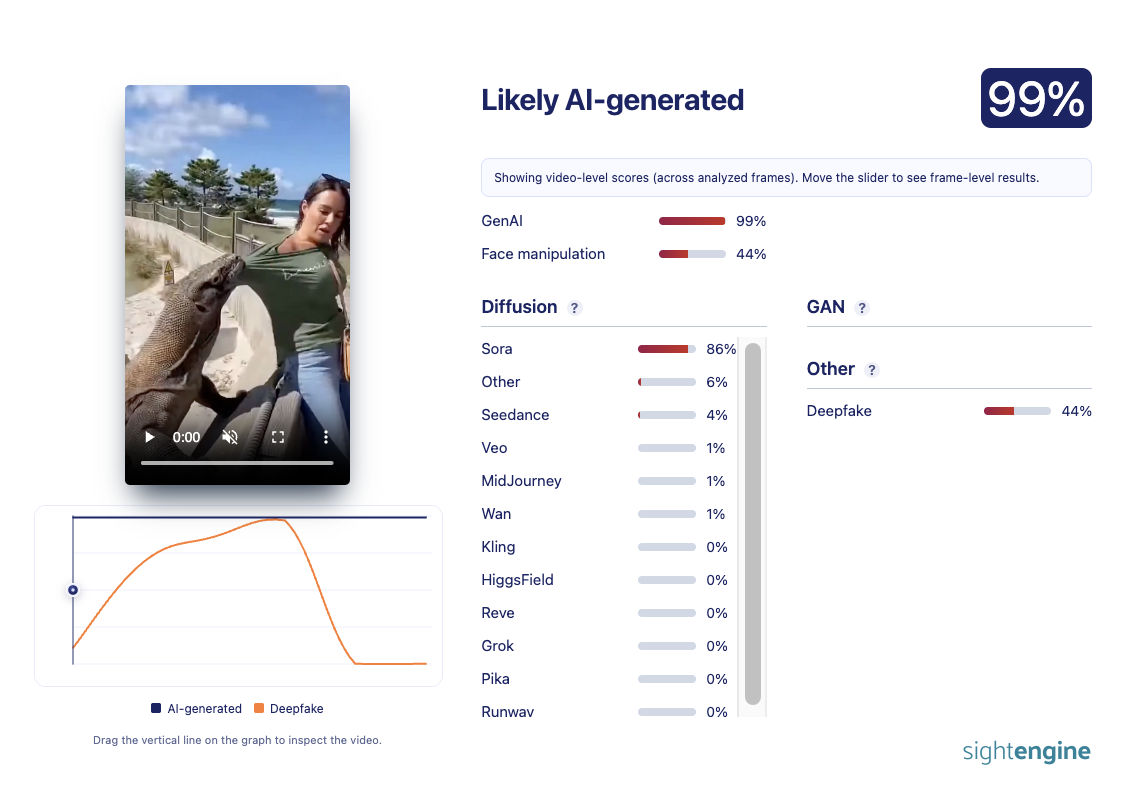
(Image source: Sightengine.)
When Lead Stories ran a thumbnail from the video through the InVID verification plugin, it said the same: That thumbnail was 99% likely to have been created by AI.
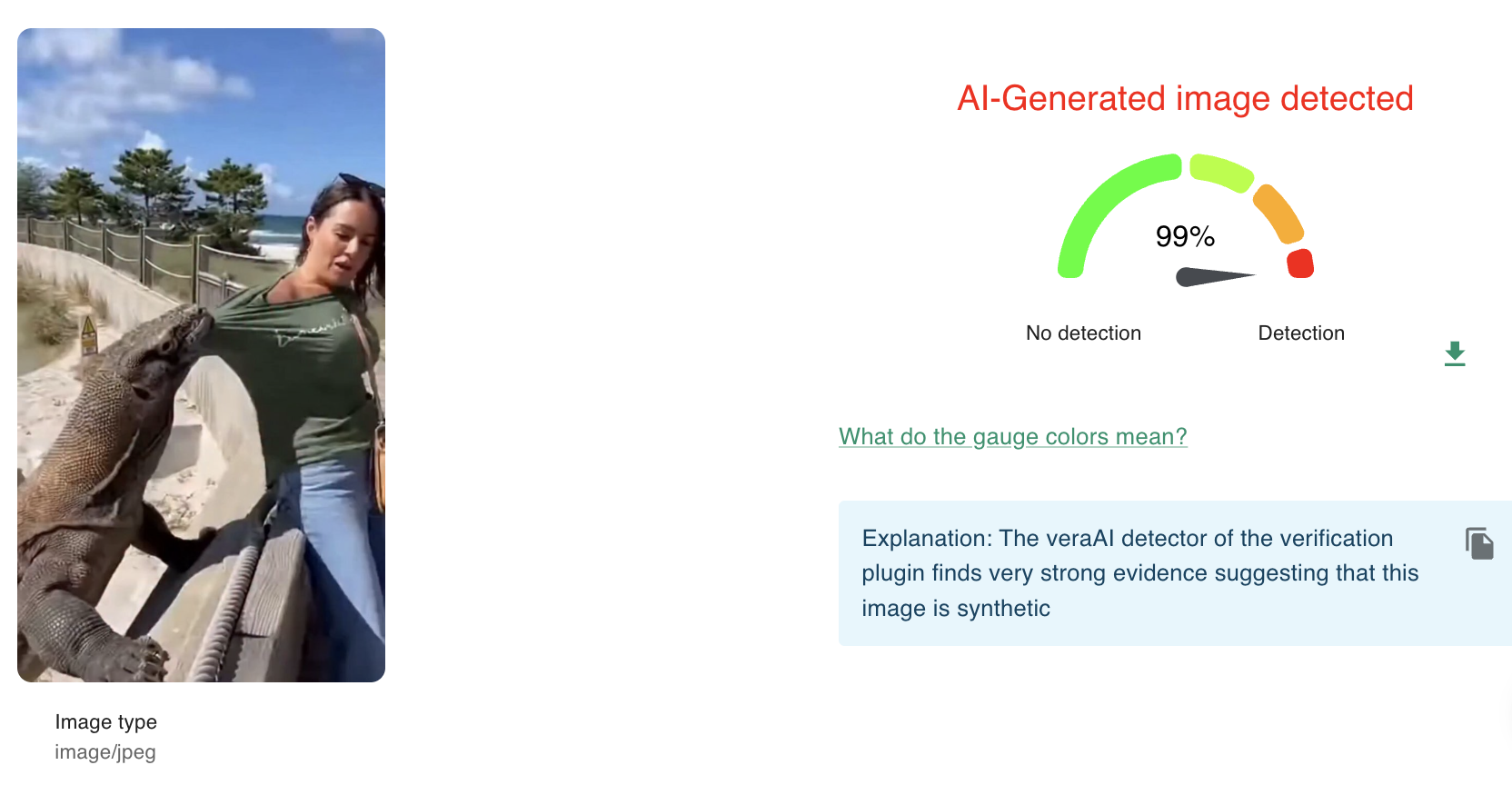
(Image source: InVID.)
The video included several signs strongly pointing to AI. One was a disappearing earring:

(Image source: post by @FUn_zone89 on X.)

(Image source: post by @FUn_zone89 on X.)
Another major inconsistency was that the woman did not appear to have one of her hands while her shoulder seemed to be placed anatomically incorrectly close to her neck:
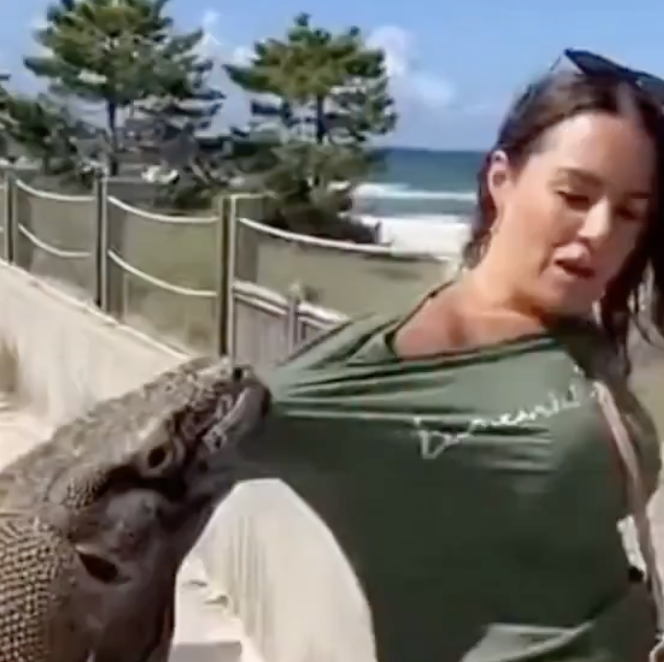
(Image source: post by @FUn_zone89 on X.)
The clip appeared to have originated (archived here) from the @luontotales account on Instagram where it was posted on July 4, 2026. The account published (archived here) many other, apparently AI-generated videos, and that specific post's caption, as translated from Japanese to English by DeepL, mentioned AI and had a #parody hashtag:
Did AI fool the world? The answer is 'NO.'
The idea that 'walking alone generates electricity' is based on real technology, but it's been slightly exaggerated on social media.
This mechanism is based on the 'piezoelectric effect.'
🔍 How it works:
1️⃣ A person walks → Pressure is applied to the floor
2️⃣ The material deforms slightly
3️⃣ That force is converted into electricity🔁 Conversely, applying an electric charge can also cause the material to deform (reverse piezoelectric effect).
#Trump #Khamenei #Usavshiran #Video #Parody
The caption and hashtags of the @luontotales post appear unrelated to the Komodo dragon video -- the text discusses the piezoelectric effect and walking-generated electricity, while the hashtags reference political figures. This is consistent with accounts that use trending or unrelated hashtags and captions to boost engagement on AI-generated content.
When the clip was reposted from the @luontotales account on Instagram to TikTok on July 6, 2026 (archived here), it showed the watermark pointing to the possible origin and the AI label:
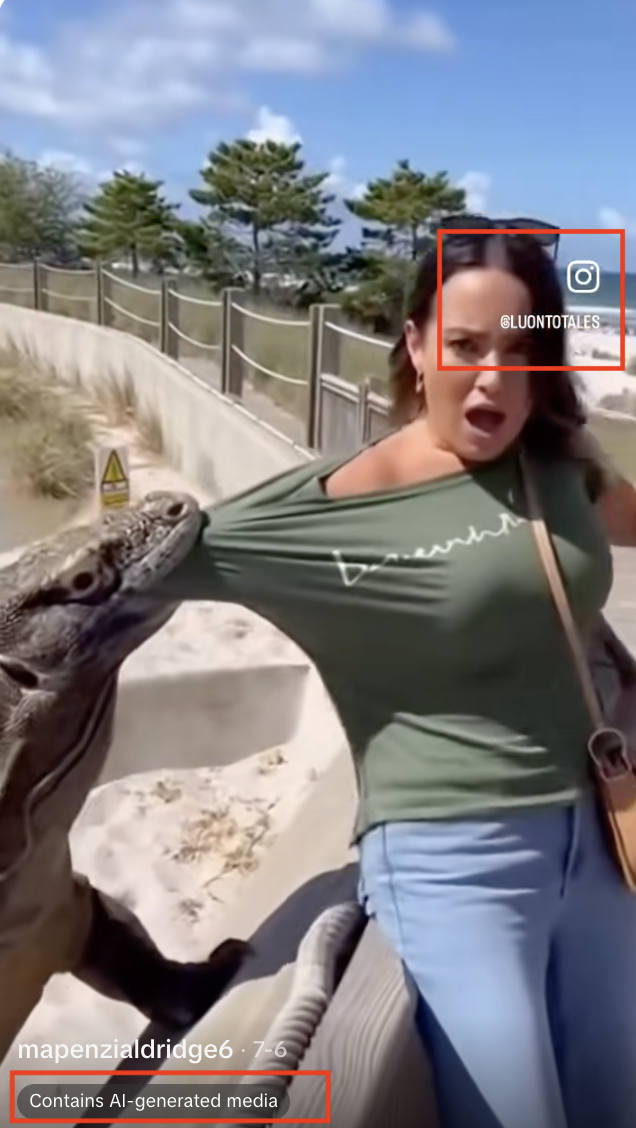
(Image source: post by @mapenzialdridge6 on TikTok.)